




 Busa head of social and labour market policy Sanelisiwe Jantjies. (Photo: Sanelisiwe Jantjies X)
Contrary to the dominant narrative, the Unemployment Insurance Fund (UIF) is painfully aware of the shortcomings of its board of directors. In the UIF Annual Report 2023/24, board chair Zola Luswazi openly admitted that “the UIF Board remains structurally ineffective given the fact that it is an Advisory Board versus an Ordinary Board with executive powers”.
Luswazi further lamented the “absence of joint planning, coordination and execution between the Board, Management, the Accounting Authority and the Executive Authority during the year under review”.
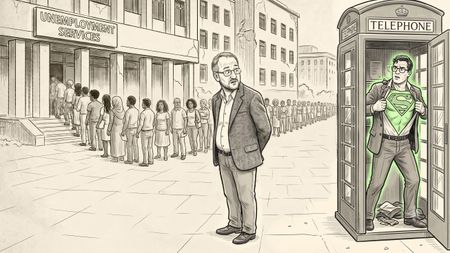
Across all the annual reports – Daily Maverick only went back to 2018 to see the extent of the structural issues – are confessions of a deep-seated culture of failure. The 2021/2022 report has the best line by far: “The culture of non-performance at the institution is rife, exacerbated by the absence of consequence management.”
It was then no great surprise when Business Unity South Africa (Busa) formally withdrew its representatives from the UIF board and National Economic Development and Labour Council (Nedlac) structures last week. The decision follows six years of worsening administration, unfulfilled operational reforms and massive corruption scandals.
The last straw
“UIF Board meetings have repeatedly failed to reach quorum, and there’s last-minute scheduling raising questions of whether that is deliberate,” Busa head of social and labour market policy Sanelisiwe Jantjies told Daily Maverick in an interview after the bombshell announcement.
She doubled down on these complaints, saying that the Department of Labour was “audacious” in using board participation as a shield of legitimacy while “the board is definitely being undermined – it cannot function as it is”.
This direct echo of Luswazi’s admissions in the annual report is at the heart of Busa’s assertions that the social dialogue has been completely eroded and the standard tripartite structures are no longer viewed by business as viable mechanisms for reform.
“The primary formal channels through which business has raised concerns about the fund are completely eroded... Engagements that continuously happen just happen without consequence. We’re sent from pillar to post... we get there and the individuals that are supposed to be there – and I’m speaking about people who can speak to actual issues – just don’t pitch. Meetings are rescheduled.”
Jantjies assured Daily Maverick that the board member withdrawal was not connected with the issues from September 2025, when Busa initiated legal proceedings in the Labour Court against the Minister of Employment and Labour to review and set aside the numerical sector targets gazetted under the Employment Equity Amendment Act.
“We started [raising UIF governance issues] in 2022. So I can tell you for a fact that these issues are not connected... We separate the issue of that particular litigation. These things are not connected at all.”
Through the eye of a needle
Busa pulling out of the UIF board is, of course, a hugely negative signal to the market which could be seen as justification for companies to withdraw contributions.
Jantjies, when Daily Maverick asked the obvious question, quickly said that Busa was completely opposed to dismantling the fund and was definitely not calling for a levy boycott.
“The UIF needs to continue and, in actual fact, this isn’t a move where Busa is trying to ask or report that people withdraw from the fund because in actual fact we don’t support that legally. Contributions are a legal obligation. The fund exists. It should, to protect workers. That’s precisely why we’re not calling for a boycott… A boycott is the last thing that we need. We can’t destabilise the labour market more than the fund already has.”
Instead, she explained that Busa saw the fund as an essential pillar of social protection: “The UIF, if it works, has the ability to actually cushion this unemployment crisis... And business also has a vested interest in people being employed... these are funds that they contribute from their own income monthly, weekly.”
That last line is in keeping with one of the central issues. And on this, Busa’s concern over contributor funds being redirected to unvetted government schemes is heavily documented.
If you look at the strategic plans, they show a massive shift in focus toward the Labour Activation Programme, which was quite controversial.
Then UIF commissioner Teboho Maruping’s statement in the Revised Strategic Plan 2023 outlined a target to increase the number of Labour Activation Programme participants from the original 15,000 target of 2022/2023 to 240,000 in the Medium Term Expenditure Framework period.
It was a massive, high-risk diversion of capital away from standard insurance reserves to fund state job schemes, which Jantjies described as a “duplication of process” that belongs under Sector Education and Training Authorities and the Department of Higher Education and Training.
Maruping was suspended in September 2024 and, after the DA went digging, was found to have been dismissed only in February 2026 after earning R2,488,072.39.
Judge by its actions
The Department of Labour, for its part, rejected Busa’s exit in a media statement in which it claimed that it “has, in all material times, held the view that the effective discharge of public governance responsibilities is best achieved through continued engagement, constructive dialogue and adherence to established institutional processes”.
It also argued that withdrawing from the UIF would stall reform.
“The UIF does not believe that disengagement is the most constructive approach... [and] rejects any suggestion that meaningful governance reform can be achieved outside the established statutory structures. Regrettably, withdrawal from these forums limits opportunities to influence governance outcomes through the very mechanisms established for that purpose. This is contrary to the principles underpinning South Africa’s social dialogue framework...”
This argument for keeping governance reform processes falls flat when you measure the fund management against the mandate of the Unemployment Insurance Act (UIA).
Under Section 4(1) of the UIA, the fund is established to pay short-term relief to workers experiencing temporary loss of income. It requires a highly liquid, low-risk capital structure to cushion sudden economic shocks (such as recessions or pandemics).
The UIF has allowed nearly 20% of its total investment basket to be placed in unlisted equity and unlisted financial instruments via the Public Investment Corporation (PIC).
These unlisted beneficiary companies have turned into a massive structural liability. Even the 2021/2022 UIF board chair report admits that “the overwhelming majority of unlisted investment entities are not performing, and as a result, a notable portion of the value of this total investment has been impaired”.
Add to that the fact that these companies have chronically failed to submit audited financial statements, forcing the UIF to violate Public Finance Management Act deadlines year after year.
The fund, then, could be better characterised as a venture capital vehicle rather than a liquid short-term insurer.
Mandate drift
According to the wording of the Unemployment Insurance Act, Jantjies was correct in her assertion that the fund was designed as a pure social insurance scheme funded by a mandatory 2% payroll levy split between workers and employers. It was never legislated to be a developmental job-creation agency.
But the Department of Employment and Labour, as evidenced in the UIF’s 2021/2022 annual report, has systematically altered the fund’s mission to cover “the expanded mandate of the DEL of not only focusing on labour market regulation... but also creating and preserving jobs”.
This was the exact loophole that led to massive allocations to programmes like the Labour Activation Programmes – which have been plagued by immense governance gaps, waste, and executive override, contributing to the Auditor-General of South Africa issuing Qualified Audit Opinions for five consecutive financial years (2020/21 to 2024/25).
The most damaging example is the R5-billion Thuja Capital contract, signed by executive leadership to funnel contributor money into an unlisted shell entity under the guise of job creation.
The Pretoria high court eventually had to step in and set the contract aside as invalid on 19 April 2024. But this systemic trend diverts billions of rands away from the primary statutory beneficiaries (vulnerable workers seeking basic maternity, illness, or retrenchment benefits) to fund state-directed, politically vulnerable economic schemes.
With this context, the Busa withdrawal transforms from a negative market signal to a giant red flag that the highest forms of government would be wise to take notice of. DM
Daily Maverick asked the UIF for comment on 3 July, but has not received any correspondence.
Comments
Scroll down to load comments...