




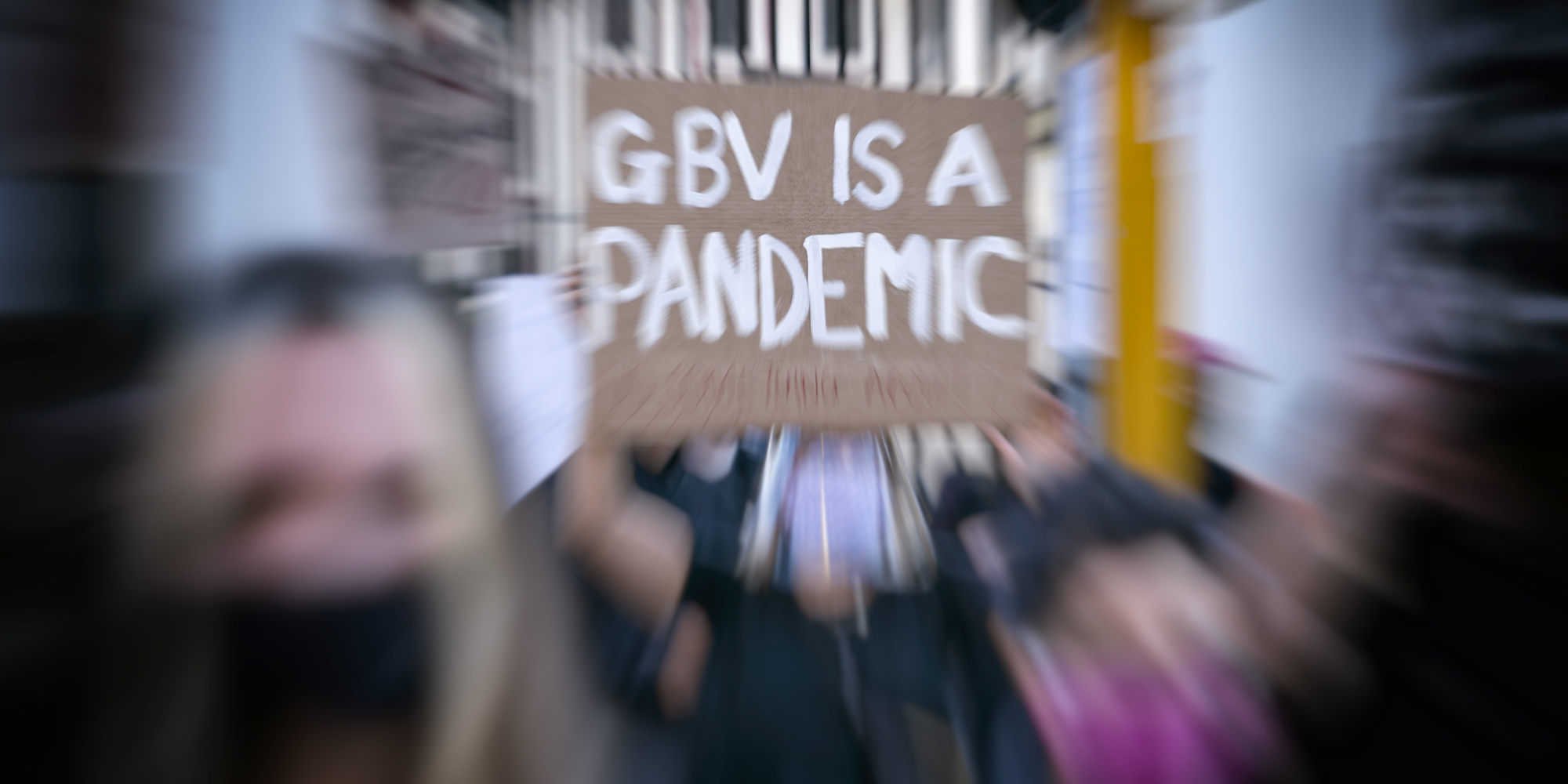
 South African men and women protest against gender-based violence outside Parliament in Cape Town on 30 June 2020. (Photo: Nic Bothma / EPA-EFE)
 /file/dailymaverick/wp-content/uploads/2025/10/label-Op-Ed.jpg)
Growing South African evidence links men’s childhood trauma to later gender-based violence (GBV) perpetration. The Human Sciences Research Council’s (HSRC) first National Prevalence Survey study on GBV provides critical insights by showing that more than a fifth (22.8%) of men had reported high levels of childhood trauma.
Men who experienced childhood trauma before the age of 18 are significantly more likely to have perpetrated physical and/or sexual violence (37.3%), physical violence (30.7%), or sexual violence (15.4%). While childhood trauma does not excuse, nor fully explain, the perpetration of GBV, the data shows a cycle of violence that begins in childhood and continues into adulthood.
Help-seeking behaviour remains low among male survivors and perpetrators of GBV in South Africa. This is not incidental, as key barriers have been identified to explain this phenomenon. When one considers the established links between men’s childhood trauma and later perpetration, there is a clear need to strengthen communication on men’s help-seeking behaviour.
Addressing this requires a comprehensive and effective response to gender‑based violence and femicide (GBVF) in South Africa that adequately engages men and boys, both as perpetrators and survivors, in prevention efforts.
Barriers to men’s and boys’ help-seeking behaviour
Researchers have identified two key barriers to men’s and boys’ help-seeking behaviour in South Africa. The first barrier is rooted in dominant societal and cultural norms about what it means to be a man in South Africa. These ideas remain deeply anchored in patriarchal ideals that prioritise dominance, physical strength, independence, financial provision and emotional invulnerability.
Such norms are actively reinforced within families, communities and cultural and religious spaces in South Africa. It shapes how boys and men are expected to behave and how they understand both perpetrators of violence and their own victimisation. The normalisation of violence through initiation practices in schools and within gangs further entrenches these harmful masculine ideals. It often leads to men and boys to under-report victimisation for fear of stigma, ridicule and rejection.
The second barrier is the orientation of the GBV response itself. South Africa has developed strong GBV policy, legislation frameworks, programmes and campaigns. However, this response has primarily been oriented and focused on women and girls (in all their diversity), necessarily so, given the disproportionate prevalence affecting these groups.
While commendable, this approach has left gaps, including the engagement of men and boys in programmes and interventions – both as perpetrators and survivors of GBV.
Presently, programmes engaging boys and men remain limited and a neglected component in the country’s current GBV response initiatives. Evidence-based programmes showed that sustained, multi-sectoral community-based engagement with boys and men can shift attitudes and social norms towards gender equality, reduce intimate partner violence (IPV) and increase women’s safety. However, these programmes remain chronically underfunded and operate far below the scale required to curb the scourge of GBV.
At the same time, there remain gaps in GBV response to men and boy victimisation in South Africa.
A 2021 University of Limpopo study on the help-seeking behaviour of male victims of IPV found that men were unable to access services that supported them. Existing interventions were widely perceived as designed for women, leaving male victims marginalised.
Men reported receiving inadequate and reluctant assistance from professionals and law enforcement, driven by fears of mockery, breaches of confidentiality and stigmatisation within their communities. Similar findings were reported in a webinar hosted by the HSRC, in collaboration with the University of Cape Town (UCT), on closing the gap in health-seeking behaviour among male survivors of GBV in South Africa. The event brought together academics, civil society organisations, and government officials from UCT, University of the Western Cape, the University of Cumbria, Mosaic, Famsa, and InsideOut NPO.
At this webinar, speakers highlighted the limitations of existing GBV interventions and programmes for male survivors of GBV in South Africa. Gaps identified included the lack of male-friendly responders, poor referral pathways, mislabelled trauma, and stigma about male victimisation found in the South African Police Service, clinics, and within families, which resulted in the silencing of male survivors.
Effectively engaging men and boys in GBVF response
Over the past two decades, momentum has grown for intentionally engaging men and boys in preventing GBVF. Engaging this population promotes collective accountability, foregrounds men’s responsibility to stop violence, challenges stereotypes about perpetrators and supports early, targeted anti‑violence work with boys that confronts harmful masculinities and unequal power relations.
However, thoughtful and effective engagement matters. In a paper published in 2019, Emily Colpitts of Dalhousie University highlighted the complexities associated with engaging men and boys in addressing GBV.
Her paper showed that engagement without clear thought and an intersectional feminist analysis risks not effectively addressing the tensions, challenges and concerns that surround the engagement of this population in South Africa.
If South Africa is to effectively stop GBVF, efforts to engage men and boys need to move beyond surface-level inclusion and toward sustained initiatives aimed at addressing childhood trauma, challenging gendered power relations and addressing dominant ideas of what it means to be a man. Only then can engagement move towards facilitating the halting of GBVF in South Africa. DM
Dr Dane Isaacs is a senior research specialist in the developmental, capable, and ethical state division of the Human Sciences Research Council; Dr Gadija Khan is a senior research specialist in the developmental, capable, and ethical state division of the Human Sciences Research Council; Mr Sbonelo Chamane is a master’s intern in the public health, societies and belonging division of the Human Sciences Research Council; Prof Sibusiso Sifunda is a research director in the public health, societies and belonging division of the Human Sciences Research Council; Dr Nompumelelo Zungu is a strategic lead and senior research director in the public health, societies and belonging division of the Human Sciences Research Council.