




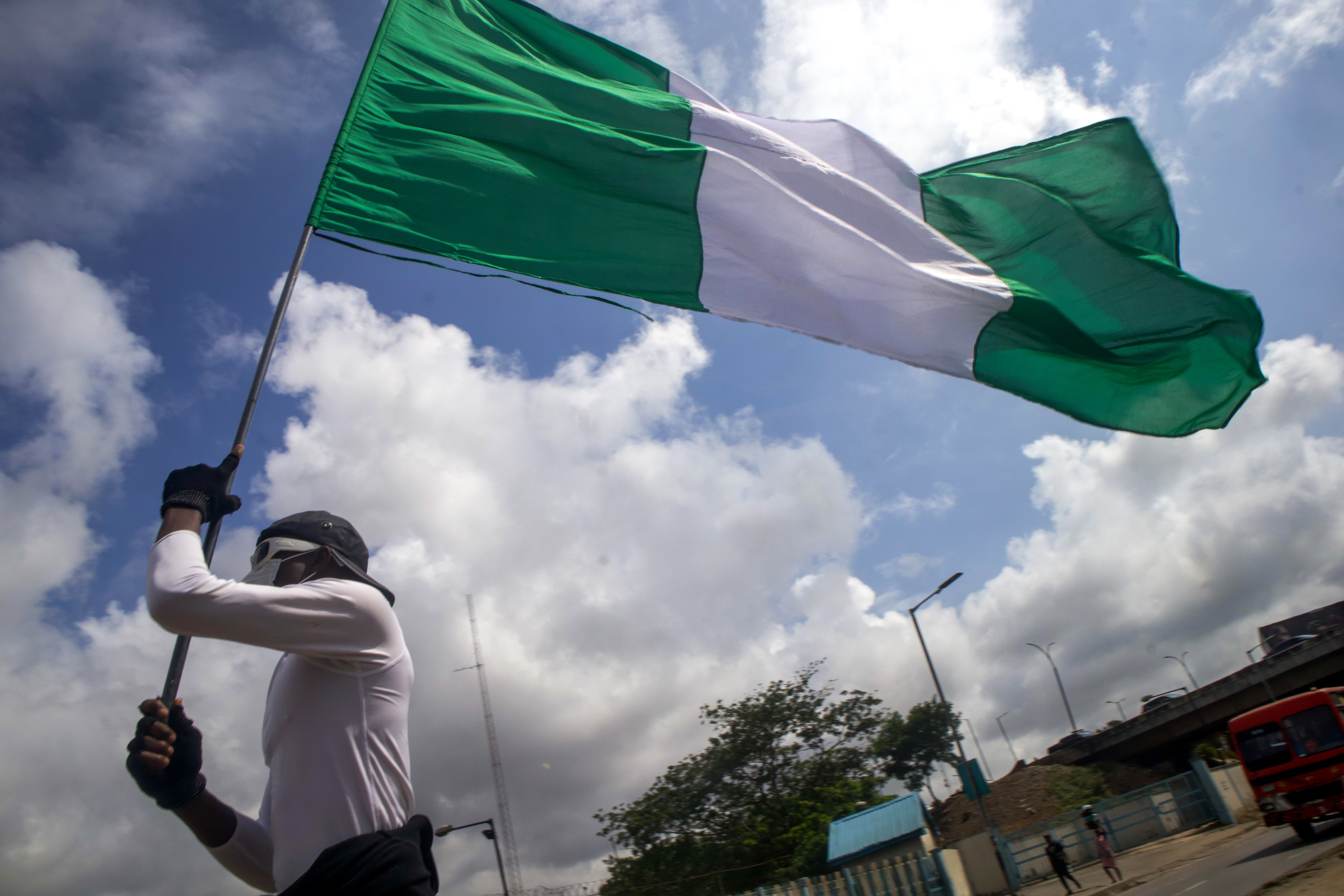
 A demonstrator waves a Nigerian flag as he takes part in a rally against the cost-of-living crisis the country is experiencing, in Lagos, Nigeria, 02 August 2024. Nigerians on 02 August responded to online calls to mobilize against economic hardship, insecurity, poor infrastructure and environmental degradation. Nigeria, Africa's most populous country, is experiencing its worst economic crisis with an annual inflation rate at 34.19 percent in June 2024, the highest since March 1996, according to the Central Bank of Nigeria (CBN). Amnesty International Nigeria condemned in a post on social media 'X' 'the killing of 13 protesters across the country'. EPA/EMMANUEL ADEGBOYE
In May, U.S. and Nigerian forces conducted military operations in northeastern Nigeria that killed Abu-Bilal al-Minuki, the second-in-command of ISIS globally. That followed a U.S. strike on Christmas Day against the militants ordered by President Donald Trump, who said they had been targeting Christians in the African country.
Addressing a conference of African defence chiefs in Angola on Thursday, AFRICOM Commander General Dagvin Anderson described May’s joint U.S.-Nigerian as a model for future security cooperation in Africa.
“We have withdrawn much of our forces that were just there for that operation, but are continuing the partnership that Nigeria has asked for to help continue with the intelligence sharing,” Anderson told journalists during a U.S. State Department-hosted briefing after the conference.
Anderson said the operation, in Nigeria’s Lake Chad Basin region, demonstrated Washington’s approach of providing specialised capabilities while allowing African partners to lead security operations.
He said cooperation with Nigeria had helped significantly degrade Islamic State’s leadership, adding that the impact had extended beyond West Africa because of the militant group’s international network.
The operation disrupted not only local commanders but also broader Islamic State communications and operations, he added.
“Nigeria has been very active since that operation in May,” Anderson said. “They continue to prosecute targets themselves.”
He added that Nigerian military pressure, combined with efforts to publicise the operation, had encouraged additional defections and surrenders among ISIS fighters in northeastern Nigeria.
The three-day conference in Angola’s capital, Luanda, was attended by military leaders from 35 African countries, alongside representatives from the U.S. and Brazil.
(Reporting by Chijioke Ohuocha;Editing by Helen Popper)
Comments
Scroll down to load comments...