




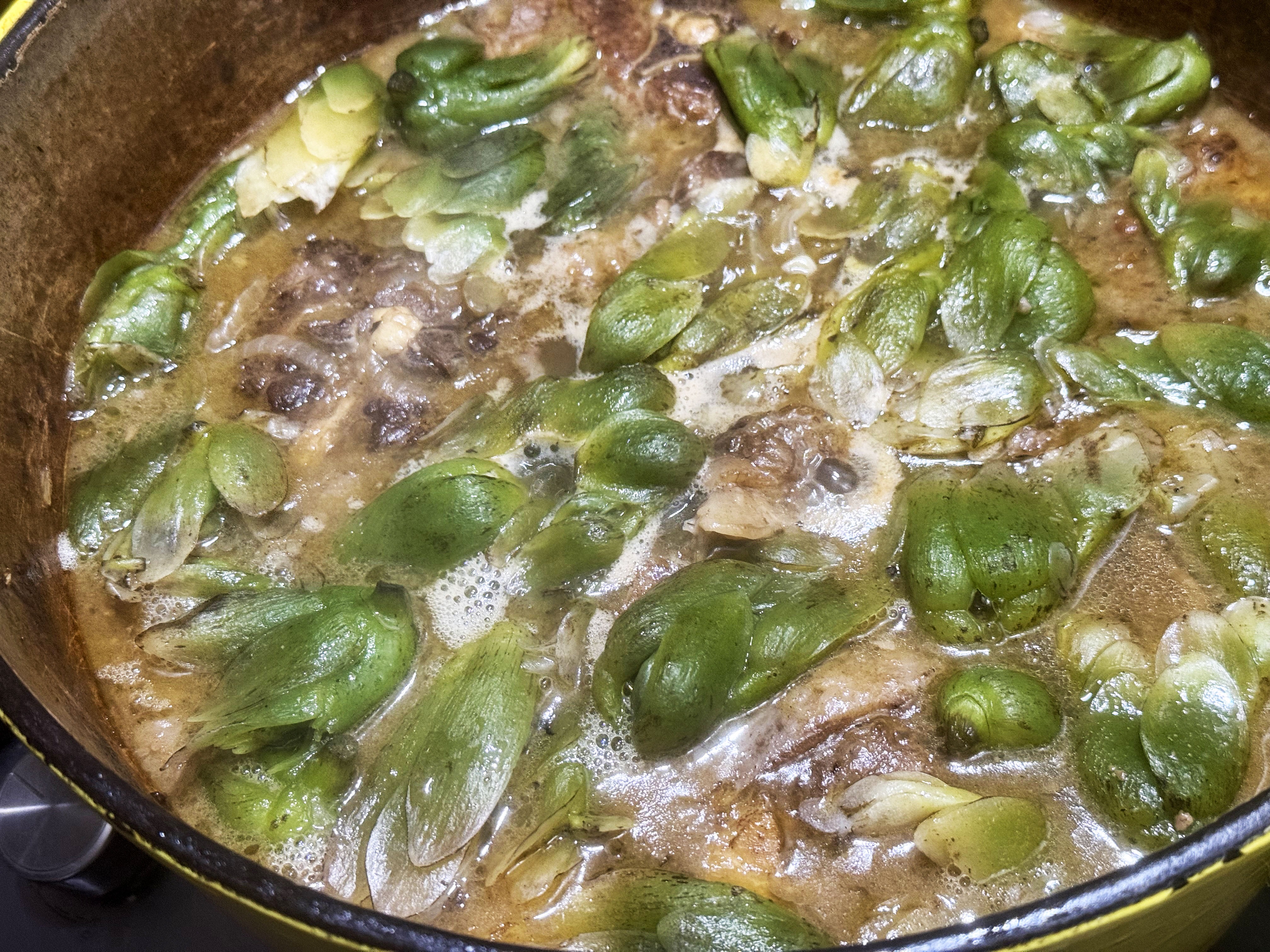
 Tony Jackman’s waterblommetjie bredie, photographed up close to show off the pondweed buds. (Photo: Tony Jackman)
 Waterblommetjie season is here. It runs from June until early spring. It’s our annual winter window when we can make this strange and typically Cape dish and explain to foreigners what it is and why we enjoy it.
Buy them, and use them, as fresh as you can – they should be preening with their lovely green and crunchy to the touch.
Call it pondweed, if you like. Or waterblommetjies, which I prefer. Water hawthorn, according to C Louis Leipoldt. Either way, they’re the bright green calyces of a water-loving plant called Aponogeton distachyos, and have a second Afrikaans name of wateruintjies. And they make good eating. Calyces are the outer casing of a flower bud, so, although they are bright green, they are in a sense petals.
I used no chilli in my dish but did use plenty of garlic. The spices were coriander and cumin. The herb was thyme. I used lemon juice instead of sorrel or tamarind water, but made a mental note to plant sorrel in my herb garden for next time.
I deglazed the bottom of the pot with a glass of white wine after browning the meat and cooking the onions. With vigorous use of a flat-edged wooden spoon, I was able to dislodge all of the collected brown caramelisation so that it would remain in the pot. The French are not regarded as fine cooks for nothing.
Then, ultimately, near the end of the cook, I went back to French tradition and ladled off the cooking broth, reduced it in a saucepan until it was a gorgeous, syrupy sauce with utterly amazing flavour, and served the stew with that poured over. It was transformational. All of the waterblommetjie flavour was there, magnified.
Tony Jackman’s waterblommetjiebredie
(Serves 4)
Ingredients
1.5kg lamb or mutton neck and knuckle slices
Butter, as needed
Oil
2 medium onions, sliced
250ml white wine
A bunch of sorrel, if you can get it, or substitute the juice of a lemon, or ¼ cup of tamarind water
4 medium potatoes, peeled and diced
2 Tbsp coriander seeds, crushed
1 tsp cumin seeds
2 bay leaves
4 sprigs of thyme
4 garlic cloves, chopped
500g waterblommetjies
Enough lamb stock to cover
2 Tbsp raw honey
Salt and pepper to taste
Rice, steamed, for serving
Method
Soak the waterblommetjies in a pot of water for 30 minutes and, if you spot any interior parts that are black, remove them and discard.
Drain and leave to one side.
Salt all sides of the meat lightly.
Melt butter in a heavy casserole with a little oil, and when hot, brown the meat in batches. Remove to a side dish. Repeat with remaining meat, adding more fat as needed.
Add more fat and fry off the sliced onions until golden brown.
Add 250ml white wine and deglaze energetically. You want the bottom of the pot to be clean again, and every bit of the caramelisation to stay in the stock.
Add the meat back to the pot and stir to mix.
Add the sorrel (or lemon juice, or tamarind water), potatoes, coriander, cumin, bay and thyme. Then add the garlic.
Pour in the stock and the honey, stir, taste, and adjust seasoning if needed.
Don’t add the waterblommetjies yet.
Bring the pot to a bubble, reduce to a simmer, put the lid on, and cook gently on the hob until the meat is tender, about 2 hours.
Add the waterblommetjies and fold through, being careful not to damage the cubes of meat or the buds. They can sit just underneath the surface on top of the pot, as in the picture.
Taste and adjust seasoning if necessary.
Spoon off the stock and reduce it in a heavy saucepan.
Reheat the stew if it has cooled, and serve on or alongside rice with the reduced stock poured over. DM
Tony Jackman is twice winner of the Galliova Food Writer of the Year award.
Follow Tony Jackman on Instagram @tony_jackman_cooks.