




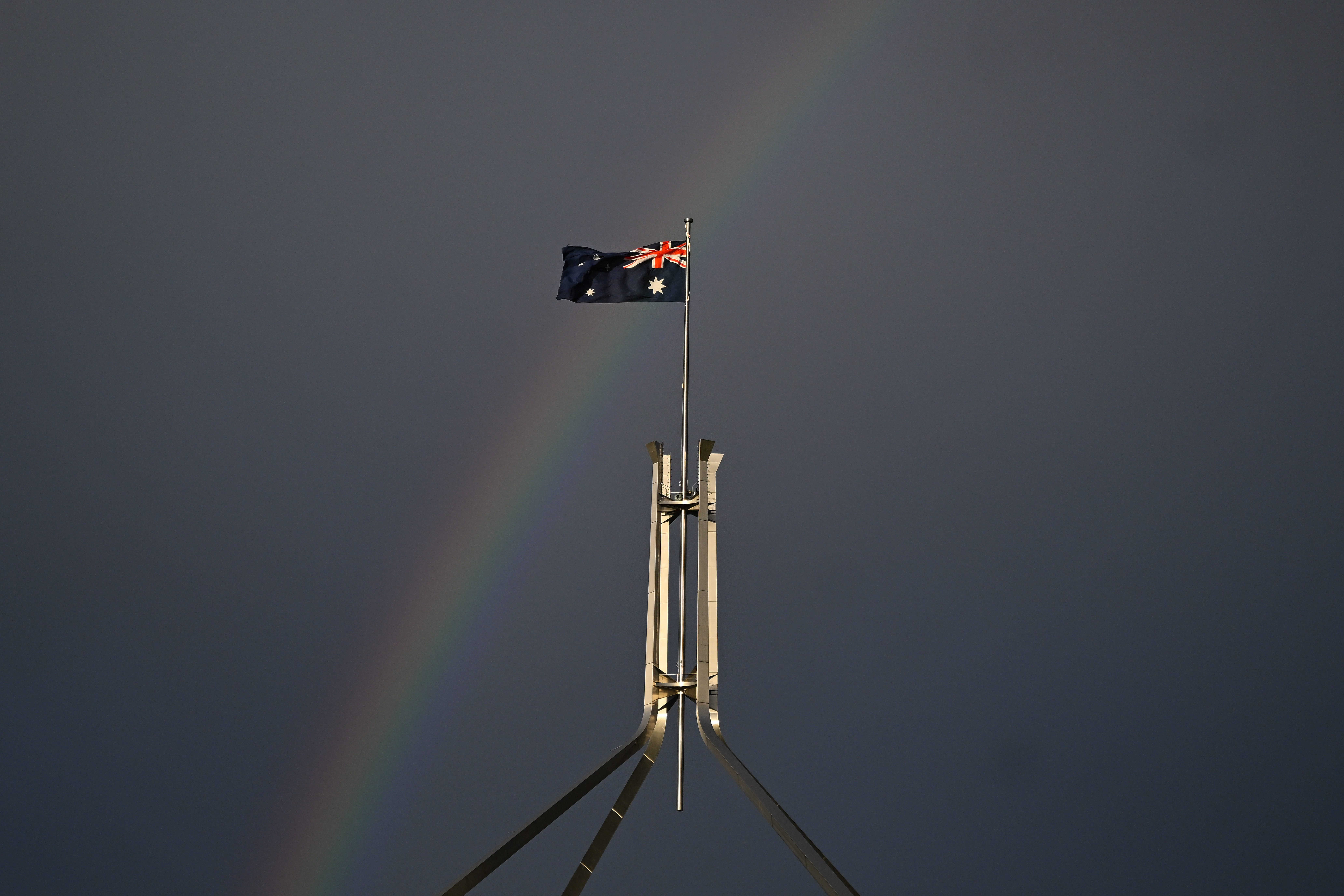
 A rainbow appears over Parliament House in Canberra, Australia, 04 June 2026. EPA/LUKAS COCH AUSTRALIA AND NEW ZEALAND OUT
The agency said there is an 80% likelihood the event will reach or exceed strong intensity during the July-September period, with effects peaking over the 2026-27 summer.
• Rainfall is likely to be near or below normal for the north and east of the South Island and the east of the North Island, with below-normal rainfall most likely for the rest of the North Island.
• The west of the South Island is likely to see above-normal rainfall.
• Air temperatures are equally likely to be near or above average nationwide, though cold snaps and frosts are expected.
• Increasingly windy and variable conditions are anticipated later in winter and into spring as El Niño signals strengthen.
• Two lower-probability risks remain under monitoring: sudden stratospheric warming events, which have become more frequent in recent years, and the remote possibility of an out-of-season tropical cyclone, historically associated only with El Niño years.
(Reporting by Lucy Craymer)
Comments
Scroll down to load comments...