




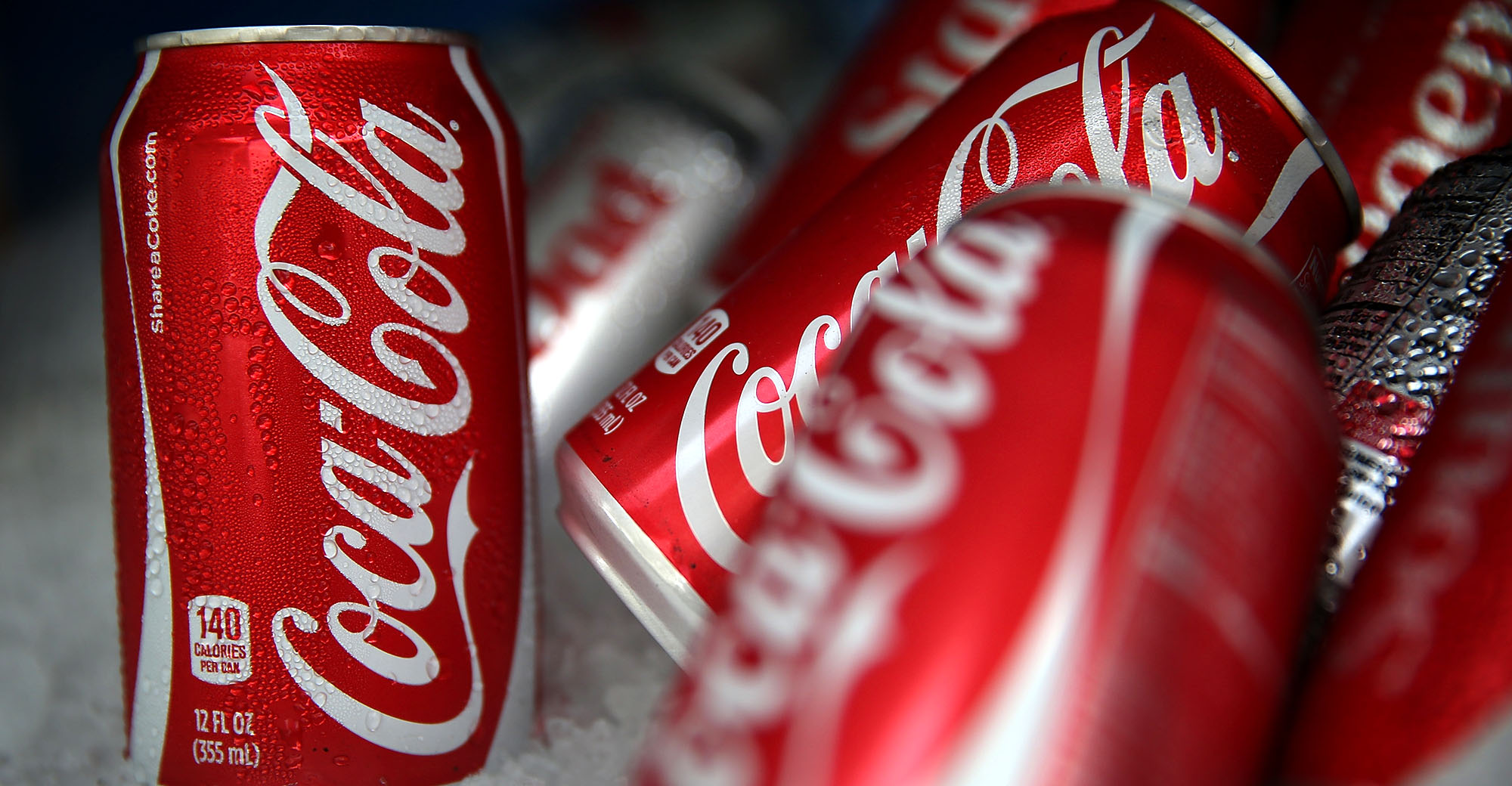
 A coalition of global health experts and advocates is calling on Fifa to end its decades-long partnership with Coca-Cola, accusing the company of ‘sportswashing’ the health harms linked to its sugary drinks. (Photo: Justin Sullivan / Getty Images)
Globally, rates of obesity and type 2 diabetes are rising.
In Africa, the International Diabetes Federation projects an 142% increase, or 60 million people, living with diabetes by 2050.
Sweetened beverages are one of the leading sources of free sugar in diets, which increases the risks for developing health issues including being overweight and type 2 diabetes, as well as cardiovascular disease and tooth decay.
“As a result, in South Africa, we have supported the implementation of the Health Promotion Levy, that is placed on sugar-sweetened beverages to disincentivise their consumption,” said Tendai Mafuma, senior legal researcher at SECTION27.
“As such, it is concerning that they (and their brands) are promoted as part of a healthy, active lifestyle. More concerning is that children are exposed to this type of marketing and are deceived into associating healthy physical activity with the consumption of unhealthy, non-nutritious soda,” Mafuma explained.
/file/dailymaverick/wp-content/uploads/2022/06/MC-Obesity1-Sulcas_2-Chile-octagon-warning-lable.jpg "Chile recently put warning labels on 80% of processed foods, which warn of excessively high levels of sugar, saturated fats, salt or energy (calories). Within three years of implementation the country recorded a 10% drop in sugar consumption. (Graphic: www.paho.org)")
Showing Big Soda the red card
A coalition of global health experts and advocates is calling on Fifa, soccer’s global governing body, to end its decades-long partnership with Coca-Cola, accusing the company of “sportswashing” the health harms linked to its sugary drinks.
The Kick Big Soda Out campaign said Coca-Cola’s sponsorship directly undermines Fifa’s stated commitments to health and fair play. The Fifa World Cup is taking place in the US, Mexico and Canada.
Now, the campaign has more than 500,000 petition signatories.
South African organisations, including Amandla.mobi, HEALA and SECTION27, have signed on.
“Amandla.mobi joined Kick Out Big Soda because holding corporate power to account has always been part of our work. Since 2017, we have campaigned against Coca-Cola’s agenda to dilute public health interventions like the Sugary Drinks Tax. Kick Out Big Soda is an opportunity to hold the likes of Coca-Cola accountable on the global stage,” said Palesa Ramolefo, a food justice, health and GBV campaigner at Amandla.mobi.
The campaign also draws a deliberate historical parallel.
The last time a tobacco company sponsored the Fifa World Cup was in Mexico in 1986, after which Fifa prohibited tobacco sponsorship entirely, according to El Poder del Consumidor (The Power of the Consumer), a consumer advocacy group in Mexico.
El Poder del Consumidor and the Kick Big Soda Out campaign argue that 2026 should mark the same turning point for sugary beverages.
Sponsorship to sportswashing
The largest producers of soda are Coca-Cola, PepsiCo and Keurig Dr Pepper.
Soda companies use sports sponsorships to promote their brands to fans around the world. When an unhealthy product like soda is connected to positive feelings about sport, this is known as sportswashing.
/file/attachments/orphans/UP1EM6P06XQIP_576816.jpg "South Africa’s Thapelo Maseko celebrates scoring their first World Cup goal against South Korea with Lyle Foster and Sphephelo Sithole at Estadio Monterrey in Mexico on 24 June 2026. (Photo: Reuters / Eloisa Sanchez)")
“Large sporting events are broadcast across the world, including to the most remote communities. Additionally, they are viewed by all age groups, including children. As such, these are also the events that receive the most sponsorship from brands whose products have been shown to be harmful, [for example] alcohol and soda,” said Mafuma.
“Focusing on large sporting events leverages on their visibility to increase public awareness of the harmful product, and exposes the corporate tactics used by Big Soda to consolidate their profits at the expense of public and environmental health.”
During the 2014 World Cup, Coca-Cola’s Facebook fans grew by 2.5 million. During the 2018 World Cup, the three most-liked advertisements were from big soda manufacturers – Pepsi, Gatorade (a PepsiCo brand) and Coca-Cola.
“Soft drink consumption has increased by 300% in the past 20 years, and 56% to 85% of children in school consume at least one soft drink daily. It not only normalises the consumption but makes it attractive in order to maximise profits,” said Sue Goldstein, division director at the SAMRC Centre for Health Economics and Decision Science (PRICELESS SA).
Research presented at an international conference in June 2026 by New York University and Georgetown University’s O’Neill Institute shows just how effective this is. The study found that Mexican teenagers who saw soft drink advertisements paired with the Fifa logo used significantly more health-associated words to describe the product than those who saw the same advert without it.
In Mexico, where the effects of this are most visible right now, El Poder del Consumidor filed public interest complaints on 8 June 2026 with Mexico’s Federal Commission for Protection against Sanitary Risks, citing more than 50 advertising violations by Coca-Cola in the lead-up to the World Cup, alleging that ads across billboards, main avenues and social media failed to display legally required warning labels and used athletes and celebrities to promote products that carry those labels – both violations of Mexico’s NOM-051 regulations.
/file/attachments/orphans/2281163331_495293.jpg "General view inside the stadium as players of Korea Republic acknowledge the fans after the team's victory in the FIFA World Cup 2026 Group A match between Korea Republic and Czechia at Guadalajara Stadium on June 11, 2026 in Guadalajara, Mexico. (Photo: Lars Baron/Getty Images)")
“In Mexico, every year they have Christmas caravans in which all the trucks go with Santa Claus through the streets of the main cities. They promote it as something children should see at night. It is like a parade with Coca-Cola,” said Dr Simón Barquera, director of the Center for Research in Nutrition and Health at Mexico’s National Institute of Public Health (INSP).
“We fight a lot to stop that because that is aggressive marketing directed at children. It is an unethical activity that goes against even human rights.”
The World Cup, he said, is the same tactic at a global scale.
Barquera, described Mexican cities during the World Cup as flooded with Coca-Cola and Fifa branding; on billboards, at conferences with governors, and even alongside the Mexican president.
“Imagine having messages from the president saying we don’t want this product at schools because it’s unhealthy – and then in 2026, the World Cup and everything is like the Fifa Coca-Cola tournament. We think it’s a very unethical activity,” he told Daily Maverick.
Barquera confirmed that fans attending World Cup matches in Mexico are not permitted to bring their own beverages into stadiums and are restricted to buying Coca-Cola company products, including water and sports drinks, sold under the sponsorship agreement.
He noted that warning labels are still present on cans sold inside stadiums, but said the broader marketing environment renders those labels almost invisible.
Lobbying
Research published in Globalization and Health found that sugar-sweetened beverage (SSB) companies across South America deploy a range of political strategies to protect their interests – cultivating relationships with policymakers, embedding themselves in poverty alleviation and nutrition programmes and using public-private partnerships and corporate social responsibility framing to shape policy in their favour. These same companies have actively sought to influence or block SSB taxes in South American countries like Mexico, Chile and Colombia.
An example of influence in Mexico is highlighted after the enacting of the sugar tax in 2014. The president agreed with ConMexico (the industry consortium, Consejo Mexicano de la Industria de Productos de Consumo) that it would not increase the tax further after it came into effect; and a research institute established by the Coca-Cola Company was inaugurated by President Peña Nieto, the health minister and CEO of Coca-Cola Mexico.
Civil society organisations (CSOs) advocated for a doubling of the tax in Mexico, much like South African CSO HEALA recommends for our own sugary-beverages tax.
According to Barquera, even with pushback from industry, Mexico’s warning labels have had a measurable impact. National surveys conducted by INSP found that about 60% of Mexicans now regularly use warning labels to inform purchasing decisions – compared with 3% who used the industry-proposed system.
About 70% of consumers said they had switched to a different product because of warning labels, and 20% said they had stopped consuming a product entirely.
“From 3% we went to 60%. And still the industry says it doesn’t work,” Barquera said.
From Mexico to South Africa
While the lobbying battle plays out internationally, South Africa is fighting its own version of it. Draft Regulation R3337, which would introduce front-of-package warning labels on products high in sugar, salt and saturated fat, has been years in the making.
Professor Rina Swart, who served on the task team that conducted the research and helped draft R3337, says the delay comes down to capacity and process, not evidence.
/file/dailymaverick/wp-content/uploads/2025/08/South-Africas-proposed-warning-labels.jpg "South Africa’s proposed warning labels would highlight products high in salt, sugar or fat, so consumers can make quick decisions about their health.")
A meeting between the Directorate of Food Control and the front-of-package labelling task team took place on 22 June 2026 to clarify points raised during the public comment period.
“The department received 600 pages of comments and it took a very long time to respond to each one, especially given the limited capacity within the department of food control. There are basically three staff members who had to review and respond, whilst continuing with their usual work,” Swart said.
“The objection to sponsorship of sporting events by producers of unhealthy food and beverages should extend beyond the Soccer World Cup down to the rugby day at the local school. Children, especially those younger than 12 years, do not have the ability to differentiate and identify marketing for what it is,” she said.
Coca-Cola’s sporting partnerships in South Africa extend beyond the World Cup.
The company is also listed as a principal partner of SA Rugby and the Springboks, the country’s most celebrated sports team.
For advocates, this presence across both global football and South Africa’s most beloved sports raises questions that go beyond a single tournament.
In an open letter published in June 2026, HEALA and the Food Justice Coalition noted that countries including Chile, Mexico and Canada have already implemented front-of-package warning labels with encouraging results, and called on the government to finalise R3337 without further delay.
“South Africa is at a critical moment in its response to the growing burden of diet-related diseases such as type 2 diabetes, high blood pressure, heart disease and certain cancers,” said Nzama Mbalati, CEO of HEALA, in the letter. “The longer these regulations are delayed, the longer South Africans are left without clear information about what is in their food.” DM
Comments
Scroll down to load comments...