




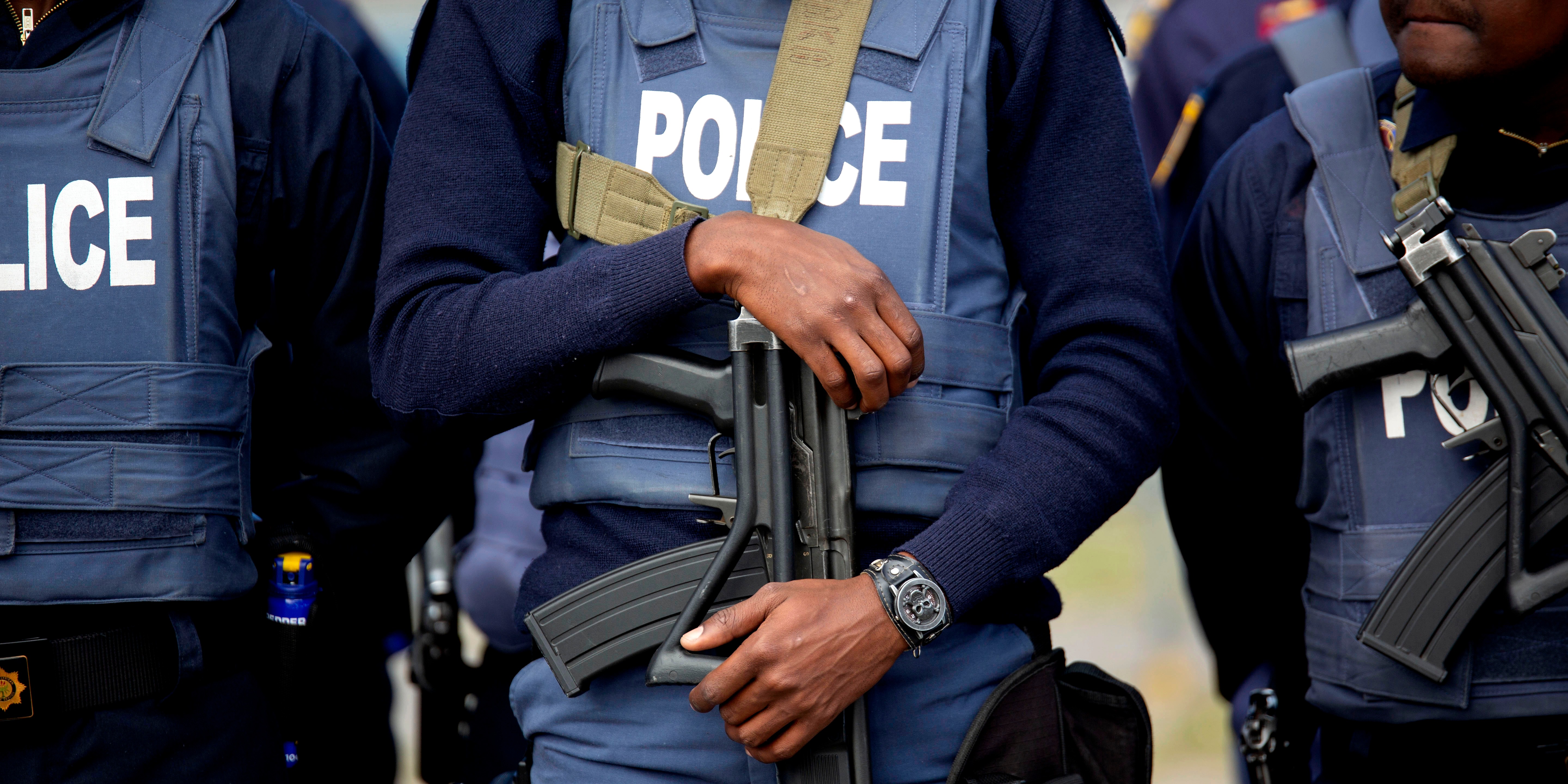
 Critical data on crimes against women and children has been missing from SAPS quarterly reports, raising alarm among stakeholders. (Photo: Leila Dougan)
Violence against children remains a major challenge facing South African society, with reports of murder, assault and sexual offences involving minors an all-too-common feature of the country’s news and information system. Combatting this scourge requires interventions to be grounded in reliable facts and figures, yet over the past year, there has been a glaring gap in the publicly available data for tracking the rate of violent crimes against children.
While the South African Police Service (SAPS) has traditionally published disaggregated data on crimes against women and children in its quarterly crime statistics reports, these numbers have not been present in any of the reports issued in the 2025/26 financial year, running from 1 April 2025 to 31 March 2026.
The last time data on crimes against women and children were published in a quarterly SAPS report was for the third quarter of 2024/25, while the annual report for that year included the totals for these types of crimes across all four quarters.
When the data was first omitted from the SAPS crime statistics report for quarter four of 2024/25, the police came under fire from Parliament, opposition parties and civil society, with people demanding answers as to why the critical information was left out.

In response, the SAPS issued a statement noting that the SAPS Component Crime Registrar had conducted a review of the datasets in preparation for the fourth quarter and preliminary annual crime statistics for the 2024/25 financial year, and found “significant anomalies” in the subset of data pertaining to crimes against women and children.
This led SAPS management to halt the release of the disaggregated statistics and withdraw the previously published data from its website. The public was assured that the statistics on crimes against women and children would be reinstated “after the data has been corrected and validated”.
However, these data have continued to be absent from quarterly reports.
In May 2026, before the release of fourth quarter crime statistics for 2025/26, DA spokesperson on police Lisa Schickerling called for the SAPS to provide complete and accurate data on gender-based violence and crimes against children, noting that the omission of the data meant that both the government and civil society were “denied the ability to properly measure trends, direct resources and implement interventions to protect vulnerable communities”.
“For months and months, ahead of every crime statistics release, the DA has repeatedly called on SAPS to include comprehensive figures on GBV and crimes against children in its official statistics. Yet these critical categories continue to be excluded or inadequately reported,” said Schickerling.
“Every missing statistic represents real victims whose experiences risk being ignored. The lives and safety of women and children cannot be treated as secondary in a country facing severe levels of violent crime and abuse.”
Daily Maverick reached out to the SAPS about progress towards reinstating the data in its crime statistics reports, but had not received a response by the time of publication.
Importance of the data
Chandré Gould, senior researcher with the Justice and Violence Prevention Programme at the Institute for Security Studies (ISS), noted that it was particularly important to have crime statistics data disaggregated by sex and age on an annual basis, in order to track trends in the prevalence of crimes against these groups over time.
“You want to be able to say, ‘Are we seeing an increase over three to four years in violence against children, or are the numbers coming down?’ That’s the value of having it, to be able to get a sense of where we’re at in relation to violence against women and children, so it’s very important,” she said.
Gould expressed the hope that the data on crimes against women and children would be published in the annual SAPS crime statistics report for 2025/26, due to be released around September of this year.
“We need to keep SAPS aware that it’s really important to have those data, and I actually think they are aware of that... I think that there’s a consciousness of the need for a disaggregation of data, and for as much detail as possible,” she said.
“On the other hand, it’s really important that the data that they do give us has been verified and is reliable data, and so I think that is what the concern is – to make sure that the data is right.”
In its statement on the omission of the disaggregated data for the fourth quarter of 2024/25, the SAPS said anomalies identified in the statistics included:
- Discrepancies identified between the sum of quarterly data and the annual totals, which could not be reconciled.
- Duplication of crime counts, resulting in inflated figures where the subset for crimes against women and children exceeded the total population of victims.
- Data integrity issues that were traced to inconsistencies in victim-linking and recording of demographic variables.
“It could be that SAPS has to go back and look at dockets, for example, and check that things have been captured correctly on the system. It’ll be a very time-consuming and detailed process of checking that the information on the system is correct,” said Gould.
If the data on crimes against women and children was not included in the annual SAPS crime statistics for 2025/26, the concern would be that stakeholders would not know if the actions being taken to reduce crimes against these populations were having any impact.
“It’s a really important measure of the extent to which we are able to shift both societal norms and behaviours, or if there is something that we need to be really worried about,” said Gould.
She made the example of analysing the relationship between the confiscation of illegal firearms by the SAPS, and the rate of violence against women and children.
“I think the one thing that we do need to be worried about at the moment is firearm-related crimes, because one of the things that we saw in the most recent quarterly release is that there was a reduction in the number of illegal firearms confiscated by SAPS,” she said.
“We know that violence against women and children is impacted by the availability of firearms, and firearm-related violence is significant when it comes to [these populations]… so you really want to make sure that you are checking the extent to which firearm crime is affecting violence against women and children. Those are some of the things that we’d be looking to understand when we get the stats.”
In November 2026, the Second Global Ministerial Conference to End Violence Against Children will be hosted by the government of the Philippines, in partnership with the World Health Organization and Unicef.
Gould noted that SA was one of the countries that had made a pledge to reduce violence against children at the last conference, held in 2024. At the upcoming event, states would need to report against their pledges, and renew their commitment to further improving child protection outcomes.
“If we don’t prevent violence against children – if we don’t reduce the violence they’re exposed to at home, in their schools and in their communities – then we are trapped in intergenerational cycles of violence,” explained Gould.
“The only way to disrupt those cycles of violence is by ensuring that children are not exposed to violence, and that children… are growing up in safe environments. That is why those data are so important. We need to know if we are doing enough to ensure that children are growing up safe, so that in 20 years time, we don’t sit with the same level of violence that we experience in our society right now.” DM
/file/attachments/orphans/ChildrensReporterV2_187851.jpg)
Comments
Scroll down to load comments...