



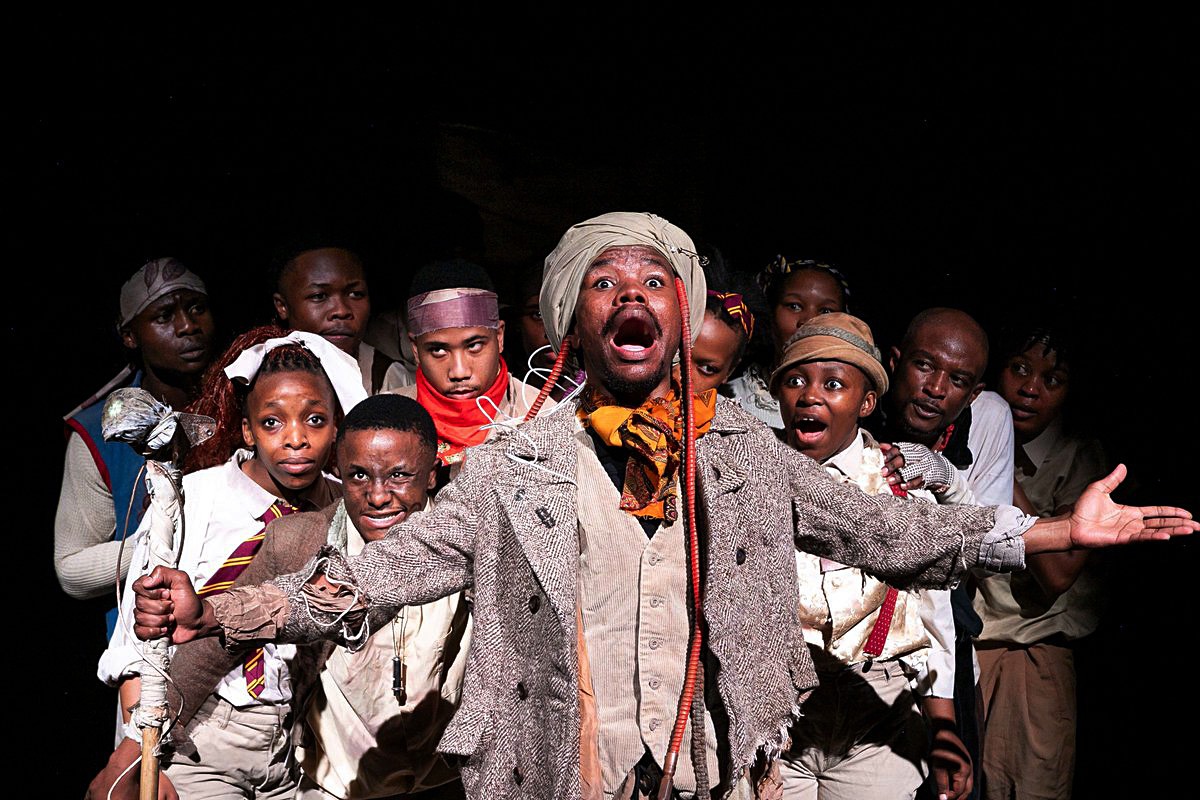
 Afropocalypse was a stand-out at NAF 2025. (Photo: Courtesy of the National Arts Festival)
 Last year, thanks to an invitation from one of the sponsors, I attended the National Arts Festival for the first time since the 1990s. My previous visit had been in a year of personal creative flourishing (compounded by the energy of relative youth); that year, I was involved in several productions, including a student show, a musical I’d written and a David Mamet two-hander.
Even with all that going on, I also saw plenty of shows and made time for after-midnight chats with my idols, often on the grimy, beer-stained carpet of that legendary hotel. The shenanigans were real, though the details are vague.
So much has changed since then. Mamet is now persona non grata, Grahamstown is now Makhanda, and it’s been almost three decades since I sang on stage (much to the relief of anyone unlucky enough to have heard it happen).
The festival itself has also gone through multiple iterations of change.
Profound change.
So much change in fact that, last year, I expected to arrive to a ghost town populated by out-of-pocket B&B owners, broke theatre-makers crying at the entrances of empty venues, miniature dust bowl twirling through the streets.
/file/attachments/orphans/DearMuseumTheTruthoftheMatteritSeemsEverythingWasBetterWhenWeWereNotTellingtheTruth_NationalArtsFestival_855976.jpg "Dear Museum! The Truth of the Matter it Seems Everything Was Better When We Were Not Telling the Truth. (Photo: Stefanie Loos)")
There’d been so much negative “news” about the state of the festival and so much moaning about the town itself that I was slightly nervous: what if it really was a let-down? There were the infamously potholed streets. The water situation. Power outages. Who spends good money on a holiday in a town with undrinkable water, unpredictable electricity and dangerously pockmarked roads?
But I was resolute. I even added several days to my official visit, because, well, FOMO.
And I’m so glad I did. Because, by day two, I felt right at home, as though I’d stepped into a place filled with the hopes and dreams of artists, aspiring young talents, unstoppably creative people, and lots of South Africans from all over the place who were eager to make things work.
Yes, there were a few deep dongas in the roads, but I also, one day, walked down African Street and felt my heart melt at the sight of a policewoman tenderly diverting traffic as a herd of cattle wandered down the road (they were, incidentally, on the correct side of the street). It was such a splendidly small-town Eastern Cape moment, the kind of thing that makes you yearn to spend more time in faraway places where the pace shifts down a notch or two.
Every morning I would run a few kilometres along the outskirts of town and was gripped each time by the bucolic views. And every day I discovered new tucked-away venues: cafés and food shops and galleries. And the hole-in-the-wall barber shop where a gentleman fresh from Pakistan gave me a trim.
It was charming and easygoing, and the locals were ridiculously friendly. And the artists who’d turned up all eagerly put on their bravest, happiest, most hopeful faces.
Certainly, you do need to be brave to take a show to Makhanda. The costs are very real and the audiences are highly theoretical.
What broke my heart a bit was that those longed-for audiences were in pretty short supply. Plenty of artists, loads of fantastic theatre and music, dance and art exhibitions… But audiences were scant. That’s not to say there weren’t sold-out shows and plenty of packed performances, but way too many excellent productions went underappreciated.
Ironically, I watched some of the most astonishing pieces of theatre in dismally half-empty venues. One international show, Magic Maids, was so incredible that I went back to see it the next day because it struck me while I was watching that I would never again have the opportunity to see anything like it.
The show, which interweaves ritual performance, pageantry and dance, and which ingeniously extrapolates the history of European witch-hunts in order to comment on the plight of contemporary domestic workers, has been touring the world’s art festivals for several years. It’s generated such acclaim that it is already sold out for its run at the Spring Performing Arts Festival in the Netherlands in May 2027!
But in Makhanda, the piecemeal size of the audience was pitiful; I was in fact embarrassed by the dearth of people who showed up to watch. Such a genius show that will never return to this country.
/file/attachments/orphans/MagicMaidswithEisaJocsonandVenuriPerera_NationalArtsFestival_834215.jpg "Magic Maids with Eisa Jocson and Venuri Perera. (Photo: Joerg Baumann)")
/file/attachments/orphans/TheCryofWinnieMandela_NationalArtsFestival_807321.jpg "The Cry of Winnie Mandela. (Photo: Courtesy of the National Arts Festival)")
There were plenty of moments that flipped that embarrassment on its head, though.
A scintillating production of Fugard’s Sizwe Banzi Is Dead played to a packed house the day I saw it. And when I looked around at the audience, it took my breath away. When I had last watched that play, sometime in the Nineties in what was then Grahamstown, the seats were almost certainly filled exclusively with white people.
Now, it was an audience that represented South Africa in every way.
And in queues outside some venues – at the start of the thrilling and mesmerising Daniel Buckland-directed fable-like science-fiction physical theatre show, Afropocalypse, for example – the mix of theatre-goers was a spectacle unto itself. We were a motley assortment of young and old, black and white, gender-diverse, tattooed, pierced and weirdly dressed drama students, bookish theatre lovers, festival virgins and long-suffering veterans. All of us together, gathered with a singular purpose.
Apart from the variety of people waiting to reach their seats, though, what blew me away even more was the diversity of homegrown creativity and the passion with which artists of every ilk showed up. Community groups, amateur theatre societies and independent producers had made the trek from every corner of the country to tell their stories.
Between the endless array of performances, I had long, wonderful conversations with theatre-makers of every ilk. Their complaints were all largely the same: the lack of audiences, worries about funding, rising costs of everything.
The other point of concern – and anger – was the blatant absence of national government involvement.
Though it is the National Arts Festival, there was not a single government minister in attendance.
Gayton McKenzie was bluntly chastised by Chester Missing and his human sidekick Conrad Koch, not only in a stirring, angrily worded social media post but during his excellent show, which was insanely funny, tremendously clever and packed with truths.
The point is that McKenzie would have done well to pitch up and discover that this national platform for human cultural endeavour is living proof that the arts matter. Nowhere else will you find such a diversity of voices and representation of South Africans from across the country telling so many different stories about what’s really on the minds (and in the hearts) of such a broad range of citizens.
But McKenzie has a fuzzy understanding of the relationship between the arts and the reality of the situation we humans find ourselves in. Certainly, if he’d taken a few days to sit in on some of the shows, he’d have heard first-hand from grassroots voices questioning the status quo, wondering when their water problems will be fixed or why corruption in their municipality persists.
And while there was theatre that expressed the heartache of real South Africans, there was plenty, too, that existed purely for the expressive beauty of it, or to make people laugh.
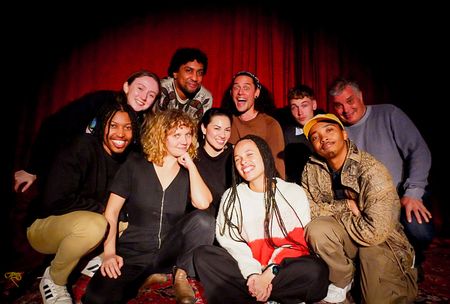
When I took time out from the highbrow stuff by listening to comedians in the stand-up comedy venue at the Graham Hotel, I often wanted to cry a bit amid the laughter – not because I was saddened, but because I was reminded that in those moments we were so many diverse people laughing together, sharing a common human emotional response to the same jokes.
And isn’t that what makes live entertainment such a powerful tool for showing us who we are?
/file/attachments/orphans/FAMEHUNGRYpresentedbyLouiseOrwin_NationalArtsFestival_175829.jpg "FAMEHUNGRY presented by Louise Orwin. (Photo: Courtesy of the National Arts Festival)")
The wonderful thing about artists is that they don’t moan and whinge and whine so much as they create work that attempts to express what’s in their hearts and in their souls. They grapple with the struggles and complaints of the nation as an act of catharsis, working through the shared heartaches and collective joy together with an audience.
That’s why the National Arts Festival is worth experiencing – again, or for the first time. And why, like last year, I anticipate days of full-scale binge-watching. It’s very different from bingeing on Netflix, though, because in a theatre you hear the sighs, the laughs and sobs of your fellow humans.
Last year, during dinner at the Long Table, a pop-up restaurant that’s a Festival institution, NAF press officer Sascha Polkey reminded me of the apartheid-era origins of the festival format, and why, traditionally, each show had a limited number of performances, always over no more than three days.
She said that, back in the days of censorship, there were cultural police who stalked our theatres and who would sit in on plays in case something untoward, anti-establishment or otherwise “undesirable” was shown.
If they noticed protest dialogue or themes that sounded like anti-government propaganda, they would fill out a form and then another inspector was required to attend the same show in order to determine if the show was to be banned.
What the clever festival organisers figured out is that it took those cops a couple of days to jump through all the bureaucratic hoops required if they wanted to shut down a show. At the National Arts Festival, by the time the second killjoy cop showed up, the show’s entire run was over, problem solved.
My God, how I loved hearing that story. It reminded me that theatre is powerful enough that it really can make the monsters in charge quiver in their boots. That’s why I’m returning to Makhanda this year: to listen and watch as humanity’s truths are spoken by voices from distant and nearby corners. DM
The National Arts Festival happens in Makhanda from 25 June through 5 July 2026.