




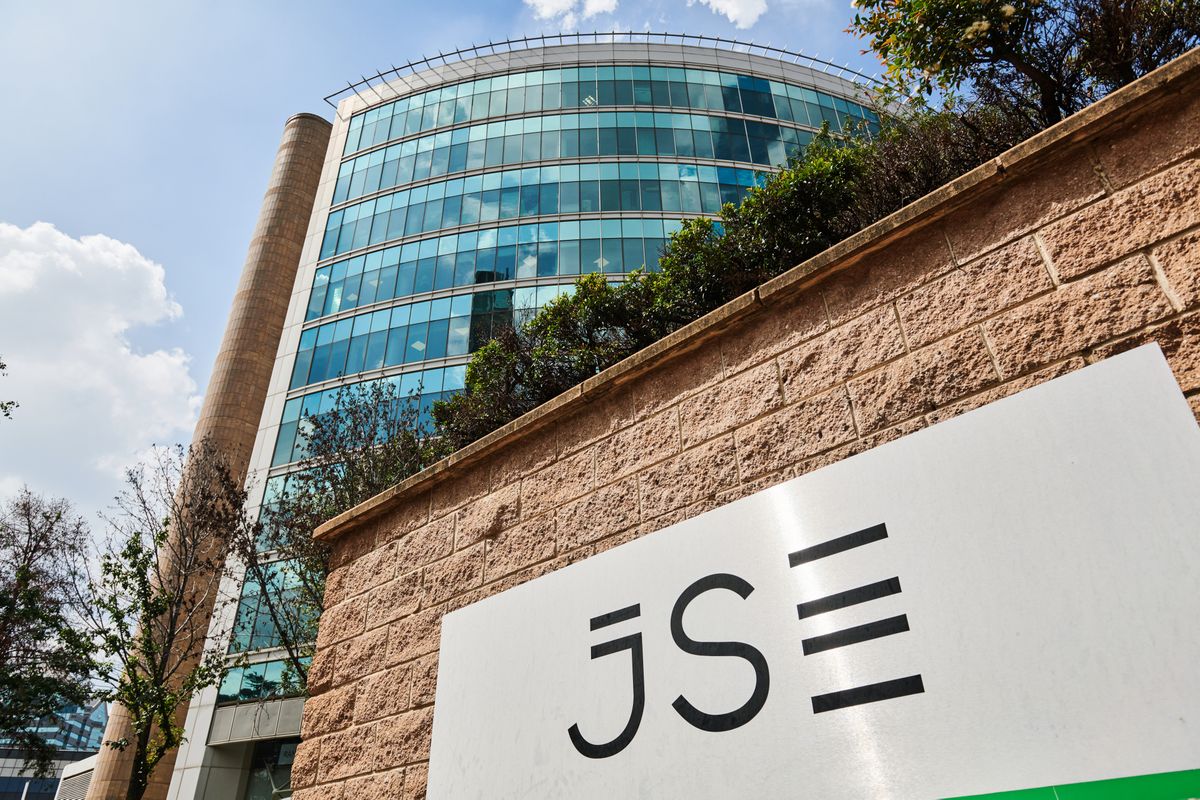
 The Johannesburg Stock Exchange. (Photo: Waldo Swiegers / Bloomberg via Getty Images)
The JSE’s latest enforcement bulletin shows that its issuer regulation division dealt with 150 investigations during the 2025 financial year. This included 43 investigations carried over from the previous year and 107 new investigations started in 2025.
By year-end, 106 investigations had been completed, while 44 were still ongoing. A further 19 matters were assessed at a pre-investigation stage and did not become formal investigations.
Not all investigations result in a finding of wrongdoing. But the number points to the volume of compliance issues crossing the regulator’s desk in a market where trust, disclosure and timely communication are supposed to be the network that keeps everything flowing.
/file/attachments/orphans/AndreVisserPortraits-33_563428.jpg "Andre Visser, JSE director of issuer regulation. (Photo: Supplied / JSE)")
The JSE’s director of issuer regulation, Andre Visser, told a media workshop this week that being listed is not a once-off compliance exercise.
“Once a company is listed, that’s not the end of the engagement,” Visser said. Listed companies have ongoing obligations, including through Sens (Stock Exchange News Service) announcements, “to make disclosures to the market to allow investors to make informed decisions”.
Enforcement powers
“Enforcement is very important for us,” Visser said. But he cautioned that the JSE’s powers were not open-ended. “The powers that we have are obviously derived from the Financial Markets Act, so very often there would be an expectation that we must do X, but our powers are limited in terms of what we can do.”
Where there is a breach of the listings requirements, the exchange can act. Its enforcement toolkit includes public and private censures, financial penalties, director disqualifications, suspensions and termination of listings.
“If it’s a breach of the listings requirements, we can take enforcement action,” Visser said.
Public censures are the most visible form of that action, and the one companies and directors are most likely to want to avoid.
“Public censures [are] obviously the one that companies and directors try and avoid at all costs,” Visser said.
The JSE can also impose financial penalties, although these are capped.
“We can’t impose penalties exceeding R7.5-million,” Visser said, adding that the cap comes from the Financial Markets Act.
In more serious cases, it can move against directors.
“Disqualification of directors [is a] very powerful tool that we’ve got,” he said. “We obviously only exercise that now in exceptional cases.”
The exchange may decide that a director’s conduct is serious enough to warrant disqualification from being a director of a listed company for a period of time. It can also suspend or terminate a company’s listing if the conduct is serious enough, including where a company refuses to provide disclosure to the market or fails for a prolonged period to produce financial statements.
Types of breaches
The JSE’s 2025 enforcement bulletin gives some colour to the types of breaches it is seeing. Public censures during the year included late disclosure of a material settlement agreement, implementation of a Category 1 transaction without shareholder approval, and the misrepresentation of a director’s qualifications.
The exchange also recorded suspended censures, private censures and referrals to other regulators. In some cases, the issue was less about actual fraud and more about weak controls: late announcements, sponsor failures, director dealings, delayed disclosure of auditor resignations, or Sens announcements that did not meet the requirements.
However, these breaches, while not as serious as fraud, can be just as harmful. The market runs on equal access to information, so a late or unclear announcement can leave investors making poor decisions based on limited information.
The bulletin flags directors’ dealings as a recurring area of non-compliance, including late announcements, failure to obtain clearance before dealing, lack of awareness of closed periods and inadequate understanding of obligations around share awards and disposals. It also highlights late Sens announcements, weak sponsor gatekeeping, problems around the appointment of audit firms, trading statements published too close to results and delays by secondary-listed issuers in publishing information on Sens.
Visser said the JSE now publishes an annual enforcement bulletin to show more than just the public cases.
“You’ll only see the details of the public censures. We’ll see names,” he said. But where there are financial penalties or private censures, the bulletin gives “a sense of what the theme was, what the breach was”, without naming the company.
Some matters are resolved through regulatory engagement, private censures, suspended censures, guidance and remedial action.
The JSE’s legal and regulatory team have also made it clear that there are statutory limits on what it can say publicly, particularly where matters are confidential or where another regulator, such as the Financial Sector Conduct Authority, must investigate.
In some cases, the JSE Investigations Unit referred certain matters to other regulatory authorities where issues identified during the investigations either fell outside the JSE’s enforcement mandate or overlapped with the regulatory mandates of other authorities.
These included referrals to:
- The Financial Sector Conduct Authority in relation to potential contraventions of the Financial Markets Act, including concerns relating to misleading disclosures, possible insider trading and the dissemination of price-sensitive information;
- The Independent Regulatory Board for Auditors, where matters raised questions regarding the appropriateness of audit opinions and compliance with applicable auditing and financial reporting standards;
- The Companies and Intellectual Property Commission, where complaints involved alleged non-compliance with the Companies Act arising from court proceedings or governance-related findings; and
- The Takeover Regulation Panel, where matters related to affected transactions, including the exercise of appraisal rights under section 164 of the Companies Act.
The delistings issue
/file/attachments/orphans/ValdeneReddy1_811937.jpg "Valdene Reddy, CEO of the JSE. (Photo: Supplied / JSE)")
At the beginning of June, Valdene Reddy, group CEO of the JSE, indicated that Canal+’s secondary listing on the exchange brought the total number of companies listed on the JSE to 263, with a combined market capitalisation exceeding R25.2-trillion.
However, in March this year, a study by Prof Haroon Bhorat, director of the Development Policy Research Unit at the University of Cape Town, commissioned by the Association for Savings and Investment South Africa, showed that the JSE had consistently experienced negative net listing rates over the past three decades, with more firms delisting than new firms listing.
The exchange’s broader challenge is therefore twofold. It must make listing easier and cheaper where the rules have become unnecessarily burdensome. But it must also convince investors that easier listing requirements do not mean softer regulation, and that enforcement still has teeth.
Visser said the JSE had undertaken the most significant reforms to the Listings Requirements in about 20 years, including cutting the rule book down by about half through a simplification project and introducing market segmentation to make rules more appropriate for smaller companies.
That may help with the listings problem, but the enforcement numbers show a different pressure point.
A market loses confidence when those that remain fail to disclose properly, act late, misstate information or treat compliance as paperwork rather than investor protection. DM
Comments
Scroll down to load comments...