




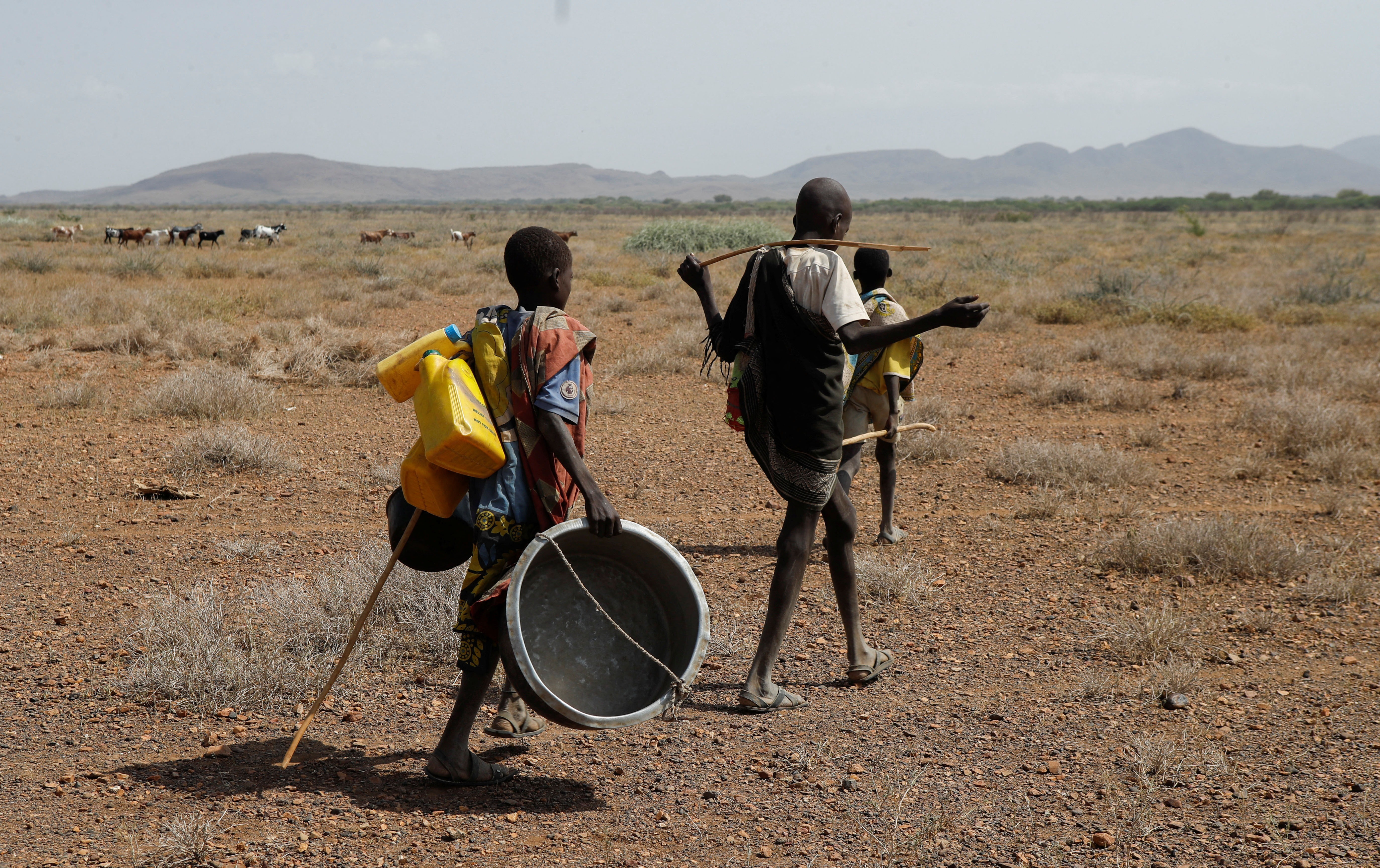
 The UN launches a historic El Niño ‘anticipatory appeal’ seeking $202-million to prep 22 high-risk countries for potential impacts. (BM-Ed-ElNino/UN)
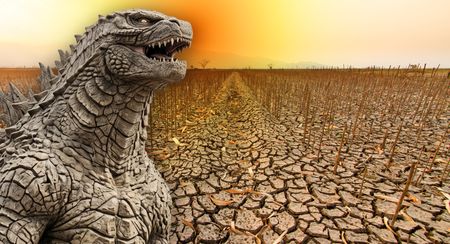
The UN’s World Food Programme and Food and Agriculture Organisation have launched an unprecedented appeal for donations to prepare in advance for the consequences expected to arise if the current El Niño strengthens alarmingly into a “Godzilla” event.
“This joint appeal marks a shift from reacting to crises to financing action before they happen on an unprecedented scale,” the agencies said in a statement.
The first ever “Joint Anticipatory Action Appeal” aims to secure “$202-million to protect nearly nine million people from the potential impact of a strong El Niño weather pattern across 22 high-risk priority countries”.
The appeal speaks to the fact that this has been the most anticipated El Niño event in history against the backdrop of improved forecasts that increasingly see it becoming one of the most intense ever, and growing awareness about its impacts.
In southern Africa, El Niño usually heralds drought, while elsewhere its impact includes torrential rains in East Africa.
Two weeks ago the Japanese Meteorological Agency was the first major global forecaster to call the onset of El Niño, triggered by a warming of surface sea temperatures in the tropical Pacific.
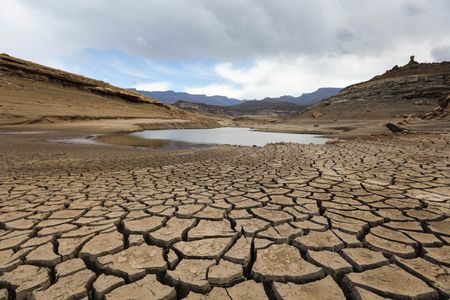
The US National Oceanic and Atmospheric Administration (Noaa) has since confirmed that finding, and significantly raised the prospects of it becoming “very strong” from 30% in its initial forecasts to 63%.
“Noaa declares an El Niño has formed when temperatures in the equatorial Pacific are 0.5°C above average for several consecutive months,” the agency said.
“Forecasters predict a 63% chance of sea surface temperatures exceeding 2.0°C in the Nino-monitored region of the Pacific. If this threshold is surpassed, Noaa considers the event a ‘very strong’ El Niño.”
Forecasting models on this front have also advanced significantly – the National Oceanic and Atmospheric Administration is one arm of the US government that has not been put through the wood chipper under Trump 2.0 – providing the agency with enhanced confidence regarding its predictions.
In February this year, the agency adopted a new tool – the Relative Oceanic Nino Index – for forecasting El Niño and La Niña events. The previous index used a static 30-year period to assess variants from average ocean temperatures, while Roni evolves and recalculates from month to month.
So when the National Oceanic and Atmospheric Administration says there is a 63% chance of a very strong El Niño, it ain’t no thumb suck.
Improved monitoring and forecasting in turn enables readiness – and the UN’s appeal in anticipation of potential catastrophe fits this mould.
“We cannot afford the fallout of another food crisis,” said World Food Programme Acting Executive Director Carl Skau. “With El Niño on the horizon, we have a narrow window to act so families are not forced into impossible choices later.
“With the right resources, we can act faster, reduce costs, and reach people before the crisis escalates.”
“We now have the tools to anticipate these events; what matters is how we act with that knowledge. Early action keeps food on the table and protects those at most risk. With the right resources, we can act faster, reduce costs, and reach people before the crisis escalates.”
Among the 22 countries targeted in the appeal, three are in the southern African region: Malawi, Mozambique and Zimbabwe. At a time when violent xenophobia is once again menacing South Africa’s fraught social landscape, one potential fallout from El Niño could be a renewed surge in migrants from these countries.
SA at least is seen as food secure before any drought that El Niño may unleash in the summer rainfall regions.
The latest estimate from the government’s Crop Estimates Committee is that SA’s maize production for 2025/26 will be a record 17.1 million tonnes. This includes 9.2 million tonnes of the staple white maize that effectively feeds Mzansi.
SA’s annual maize consumption is about 12 million tonnes, so there should be ample carry-over stocks in the event of a stunted harvest next year – with some additional stocks to export to neighbouring countries if they experience shortages.
One way to prepare for El Niño is to have a commercial farming sector that utilises the latest technology to boost yields and get more grain from rain.
Social assistance
But the South African government may find that it needs to boost social assistance if El Niño-triggered droughts drive maize prices and overall food inflation significantly higher, and poor households experience increased hunger as a result.
Its ability to do so is hampered by its limited fiscal space and budget pressures as it strives to stabilise and reduce SA’s mounting debt burden. The spectre and costs of State Capture continue to haunt the economy.
The UN appeal also comes in the face of evaporating funds for such efforts. Donor fatigue is pronounced and aid budgets among wealthy countries, notably but not exclusively in the US, have been slashed.
The UN’s food and farm agencies may want to get ahead of the curve on this El Niño. But they may not get the funding they need to address the challenge in advance. DM


Comments
Scroll down to load comments...