



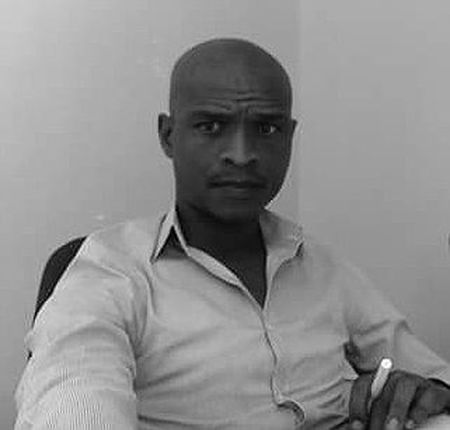
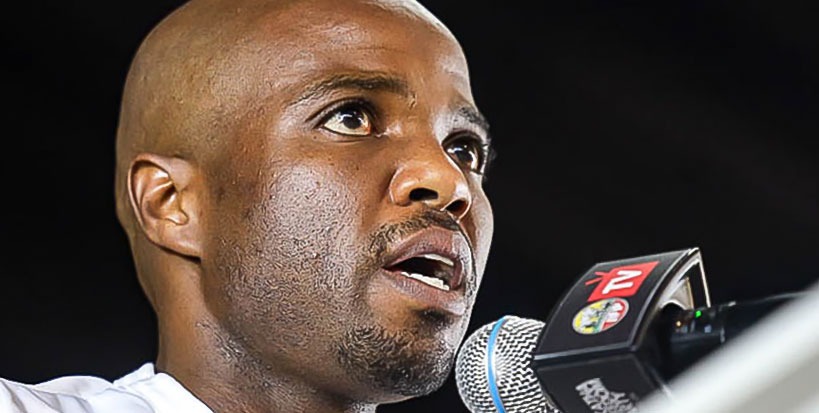
 Mlungisi Mabaso, the Inkatha Freedom Party‘s mayoral candidate for the City of Johannesburg. (Photo: Gallo Images / Sharon Seretlo)
/file/attachments/orphans/Election2026LogoInarticle_260133.jpg)
Question: How long would it take you to get Joburg back on its feet?
Answer: You do not repair years of institutional decline overnight, but what leadership can do immediately is restore direction, discipline and confidence in government.
Within the first 100 days, residents must begin to see visible interventions:
- Improved law enforcement visibility;
- Faster response to service delivery complaints;
- Infrastructure repair teams on the ground;
- Cleaner public spaces; and
- Stronger accountability from departments.
The rescue of Johannesburg must be driven by three non-negotiable principles: jobs, order and dignity.
The 10-Point Rescue Plan presented by the [IFP] is designed not merely to stabilise the city, but to rebuild Johannesburg into a clean, safe, functioning and economically productive metropolitan government.
Q: There were at least a million power interruptions over the past three quarters. What is your energy plan?
The energy crisis facing Johannesburg is both an infrastructure crisis and a governance crisis. Years of poor maintenance, cable theft, illegal connections and the weakening of internal technical capacity have left communities vulnerable.
The approach we are advancing is practical, interventionist and infrastructure-led.
The plan includes:
- Protecting critical infrastructure from sabotage and vandalism;
- Establishing rapid-response technical teams;
- Rebuilding internal engineering and maintenance capacity;
- Expanding electrification to informal settlements;
- Investing in alternative energy solutions such as solar and microgrids; and
- Restoring and expanding gas infrastructure where viable.
A municipality cannot continuously outsource its competence. A capable city requires engineers, artisans and maintenance teams at the centre of service delivery. A globally competitive African city cannot function under constant infrastructure instability.
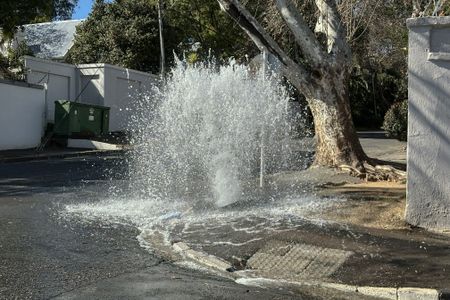
Q: The JoJo tank is one of the most important assets citizens are buying or hiring. What is your water plan?
A: The fact that residents now consider water tanks a household necessity is itself an indictment of governance failures. Reliable water is not a luxury; it is a constitutional obligation.
The response to the water crisis must focus on infrastructure renewal and maintenance by:
- Replacing ageing water and sewer infrastructure;
- Reducing water leaks and non-revenue water losses;
- Establishing dedicated rapid-response repair teams;
- Strengthening preventative maintenance; and
- Rebuilding municipal engineering capacity.
Johannesburg loses enormous amounts of treated water through leaks, vandalism and infrastructure neglect. Addressing those failures alone would significantly improve water stability in communities. Residents should not have to permanently live preparing for the next outage.
/file/attachments/orphans/VISIT3_861362.jpg "Johannesburg Housing MMC and IFP mayoral candidate Mlungisi Mabaso in Cleveland, east of Johannesburg, after the mass shooting on Tuesday, 9 June 2026, that claimed 13 lives. (Photo: Leon Sadiki)")
Q: Where do you live and what is your favourite park in Joburg?
A: I live in the south of Johannesburg, although at this point I suspect I spend more time in meetings, airports and political programmes than I do at home.
When I first arrived in Johannesburg during my schooling years, I lived at Jabulani Hostel, and to this day, I remain a branch member there. So in many ways, my relationship with Johannesburg was not introduced through boardrooms or political offices, but through the everyday realities experienced by ordinary residents.
The south of Johannesburg teaches you many things, including survival, resilience and occasionally how to identify a pothole well enough to dodge it without reducing speed. It also teaches you that politics means very little if it does not improve the lived reality of communities.
As for parks, Johannesburg has many beautiful public spaces, but what matters most to me is ensuring all parks become safe, clean and functional again for ordinary residents, particularly children, families and elderly citizens in historically neglected communities. The condition of public spaces reflects the dignity of a city.
Q: What is a weekend in the city like for you?
A: As national secretary of the IFP Youth Brigade, weekends are almost non-existent.
A “weekend” usually means travelling across provinces, engaging branches and structures, political programmes, youth meetings, strategy sessions, community work, and occasionally trying to remind family members that you still live at home.
There is very little glamour attached to political work when done seriously. But public service requires sacrifice, discipline and availability. Politics cannot only exist from Monday to Friday.
At the centre of it all is the belief that government must work for ordinary people again. That is what continues to drive this mission to restore Johannesburg into a city that is safe, functional, economically vibrant and dignified for all its residents. DM
Comments
Scroll down to load comments...