




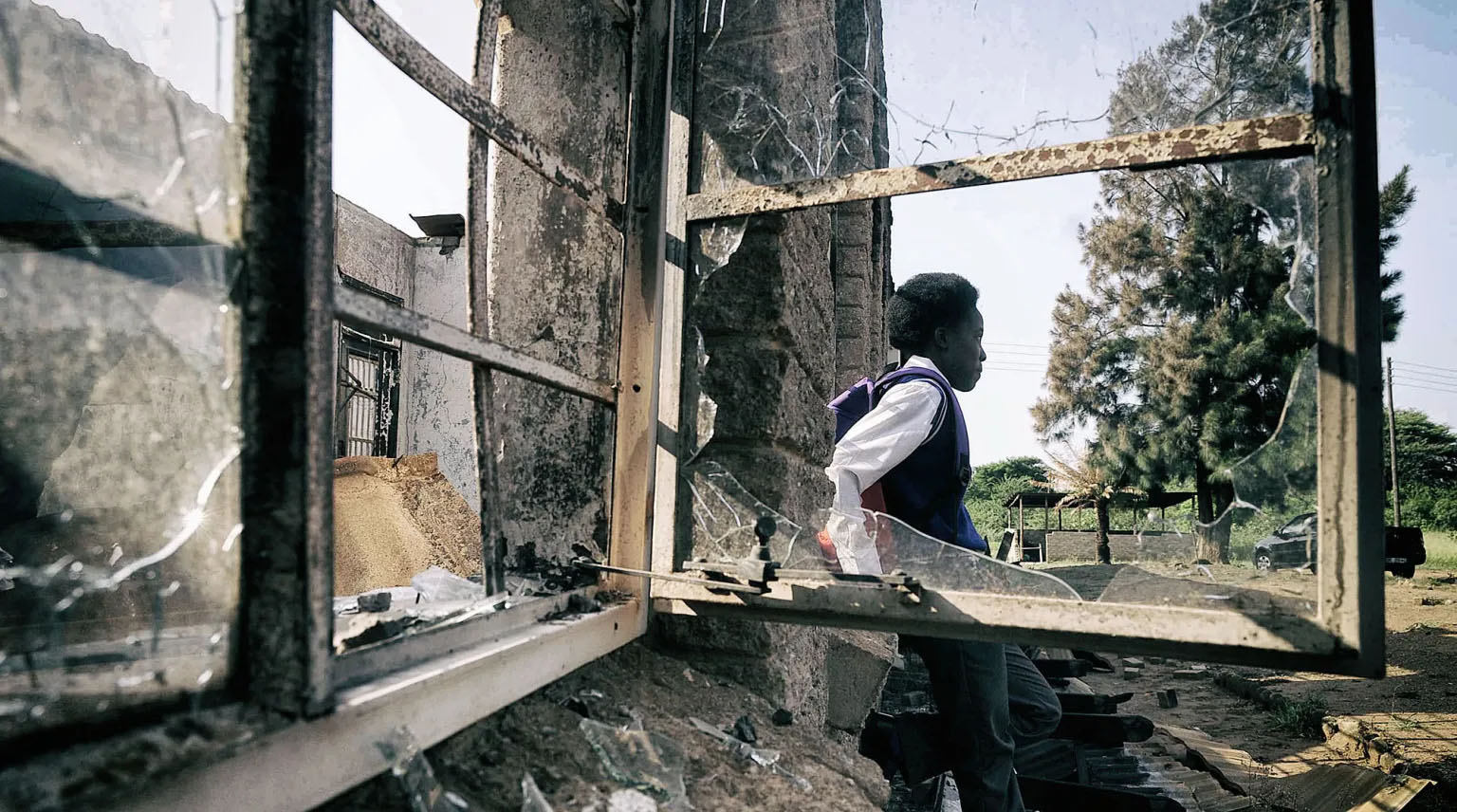
 While South Africa has improved access to education since the 1976 Soweto Uprising, systemic inequalities remain pervasive for today’s young people. (Photo: Gallo Images / Sowetan / Thulani Mbele)
On the morning of 16 June 1976, thousands of pupils in Soweto laced up their shoes and walked towards a confrontation that they did not fully understand would define a nation. They were not soldiers, they were students carrying books, not weapons, furious that a government had decided that their minds were best shaped in a language designed to keep them at the bottom. When police opened fire, 12-year-old Hector Pieterson fell. A photograph froze that moment forever. And a country, however slowly, began to break. The death of Hector became a symbol of the apartheid regime’s brutality.
The Bantu Education Act of 1953 enforced racial segregation and deliberately provided inferior schooling for Black South Africans, engineered not merely for inequality but for subjugation. Black children were to be schooled just enough to serve, never enough to lead.
In 1974, the Department of Bantu Education mandated Afrikaans as a compulsory medium of instruction in Black schools. Teachers, parents and students opposed the policy through complaints and exemption requests but without success. By 1976 it was fully imposed. In response, on 16 June 1976, thousands of students from schools across Soweto organised a peaceful protest against the apartheid government’s language policy. The march was meant to conclude at a rally at Orlando Stadium, but before reaching their destination the students were met with a heavily armed police force that responded with teargas and live ammunition. June 16 marked a turning point for the apartheid government. The aftermath caused unrest and widespread rioting across South Africa, strengthened anti-apartheid movements and led to international condemnation and sanctions, which contributed to the pressure for change.
What we got right
Following the 1976 uprising, the right to basic education is now enshrined as a fundamental right in terms of section 29 of the Constitution, ensuring that no child may be denied this right because of race or background. The fragmented and racially segregated departments of education have been unified into a single national system. The national matric pass rate has continued to increase steadily, intergenerational illiteracy has dropped to under 3.2%, about 66% of pupils attend no-fee schools. The national school nutrition programme ensures daily meals for more than nine million pupils. The Department of Basic Education has pushed for mother-tongue bilingual education to help foundation-phase pupils learn better in the languages they speak at home.
Civil society organisations like SECTION27 have won important legal and policy battles, securing improvements in school infrastructure, such as the eradication of pit latrines, ensuring the provision of learning and teaching material in Limpopo, and successfully challenged the Copyright Act for its unconstitutionality to the extent that it prevented visually impaired persons from converting materials into accessible formats. These are not small victories in a country still wrestling with the remnants of apartheid while seeking to provide quality education to all pupils. We should acknowledge them clearly.
However, acknowledgement is not the same as satisfaction, and this is where honesty becomes uncomfortable. Fifty years later when we commemorate the sacrifice made by the youth for challenging an unequal education system, has much changed? While students today no longer live under apartheid laws, many continue to face systemic barriers. Fifty years later, we sit with the question: did we deliver on the promise?
Barriers confronting young people today
Students and pupils face systemic barriers that are rooted in the legacy of structural inequality. These barriers include low early literacy rates, unequal access to quality schools, overcrowded classrooms, inadequate infrastructure, lack of access to water and adequate sanitation facilities, and significant disparities between rural and urban schools. There has also been an increase in unsafe schooling environments as pupils face bullying, sexual violence and abuse while attending school. Socioeconomic issues such as poverty, lack of reliable transport and food insecurity further hinder pupils’ ability to perform well and attend school. In communities where schools are severely overcrowded, underresourced and struggling to meet pupils’ basic needs, migration is often wrongly framed as the cause of these challenges rather than a reflection of broader systemic failures.
The true test of the democratic promise made after 1976 is not whether education has become more accessible for some, but whether it can provide dignity, opportunity and inclusion for all children who walk through the school gates.
While South Africa has made significant strides in expanding access to education since 1976, many of the inequalities that motivated the Soweto Uprising continue to affect young people today. As South Africa reflects on 50 years since the uprising, it is evident that the struggle has evolved rather than ended.
The children of 1976 sacrificed their lives so that education could be a ladder, not a cage. Fifty years later, the ladder exists but for too many young South Africans, it’s missing rungs. Honouring them is not lighting candles at the Hector Pieterson memorial. It is demanding that a child in a rural school in Musina or Mitchells Plain gets the same fighting chance as one in Sandton.
The tension is not a reason for guilt. It is the work. Fifty years after the class of ‘76 changed the course of this country with nothing but their conviction, the least we owe them is the honesty to look at what remains undone and resolve to do it – to finish what was started. DM
Teri Brown and Faatima Laher are legal researchers at SECTION27.
Comments
Scroll down to load comments...