



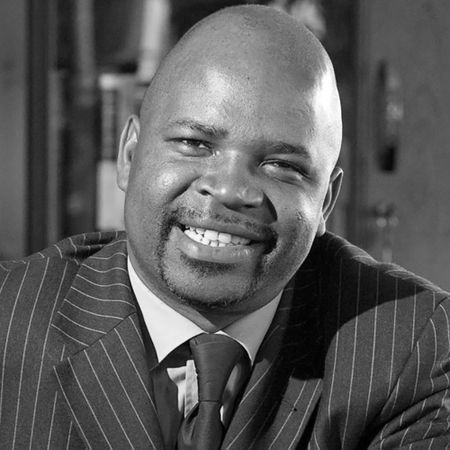
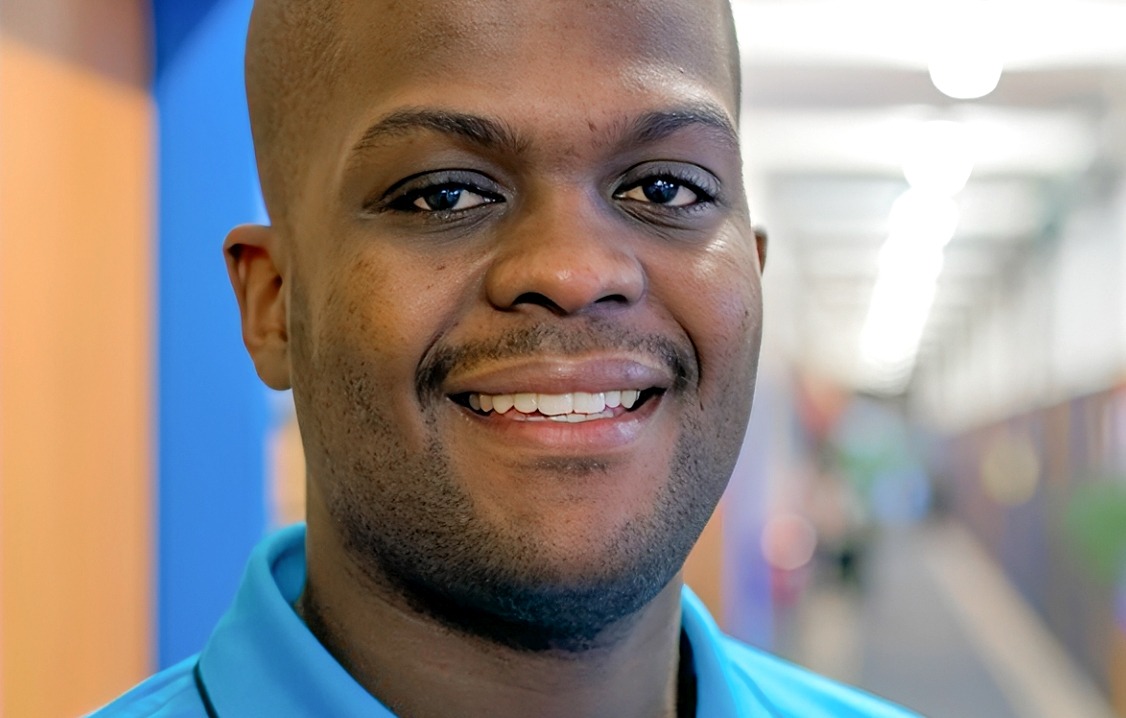
 Professor Vukosi Marivate. (Photo: Wikipedia)
 Fifty years ago, in 1976, when the youth of Soweto exploded in protest against Bantu education and white oppression, Vukosi Marivate was not yet born. However, in many ways Vukosi is the embodiment and the fulfilment of the ideals and the dreams for which the children of Soweto struggled.
In the morning of 19 May 2026, President Cyril Ramaphosa adorned 40-year old Vukosi Marivate, born and bred in Garankuwa, with the National Order of Mapungubwe in Silver. For “his excellent contributions to data science, artificial intelligence (AI), and natural language processing that have significantly advanced both national and continental technological capabilities”, said the commendation from the Presidency.
At that very moment, there is no doubt in my mind that Vukosi’s late grandfather, Dr Charles Daniel Marivate, a famous medical doctor, who served the people of Garankuwa, Mabopane, Winterveldt in Gauteng and Valdezia in rural Limpopo, was dancing in the sky. Similarly, his late great-grandfather – exceptional pedagogue, pioneering author, newspaper founder and musical virtuoso – the Reverend Dr Daniel Cornel Marivate – was smiling down upon Vukosi from the blue African skies up above.
Armed with a PhD in computer science, focused on reinforcement learning (a subfield of machine learning/artificial intelligence) from Rutgers University, an executive leadership certificate from Harvard Business School, a master of science in electrical engineering, Marivate has one of the most decorated CVs among his peers. Equally impressive is the calibre of institutions he has worked for – from Google to Rutgers University to the Council for Scientific and Industrial Research and now the University of Pretoria.
Earlier this year, the UN secretary-general named Marivate a member of an independent scientific panel of experts on AI. More recently, Marivate was included in an advisory panel consisting of top South African AI experts to whom Minister of Communications and Digital Technologies Solly Malatsi has given the task of redrafting the country’s AI policy after a false start.
There is nothing fortuitous about Marivate’s meteoric rise in stature. He is a prolific researcher of tremendous rigour and influence, nationally, continentally and globally.
On 13 August 2019, at the University of Pretoria (UP), I was in the audience as Marivate’s lanky frame towered over us, a small, hand-picked audience of fellow AI experts, innovators, engineers, linguists, deans and members of university management. Midway into his brilliant lecture aimed at demystifying AI, machine learning and natural language processing, it dawned on me that we were in the presence of an extraordinary mind.
On 26 August 2025, I was once again in the audience when Marivate delivered his professorial inaugural address, “Beyond the symbols: Natural language processing as an adaptive problem”. So was Thembekile, an engineer, whom he married in 2010. His parents, Dr Vongani Marivate and Dr Mpolokeng Molamu – both medical practitioners – were in the front row, smiling from ear to ear.
Marivate advises against using the term “4IR” as a vague catch-all phrase or buzzword. Despite his tenure as a World Economic Forum Young Global Leader, he remains sceptical of a cyclical pattern where leadership returns from Davos each January introducing new terminology that society is expected to adopt without clear definition. Instead, he argues for a more substantive focus, calling for a deeper, more grounded understanding of how AI is actively reshaping both our present and our future.
Every time I listen to Marivate, whether on a public platform or across the table over coffee, as we did a few days after his National Order award, I am always struck by his crystal-clear vision for the insertion of African places, faces and stories into the global digital space. “If we spent 1% of the time we spend watching TV or listening to music, editing Wikipedia instead, we would greatly increase collective knowledge/data/memory about ourselves in the digital space” he said in his 2019 lecture at UP.
What irks Marivate is the paucity of data on and knowledge about, for example, the black townships. His somewhat harsh but well-reasoned verdict is that “computation and society are so intertwined that soon, if not true already, if something does not exist on the internet, it might as well not exist in reality”. His view is that “if we don’t find ways to digitalise and if we don’t find ways to get machines to understand and learn patterns from data about us”, we as Africans may become “obsolete”. Marivate further suggests that the main challenge that lies ahead is for all Africans to take responsibility and agency in shaping AI – because African knowledge counts as much as all other knowledges.
Drawing on the perspective shared in his Rutgers PhD thesis, Marivate aligns with thinkers like Mo Gawdat in viewing agentic machines much like children, placing a shared responsibility on both experts and society to teach and nurture them. For Marivate, this nurturing rests on three critical foundations: first, the creation and accessibility of local datasets; second, the development of algorithms specifically tailored to ingest data from our local contexts; and finally, the deployment and use of these locally developed systems within our own communities to drive scientific predictions and real-world impact.
It is precisely the lack or inaccessibility of digital data in African languages that keeps Marivate awake at night. This challenge led him, together with his international colleagues such as Shakir Mohammed, Ulirich Patel, Benjamin Rosman and Nyaleng Moorosi, to start African AI movements such as the Deep Learning Indaba, which is now spread across 47 African countries and leveraging the support of more than 50 tech and peer partners from various sectors as well as Masakhane.
In this way Marivate is an activist-researcher, conscious of the need for Africa to write itself so well into the internet until it feels natural for Africans to be on the internet.
It is remarkable that while both his great-grandfather, Rev DC Marivate, and his grandfather’s brother, Professor CTD Marivate, were pioneering linguists and celebrated authors, the AI specialist Vukosi Marivate returns to the subject of African languages but comes at it from a totally different angel: the AI point of view.
Whereas some AI experts are satisfied and in awe of AI’s ability to learn, speak and interpret, in real time between European, Arabic and Asian languages, with some hailing it as a sign that AI has ultimately solved the problem of the language divide between humans, for Marivate, until AI is taught and learns to becomes fluent in African languages and knowledges, it is not yet Uhuru.
Just before we ended our coffee session in May 2026, I asked Marivate to paint the ideal future of AI in Africa, should his efforts succeed in growing and embedding African data – languages, stories, places and people on the internet. He wouldn’t be drawn. “I can’t even adequately imagine the future because I think it will be so advanced, it’s beyond how I can think about the future right now.”
He then recalled a day he spent in Nairobi, Westlands, Kenya where he met young AI students and innovators bursting with brilliant ideas, and he asked himself, rhetorically: “How do I enable them, to be themselves, and do the things they do, and enable the world to notice their brilliance and afford them the resources they need to build the [digital] Africa that we need?”
And just as we were bidding farewell to each other, Marivate said to me: “I am not the greatest, for if I am the greatest, then I have failed as a scholar and teacher… my ideal is to do the best I can to teach, to learn and to innovate; and thereafter to be forgotten… because there will be so much more greatness that is still coming.” DM
Professor Tinyiko Maluleke is the principal of the Tshwane University of Technology and professor extraordinarius at Unisa.