




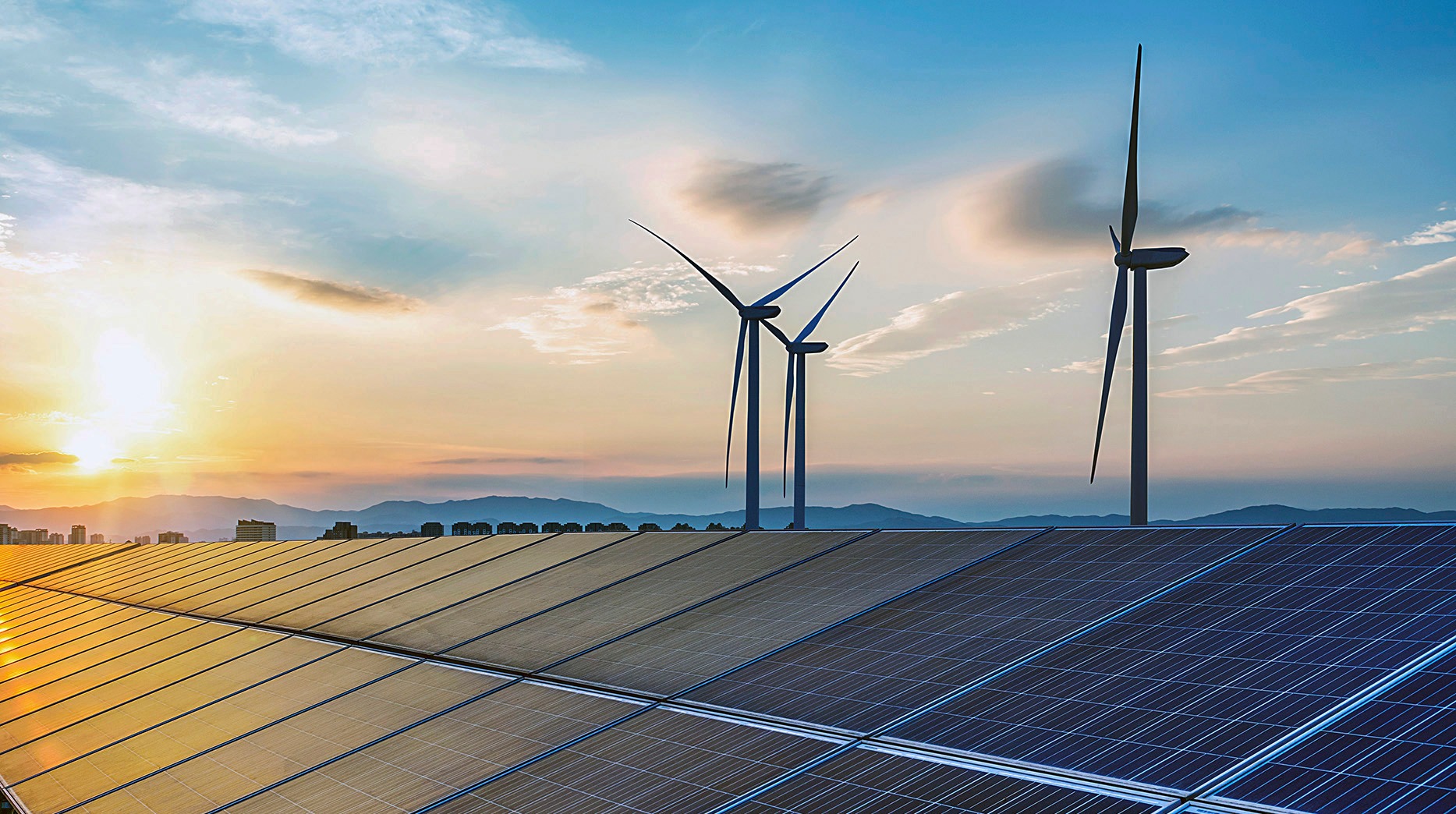
 South Africa’s renewable energy buildout offers a useful example of what can happen once rules, capacity and confidence align, according to Andrew Herscowitz, chief executive of the Mission 300 Accelerator. (Photo: iStock)
Mission 300, launched in 2024, is being backed by the Rockefeller Foundation, the Global Energy Alliance for People and Planet and Sustainable Energy for All. It is intended to tackle one of Africa’s most stubborn development failures: the fact that about 600 million people, almost half the continent’s population, still live without access to electricity.
These are big numbers, but the more important issue currently is pace. Mission 300 is now delivering electricity access at almost double the rate recorded when it was launched.
Andrew Herscowitz, chief executive of the Mission 300 Accelerator, says the 50 million figure is not based on projects reaching financial close or money being allocated, but the number of people actually now able to access electricity directly.
“The goal is for it to be actual lights on by 2030,” he says. “Those 50 million are people who have flipped the switch.”
The World Bank has front-loaded concessional financing from the International Development Association, while governments have been pushed to move faster on existing project pipelines. In Tanzania, 7.5 million people have gained access to electricity under Mission 300, which is a fivefold increase on the country’s previous annual pace of electrification. In Ethiopia, 4.6 million people have been connected, supported by reforms that made grid connections more affordable.
The World Bank Group and the African Development Bank Group have committed nearly $15-billion in financing and attracted about $4.5-billion in co-financing for Mission 300-related projects. Other development partners have pledged more than $7-billion in support of Africa’s energy sector.
Woochong Um, CEO of the Global Energy Alliance for People and Planet, says the early results show that Africa’s energy access problem is not primarily about technology.
“It is a financing, delivery and partnership challenge. Connecting more than 50 million people through Mission 300 shows that when governments, development finance institutions, philanthropies and the private sector align behind a common goal, progress can happen much faster and at much greater scale than many thought possible,” he says.
This is what Mission 300’s backers describe as a new way of doing business. Instead of banks, governments, donors and private companies working alongside one another in parallel lanes, the initiative is trying to force a single delivery machine into life.
The grease and the glue
Herscowitz describes the Accelerator, housed within the Rockefeller Foundation, as “the grease and the glue” for Mission 300. Its role is to unblock projects, fund technical assistance quickly, support government delivery units and help countries learn from one another.
It is not unusual on the African continent to find that projects can delayed by practical bottlenecks such as an outstanding study, limited capacity in government, slow paperwork or poor coordination between energy and finance ministries.
Mission 300 is trying to close those gaps by helping countries set up delivery units that include officials from energy and finance ministries and report into heads of state. Herscowitz says 110 officials from 35 African countries were recently brought together in Nairobi for working sessions (not a conference, as he pointedly noted), to discuss issues such as clean cooking, VAT exemptions and energy reforms.
By January last year, 48 countries had endorsed the Dar es Salaam Energy Declaration. To date, 30 countries have launched National Energy Compacts, setting out plans to strengthen energy systems, expand affordable power generation, scale renewable energy, improve regional integration and bring in more private investment.
The next frontier
The financing task remains enormous. “Transmission is going to be the next frontier of where you really need public capital… our hope is that we’ll be able to get to, in a few years, with transmission infrastructure where we are with power generation infrastructure,” Herscowitz says. His hope is that, over time, transmission can follow the path of independent power producers, where the model becomes easier to replicate once the first projects get over the line.
South Africa’s own experience is relevant here, he adds. Once reforms allowed more commercial and industrial energy investment, private projects moved quickly. Herscowitz says the country’s renewable energy buildout offers a useful example of what can happen once rules, capacity and confidence align.
Regional connectivity between SADC nations
Unlike other countries on the continent, South Africa is not primarily an electricity access story. With electrification of about 94%, it is in a far better position than many other sub-Saharan African countries. Its energy challenge is reliability, affordability, transmission, storage and the need to balance the shift to cleaner energy with jobs and industrial policy.
South Africa also has a regional role. Mission 300 sees regional power trading as one of its core pillars, and South Africa could both export and import power through the Southern African Power Pool. Cheap solar power from Botswana or Namibia, gas from Mozambique and hydropower from Zambia and Zimbabwe could help create a more balanced regional energy system.
The harder question is how to bring in private capital without pretending that private money alone will electrify Africa. Herscowitz says there is “no choice” but to bring in private investment, because that is where much of the available capital sits. But political will, weak coordination across ministries, human resource shortages and currency risk remain major constraints.
Off-grid power is another test. Nigeria has connected more than 4.5 million people through private sector-led initiatives, but Herscowitz cautions that off-grid models still need public support. Many un-electrified households cannot afford even a small solar home system. The answer lies partly in reducing the cost of access, partly in raising incomes, and partly in using electricity for productive purposes.
Um says electricity becomes powerful only when people can turn it into income.
“When a farmer can refrigerate produce, a manufacturer can expand production or a young entrepreneur can start a digital business, electricity becomes an economic asset and a catalyst for job creation,” he says.
In other words, success in 2030 would mean reliable and affordable power that supports businesses, clinics, schools, farms and households. It would also mean less dependence on diesel and more room for young people to build livelihoods.
The risks are real. Foreign assistance budgets are shrinking, many African governments are debt-constrained and electrification requires low-cost finance and some subsidy. Herscowitz says the idea that rural electrification can be done at commercial rates is unrealistic.
The first 50 million connections have proven that Mission 300 can shift from pledges to power. The question is whether it can keep up that pace with enough funding, skills and political will to reach the 2030 finish line. DM
Comments
Scroll down to load comments...