




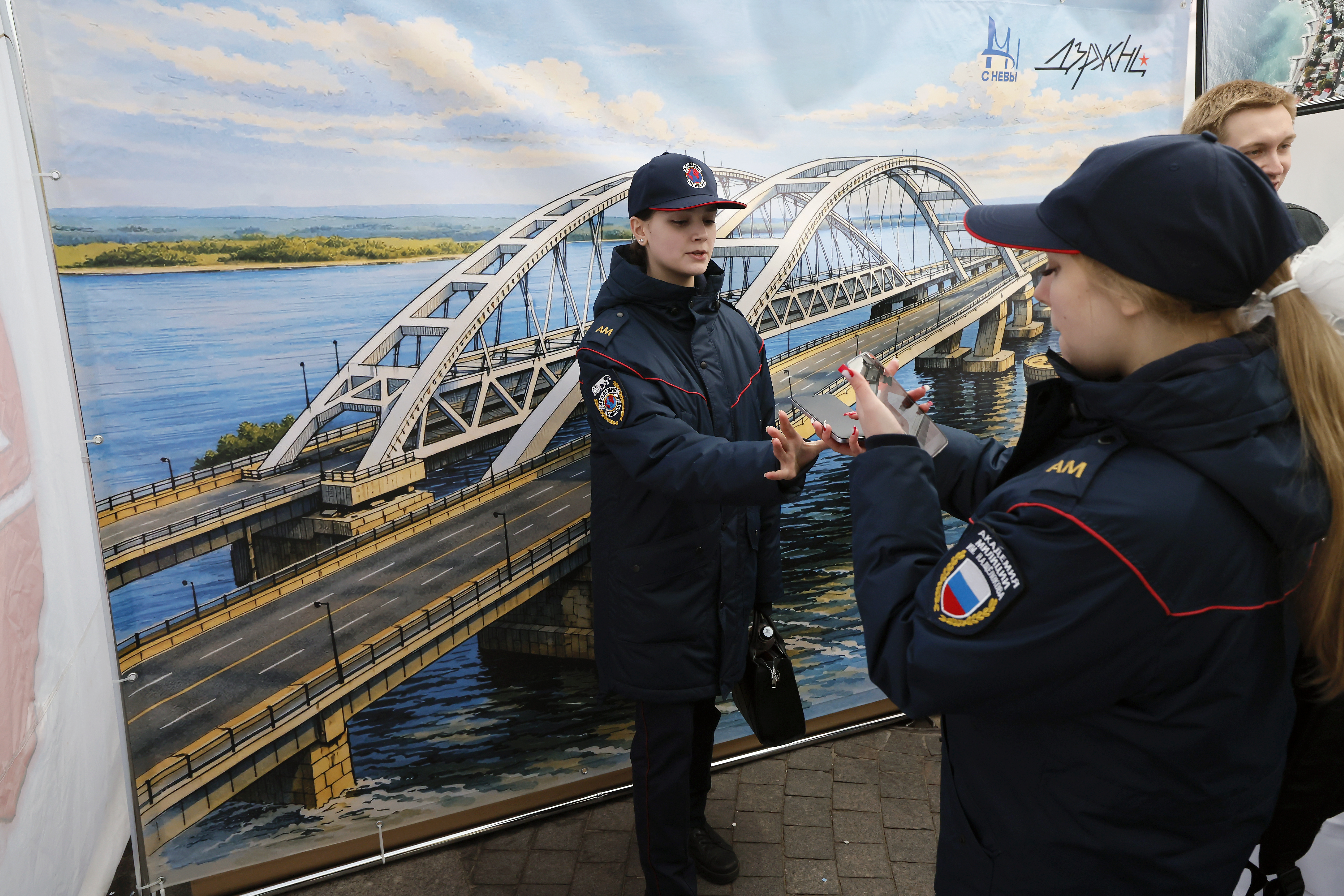
 Police cadets visit a photo zone featuring an image of the Crimean Bridge marking the 12th anniversary of Russia’s annexation of Crimea in St. Petersburg, Russia, 18 March 2026. The annexation followed a referendum held in Crimea on 16 March 2014 that the UN General Assembly later said had no validity, while reaffirming Ukraine’s sovereignty and territorial integrity within its internationally recognized borders. EPA/ANATOLY MALTSEV
Sergei Aksyonov, the peninsula’s Russian-installed governor, said the ban, which he called a temporary measure to guard military and other important facilities, would be in place between 8 p.m. and 6 a.m. from Wednesday onwards.
“The moped noise hampers the work of defence systems. Their engines sound similar (to drones),” Oleg Kryuchkov, Aksyonov’s advisor, said separately on Telegram on Tuesday. “The enemy is recruiting your children for nighttime rides.”
The ban in Crimea, a popular summer tourist destination for Russians, does not apply to cars or larger vehicles.
Ukraine has recently intensified drone attacks on Crimea, home to Russia’s Black Sea Fleet, targeting the peninsula’s supply routes and triggering a fuel crisis, as the holiday season starts.
A limit of 20 litres (5.3 gallons) of fuel per car at local petrol stations would continue, Mikhail Razvozhayev, the governor of Crimea’s biggest city, Sevastopol, said in a Telegram post late on Tuesday.
On Tuesday, a Ukrainian drone strike halted operations at Moscow’s oil refinery, sources said, adding to widespread damage inflicted on Russian energy facilities and extending the fuel crisis deeper into the country.
Overnight, Russian defence systems downed 10 drones heading for Moscow, Mayor Sergei Sobyanin said on Telegram early on Wednesday.
U.S. President Donald Trump said on Tuesday Russia should make peace with Ukraine after a “very good” meeting with President Volodymyr Zelenskiy, in comments that sparked cautious optimism among G7 leaders that a peace deal could be struck.
(Reporting by Jekaterīna Golubkova in Tokyo; Editing by Lincoln Feast.)
Comments
Scroll down to load comments...