




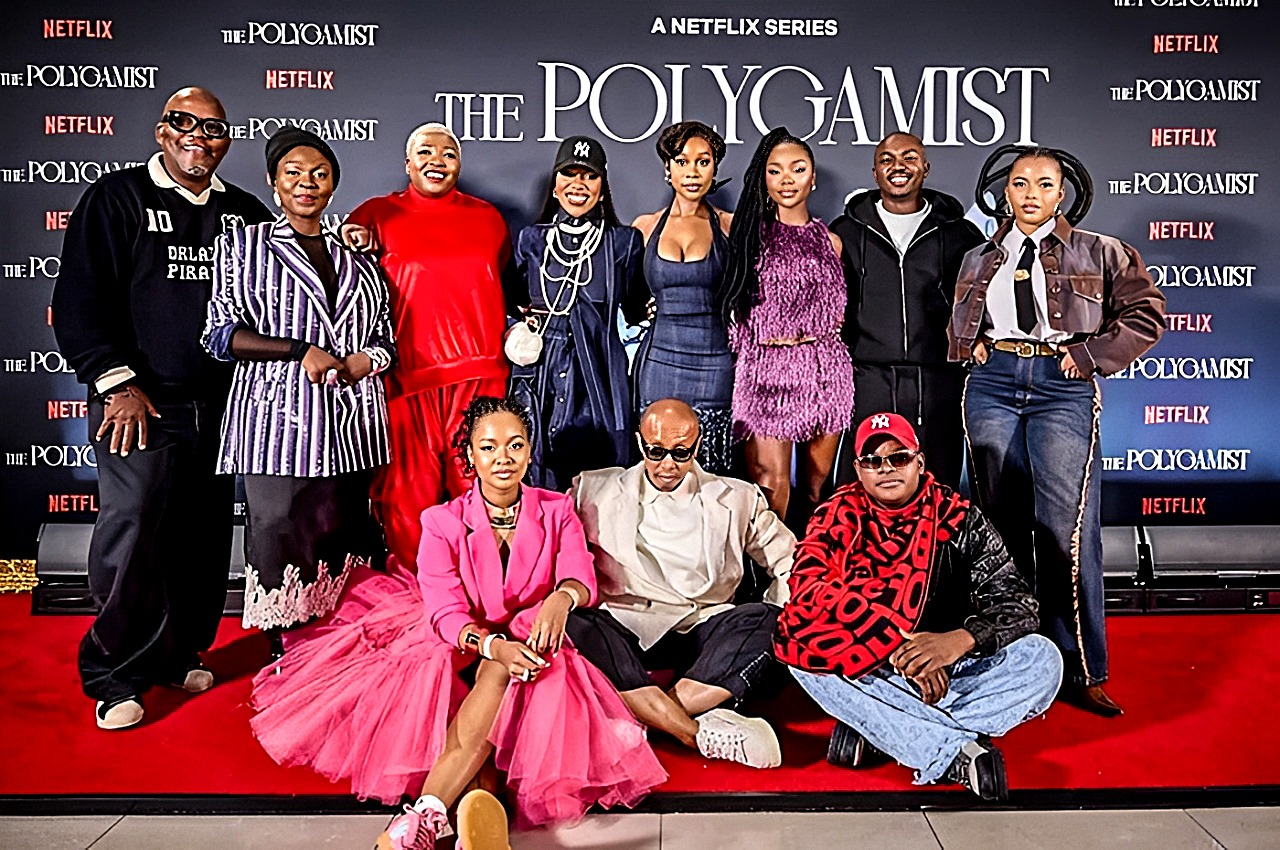
 Image: Netflix / Instagram
“Bad writing is like any other form of crime: most of it is unimaginative and tiresomely predictable.”
That Richard Mitchell line appeared on my Facebook memories while I was watching Netflix’s The Polygamist over three days. By the end of the series, it felt less like a literary joke and more like a diagnosis.
The main issue with The Polygamist is not melodrama. It is that the series conflates polygamy (isithembu) with sexual deviance, mistakes culture for pathology, and passes off shock as storytelling. It mistakes a family institution for a libido.
Most South Africans do not know Bhusha. I knew him.
He was my half-brother in my village of eHabeni near Eshowe. He had three wives. Not three secrets. Not three victims. Not three women trapped in a man’s theatre of deception.
His first wife was his wife in the ordinary sense. The second entered the household because Bhusha’s brother had died in prison, leaving children behind. The family decided: Bhusha would ngena indlu yomfowabo. He would enter his late brother’s house, not as a sexual adventurer, but as a man carrying a family obligation.
It was a sacred tradition, however uncomfortable it may sound to modern ears. Its purpose was not pleasure. It was continuity. It was aimed at protecting children from abandonment, poverty and the slow social death that turns children into amaphara.
The third wife was, in a sense, for the first wife. She was barren. She asked her husband to take another wife who would bear children who would become hers in the family imagination, not merely the biological children of the new wife. In fact, she went around the village herself, eshela, looking for wife number three.
That was polygamy.
One may critique it. One may reject it. One may call it patriarchal. But one must first understand it. It was not random lust. It was not deception. It was not a man moving from one woman to another, like a bull in a kraal without a fence. It was a social arrangement governed by family, duty, negotiation, responsibility and cultural logic.
My late brother, uCelemba, also understood this distinction. He told anyone who cared to listen: “I will have isithembu.” Both women knew this before the first marriage. There was no secret architecture, no double life, no elaborate fraud. Both women orbited his family.
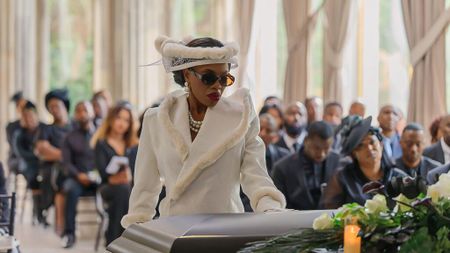
The Polygamist angered me because Jonas Gomora is portrayed not as a true polygamist, but as a man motivated by excess, deceit and emotional violence. He lies, manipulates, hides women, abuses power and causes harm – all of which distort the reality of polygamy.
That is not polygamy. That is sexual misconduct.
This distinction is crucial. Stories shape society’s understanding of itself. Misrepresenting culture in storytelling misleads the public about that culture.
The Booker Prize-winning Nigerian novelist Ben Okri once said: “To poison a nation, poison its stories.” This idea echoed throughout The Polygamist. The series fails to interrogate polygamy and instead mistakes sexual pathology for culture.
In the series, culture becomes costume. The story appears to believe that if a man has multiple women, the word “polygamy” will do. It will not. A man with an excessive sexual appetite, prone to psychological abuse, deceit and manipulation, can hardly serve as a poster boy for a sacred institution.
One reflects personal sexual misconduct, while the other is a longstanding social practice with defined cultural norms, obligations and consequences.
The portrayal of women is equally troubling. For a series that seems eager to speak in the language of female suffering, it gives its women very little agency. Joyce is warned repeatedly, yet remains trapped in reaction. Matipa begins with promise, then collapses into weakness. Essie fights back through another form of dysfunction. Lindani’s story is unforgivable: a young woman drawn into a web of sex, violence and violation ends the series sleeping with Menzi, episodes after she slept with his father.
If feminism is about dignity, capacity for self-determination and respect for women, what exactly is feminist about reducing Black women to victims, rivals, dependents, influencers, mistresses and emotional debris?
Kanti intoni i-feminism?
A woman gets a job through her boyfriend’s brother’s company. Another character’s professional life seems to revolve around influencing bath products. Black women are far more than this. They are intellectuals, workers, organisers, mothers, leaders, healers, professionals and builders of families. Yet across 22 episodes, the series repeatedly narrows them into stereotypes.
/file/attachments/orphans/ThePolygamistS1_Netflix_20_3574-1024x576_816760.jpg "Sdumo Mtshali as Jonasi Gomora in The Polygamist. (Image: Courtesy of Netflix)")
The men are not much better served. Menzi has little agency. Magesh drifts through implausible emotional entanglements. Jonas dominates the story, but not because he is complex. He dominates because the plot keeps feeding him women, secrets, violence and scandal.
That is not artistic mastery. It is spectacle in search of a story.
The excessive sex scenes do not deepen the story. The violence does not reveal character. The betrayals do not build moral complexity. They merely accumulate. After a while, the viewer is not watching drama. One is watching escalation without imagination.
A confident writer trusts character. A weak story relies on shock.
What pains me further is that the story was written by Sue Nyathi, a woman writer whose work should have been more alert to the dignity, complexity and self-determination of Black women.
The issue is that The Polygamist presents behaviour that traditional Zulu communities would not recognise as polygamy. If this is Nyathi’s reading of the practice, why are the characters Zulu-speaking? Why is the story set in Johannesburg? And why is a Zulu cultural institution used as the vessel for secrecy, coercion and compulsive sexual appetite masquerading as custom?
The result feels less like interpretation and more like erasure: a poisoning of the well, as it were.
Before a global audience, a Black man is presented as a sexual deviant hiding behind culture. Black women are made to participate in the spectacle of their own oppression. The old imperial gaze is well served. The natives are once again abusing, deceiving and destroying one another.
Perhaps this is why the series feels so marketable. There is money in Black dysfunction. There is always an audience for stories that confirm the worst suspicions about Black life. Stained Glass, with its flair for the dramatic, understands spectacle. No surprise there.
But spectacle is not art.
The tragedy is that The Polygamist had a rich premise. South Africa’s tensions around marriage, custom, patriarchy, gender and modernity offer fertile ground. A better series could have explored how ancient obligations collide with contemporary life and asked whether polygamy can survive modern ideas of equality and women’s autonomy. It could have shown women negotiating, resisting, consenting, refusing and reshaping tradition.
Instead, it gives us Jonas Gomora.
By the end, it was clear this was not a story about polygamy, but about sexual excess, emotional abuse and cultural misappropriation.
There is a difference between interrogating culture and butchering it. The Polygamist does the latter.
South Africa deserves stories brave enough to question tradition and honest enough to portray it with nuance. We owe our cultures, our Blackness and ourselves nothing less. DM
Bhekisisa Mncube is an author, columnist and manuscript assessor for a leading South African publisher. He has a keen interest in culture, politics and literature.
Comments
Scroll down to load comments...