



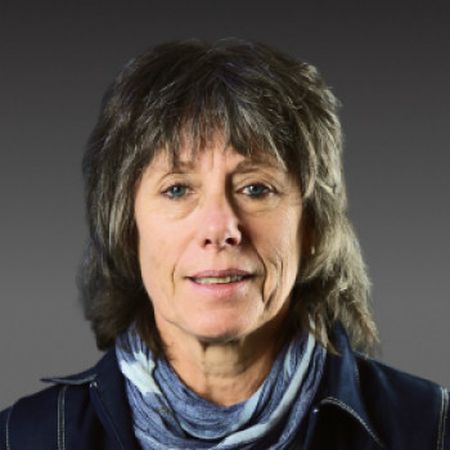
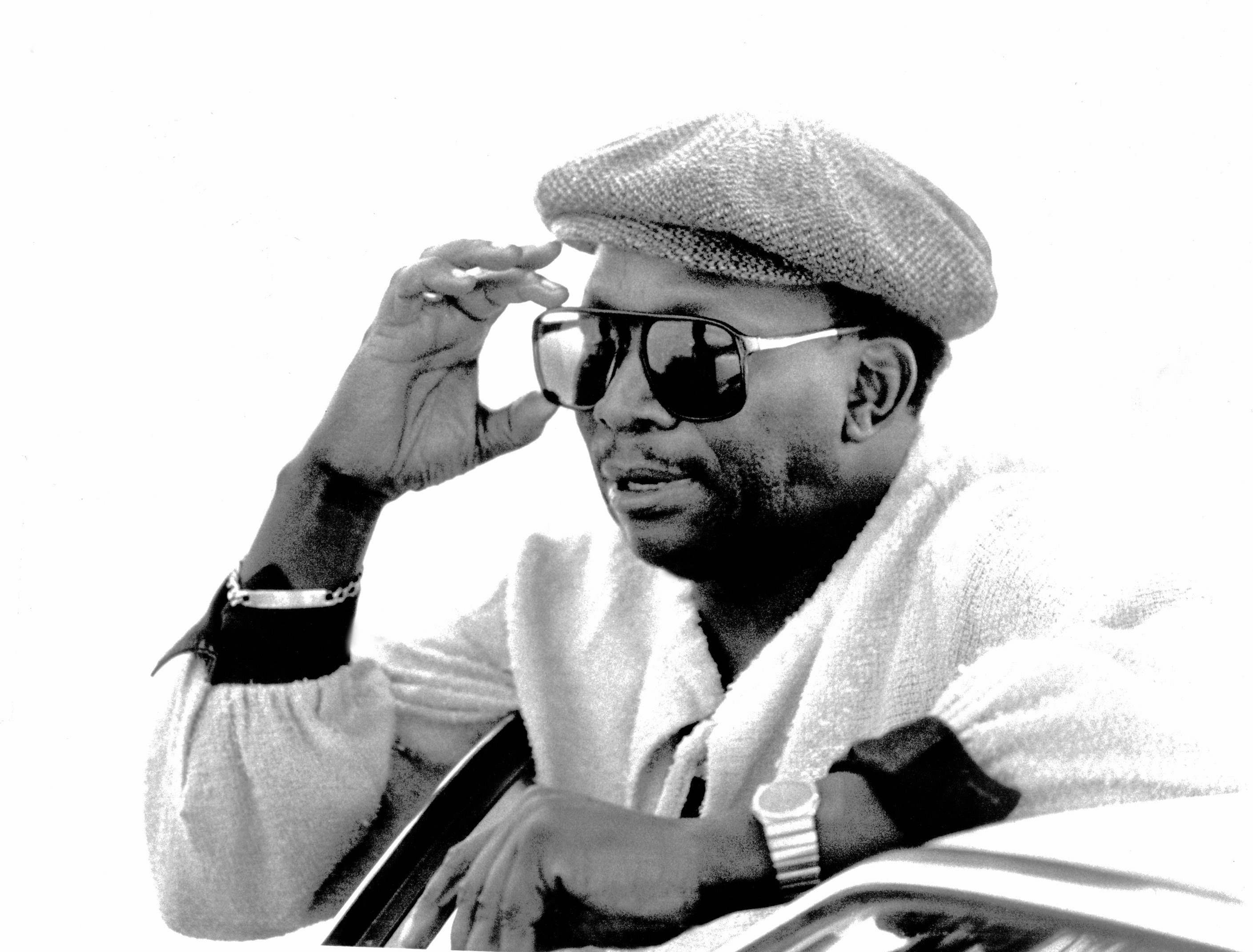
 Legendary South African playwright and music producer Gibson Kente, known as the 'father of black theatre' in South Africa. (Photo: City Press / Gallo Images)
 By 1975, many of the artists, musicians, journalists, poets and writers who shaped and coloured the resistance to apartheid in the 1960s had gone into exile. Political leaders had been silenced and locked away.
Life for the black majority in South Africa was a relentless series of obstacles and hoops from before dawn – usually 4.30am, when people woke in the dark to catch buses with hard seats – to after dusk, at around 7.30pm, when workers returned to smoke-filled, badly lit, dangerous streets.
Controlled access to the sprawling township of Soweto through four entrances (and exits) was specifically designed by the state to easily contain the area. In the mid-1970s, South Africa suffered a depression leaving more than half of its residents unemployed or underemployed.
Everything mattered: where you lived, how you travelled, which job you were allowed to hold and where you could eat and drink in public. 1975 was the year the government introduced Afrikaans as a medium of instruction in all schools for at least half of the subjects.
A different country
The 16 June 1976 march by scholars resisting the imposition of Afrikaans, which claimed the lives of at least 200 young people, sparked countrywide uprisings and made Soweto an emblem of resistance.
The slaughter drew world headlines as the violence spread across the country, making Prime Minister John Vorster’s National Party government and the racist Republic of South Africa a world pariah.
The date marked the start of the throttling of the apartheid state, already mired in moral and political decay. The aftermath of 16 June was unstoppable. Young South Africans today would not recognise that other country, that past, and thankfully so.
It was the voices of the black consciousness movement that stirred and ignited passions and courage in the vacuum created by the exiled and the incarcerated.
The historical moment
Student leader Steve Biko was one of the movement’s most recognisable political and intellectual faces, while the “Soweto poets” (who eschewed the label) – Mafika Pascal Gwala, Oswald Mtshali, Mongane Wally Serote, James Matthews, Sipho Sepamla, Webster Makaza and Meshack Hlongwane – were its verbal spears, its cultural weapons.
/file/attachments/2993/12ED_521606_458242.jpg "The funeral service of poet James Matthews (95) at St Georges Cathedral on September 21, 2024 in Cape Town. The renowned poet worked against South Africa's repressive and racist system of apartheid, which resulted in him being relentlessly harassed, detained by police and his work banned. (Photo by Gallo Images/Brenton Geach)<br> <br>")
With no space to contain the bubbling rage, it was words, music and theatre that spread the seeds of resistance and solidarity. Gwala recalled the atmosphere of the time as one of “intellectual slaughter, tinged with deep, ever-building and brooding anger”.
Traditional theatres and venues were segregated, shutting out black performers and artists. So, performances took place at mass rallies, clandestine meetings and endless funerals. “Soweto was a culminating point in a lonely and grisly blow-for-blow contestation by the black resistance movement against racism and class exploitation. The whole of South Africa was ‘Soweto’. June 16 spilled over to all across the country,” Gwala, who died in 2014, noted in an interview with Thengamehlo Ngwenya in Staffrider magazine in 1989.
/file/attachments/2993/12000077591_108776.jpg "Well-known South African author Oswald Mtshali at his home in Soweto in 2007. (Photo: Mlandeli Puzi / Gallo Images)")
Key role of student organisations
Biko and Gwala were both arrested in state clampdowns on the black consciousness movement in 1977. The poet spent six months in detention. Port Elizabeth security police tortured Biko for 20 days. He died on 11 September 1977 while being driven 700km to Pretoria in the back of a police van, bruised, naked and shackled.
Staffrider later published Gwala’s Jol’iinkomo volume of poetry, which the state immediately banned. Jol’iinkomo is also a battle song originally from Pondoland and was made popular by exiled jazz diva Miriam Makeba.
Gwala was a founder member of the Medu Arts Ensemble, an anti-apartheid cultural collective that included Nkathazo ka Mnyayiza and Ben Dikobe Martins. In fact, it was their flame and fire that led to the establishment of Staffrider with Mike Kirkwood of Ravan Press.
The South African Students Organisation was founded in 1968 under the guidance of Biko in the then Natal. At its conference in 1971, the organisation invited artists to join students for a two-week workshop about cultural revival as part of the black consciousness movement’s vision for the oppressed black majority.
Cultural revival
The relentless assault on black life, said Gwala, had called “for some kind of common identity and mutual understanding among people of colour” and this could be achieved by “understanding the values, ideas and images that tied us to our social functions”.
/file/attachments/2993/ED_531205_944223.jpg "John Kani at a book launch at Exclusive Books Rosebank on 23 October 2024 in Johannesburg (Photo: Oupa Bopape / Gallo Images)")
The Mamelodi-based Malombo Jazz Men as well as the Port Elizabeth-based the Serpent Players, led by actors John Kani, Winston Ntshona and Nomhle Nkonyeni (who collaborated with Athol Fugard), attended the conference.
The conversations between these performance artists and the student movement fostered the new message of resistance that became characteristic of black consciousness, Gwala noted.
The artists later went on to gain international recognition for their fearless resistance, through theatre and performance, against a state that had shut down and compartmentalised every other sphere of life.
In Kente’s footprints
In 2018, the Market Theatre in Johannesburg, also one of the iconic self-funded venues that joined in the cultural revival in the 1970s, staged The Gibson Kente Musical Tribute.
Playwright, composer and director Kente, regarded as the father of South African township theatre, created spaces in a time and place where no venues existed for black audiences to view productions that reflected black life. As David Copland reflected in his book In Township Tonight!, Kente grasped “the implications of urban South African society”.
Kente, who studied at the pioneering Jan H Hofmeyr School of Social Work, learned choral music and formed a gospel-jazz group called the Kente Choristers. He later wrote songs for Makeba and other vocalists, including Letta Mbulu.
The theatre innovator and shrewd businessman avoided overtly dramatising political issues, focusing in this post-Sharpeville era rather on the frustrations and suffering of urban Africans. The success of Kente’s Manana the Jazz Prophet and Sikalo are evidence of this. People would queue outside his venues and pack them to the rafters, if they had any.
Mbongeni Ngema had moved from Verulam in KwaZulu-Natal to Johannesburg to work in a fertiliser factory. He played guitar for a workers’ production when Kente asked him to stand in for an actor who was sick. This small chance launched Ngema’s career, which was to encompass acting, playwrighting and screenwriting. He was the librettist for his world-famous musical Sarafina! and the author, with Percy Mtwa, of the groundbreaking Woza Albert.
Cultural pioneer Zakes Mda cites Kente as a major influence on his work. Eastern Cape-born Mda was educated in Soweto, but left South Africa in 1963 to live in Lesotho. The now internationally renowned writer began penning plays in high school and in 1978 won Playwright of the Year for We Shall Sing for the Fatherland, first performed as a double bill alongside Dead End in 1979 in the Diepkloof Hall in Soweto.
/file/attachments/2993/12ED_285778_405886.jpg "Zakes Mda during the SA Book Fair in September 2017 in Johannesburg. (Photo by Gallo Images/Oupa Bopape)")
“[Kente] used virtually every medium and style of performance found in the streets and social occasions in townships, so that working-class Africans, unfamiliar with formal theatre, could recognise themselves up on stage,” writes Copland.
The Red Theatre in Soweto was renamed the Gibson Kente Theatre in 2023 in honour of this pioneer.
The inheritors
Theatre, dance, music, opera, fine art, literature, poetry, design and sculpture all render life worthwhile. A robust and productive arts scene is essential for a society’s healthy emotional, mental and social life.
Minister of Sport, Arts and Culture Gayton McKenzie might learn from these giants of the South African cultural terrain that the arts, perhaps more so than sport, create wide circles of social cohesion and jobs across sectors.
The South African Cultural Observatory mapped the total contribution of the cultural and creative industries to South Africa’s GDP at R161-billion in 2020. This represented just under 3% of the country’s total economic production that year, making the sector about the same size as agriculture.
Maria McCloy, visionary Johannesburg curator, creator and collaborator in the arts, who died recently, was an example of an inheritor of the proudly Africanist ethos that still nourishes generations of new South African creators and thinkers.
Many have made their mark during the darkest of times, including Paul Slabolepszy, Pieter-Dirk Uys and Fatima Dike, and a new generation has continued the tradition. Award-winning choreographer, writer and dancer Gregory Maqoma’s recent sensation, Genesis, is the artistic culmination of the vision of Gwala, Biko and the black consciousness movement, and evidence of its lasting impact.
The same can be said for some of the works of playwrights such as Mike van Graan, Lara Foot, Mpumelelo Paul Grootboom, Yaël Farber, Aubrey Sekhabi, Brett Bailey, Nadia Davids, Mandla Mbothwe and Lwanda Sindaphi, and for companies such as the Magnet Theatre and the Theatre Arts Admin Collective. The Magnet, started in 1987 by Jennie Reznek and Mark Fleishman, continues performance training and in many ways the tradition of Kente and others who located theatre within community storytelling.
There are poets aplenty: Lebogang Mashile, Koleka Putuma, Antjie Krog, Malika Ndlovu, Gabeba Baderoon, Phillippa Yaa de Villiers, Ronelda Kamfer, Rustum Kozain. Authors too are working to inscribe the present.
The foundations laid by the black consciousness movement have been the bedrock of what has grown into a truly flourishing – albeit underfunded – artistic and cultural sector that continues to innovate and agitate. DM
This story first appeared in our weekly DM168 newspaper, available countrywide for R35.
/file/attachments/2993/DM-120626_491550.jpg)