



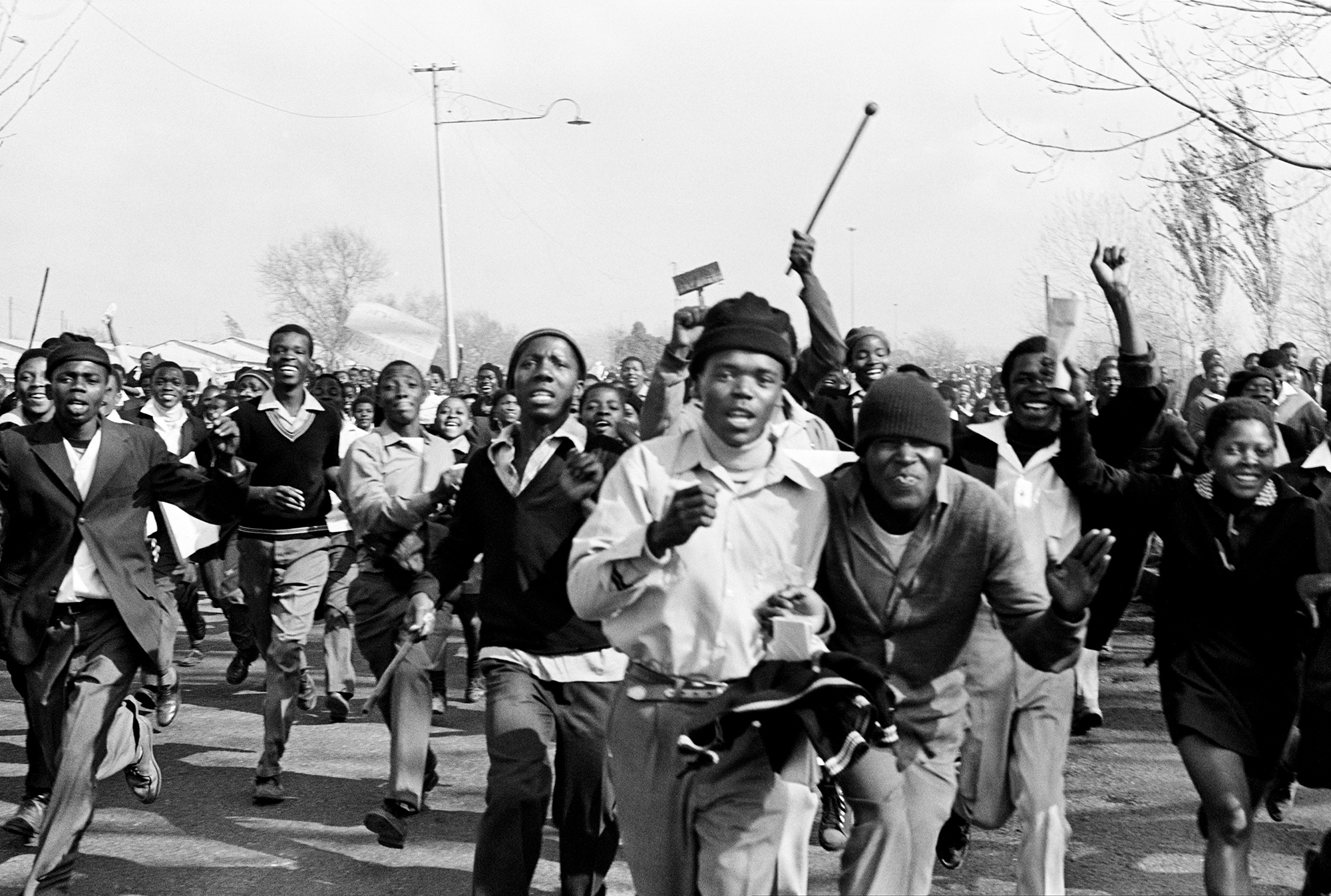
 Soweto schoolchildren protest on 16 June 1976. (Photo: Peter Magubane)
For many South Africans, 16 June 1976 and Afrikaans are forever linked. On that day, schoolchildren in Soweto marched against the apartheid government’s plans to impose Afrikaans as a language of instruction in “black” schools. The state responded with violence. Young people died. Images from that day travelled around the world and exposed the brutality of apartheid in a way that few events had done before.
/file/dailymaverick/wp-content/uploads/2021/06/Brooks-june16d.jpg "Pupils gather in Soweto on 16 June 1976 for a mass demonstration to protest against the use of Afrikaans in 'black' schools. (Photo: Alf Kumalo Family Trust)")
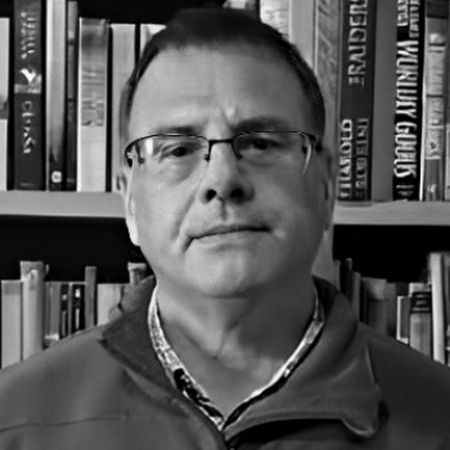
In Aanstap Boere: ’n Ooggetuie van die Ontrafeling van Wit Mag in Suid-Afrika (Step Forward Boers: An Eyewitness to the Unravelling of White Power in South Africa), Max du Preez reflects on 16 June 1976 and argues that it was one of the decisive turning points in South African history — the beginning of the end of apartheid.
Reading those pages on Youth Day made me think again about Afrikaans, my own journey, and the role Du Preez played in it.
I was a theology student at the University of Pretoria when the Dakar Conference took place in 1987. Today, it is difficult to explain the reaction that followed. White South Africans met publicly with the ANC in exile. In many Afrikaans circles, the participants were branded naïve, dangerous or simply traitors. For many Afrikaners, the old certainties still held. For me, however, questions had already started to surface.
Around that time, the newspaper Vrye Weekblad, edited by Du Preez, was launched, and every Friday I bought a copy. The stories about death squads, covert operations and the abuses of the apartheid state were important because they forced many of us to confront realities that had been hidden, denied or explained away. Yet what stayed with me even more was something else.
/file/dailymaverick/wp-content/uploads/9f7f6c5f20605d8fe10cdf93c76267d6.jpg "Max du Preez. (Photo: Supplied)")
Through Vrye Weekblad I discovered the Afrikaans literature of the Sestigers — writers such as Jan Rabie, André P Brink, Etienne Leroux and Breyten Breytenbach, whose work challenged the moral assumptions of apartheid long before many Afrikaners were prepared to do so. Later, I would also discover the work of writers and poets such as Ingrid Jonker, Karel Schoeman and Antjie Krog, who formed part of the same broader tradition of dissent within Afrikaans culture.
When many of these writers produced their most important work, I was too young to appreciate what they were doing. It was only later, through reading Vrye Weekblad, that I started engaging seriously with them.
/file/dailymaverick/wp-content/uploads/2024/01/Andre-Brink-1973.jpg "André Brink in 1973. (Image: Supplied by Anthony Akerman)")
A different tradition
What struck me was not simply that they opposed apartheid. What struck me was that they represented another Afrikaans tradition. They refused to accept that being Afrikaans meant supporting the National Party, apartheid or the Afrikaner establishment. They insisted that loyalty to truth, justice and human dignity mattered more than loyalty to tribe, party or state.
Gradually, I realised that Du Preez and Vrye Weekblad did not emerge from nowhere. They stood firmly within that same tradition.
Long before Vrye Weekblad exposed the crimes of apartheid and the corruption of the security state, Afrikaans writers, poets and intellectuals had already begun asking uncomfortable questions. Through literature, they challenged the certainties of Afrikaner nationalism, exposed injustice and insisted on recognising the humanity of those whom apartheid sought to dehumanise.
What Vrye Weekblad later did through journalism, many of these writers had already done through literature. The medium was different, but the instinct was remarkably similar: a commitment to truth-telling, a willingness to confront power and a refusal to remain silent when silence became complicity.
For me, that was a profound discovery. Max du Preez did not liberate me from Afrikaans; he helped me discover another Afrikaans. It was the same Afrikaans I encountered in the Sestigers, in protest poetry and in the literature of dissent. It was an Afrikaans that questioned rather than obeyed, that exposed rather than concealed, and that stood with the vulnerable rather than with power. Vrye Weekblad was not a break from that tradition. It was its continuation.
Years later, I accepted a call to serve a Zulu-speaking congregation of the Uniting Reformed Church in Nongoma in northern KwaZulu-Natal. I did not go there because I had all the answers. I went because I had too many questions.
It was there that I regularly listened to Du Preez on Radio Suid-Afrika. Looking back, it is easy to forget how unusual those broadcasts were. Here was an Afrikaans journalist discussing politics, apartheid, democracy and the future of the country in ways that were not common in mainstream Afrikaans media at the time. For somebody living in rural northern KwaZulu-Natal, it mattered.
Later, when the Truth and Reconciliation Commission (TRC) started its work, I was still living there. Many Afrikaners were suspicious of the TRC. Many supporters of the Inkatha Freedom Party were equally sceptical. Through Du Preez’s reporting and commentary, I could at least follow the process and engage with what was emerging. The stories were difficult to hear, but many of them were not entirely surprising because Vrye Weekblad had already reported much of what South Africa was only beginning to confront publicly.
Enormous challenges
Fifty years after the Soweto uprising, South Africa’s young people still face enormous challenges. Unemployment remains painfully high. Poverty remains entrenched. Too many schools are failing the children they are supposed to serve. Corruption, incompetence and poor governance have robbed many young people of opportunities that should have been theirs. The struggle for dignity did not end in 1994.
That is why Youth Day remains important. It reminds us of the courage of the young people of 1976, but it also reminds us that languages themselves are not oppressive. People can use language to oppress. States can use language to dominate. Ideologies can use language to exclude. That happened with Afrikaans, and the events of 16 June 1976 will forever remind us of that reality.
/file/dailymaverick/wp-content/uploads/Soweto-uprising-callout-Guardian.jpg "The dead body of Hector Pieterson is carried by Mbuyisa Makhuba alongside his sister in Soweto on 16 June 1976. (Photo: Sam Nzima)")
Yet the story of Afrikaans is bigger than that.
The same language that was used by the apartheid state to impose its will was also used by writers, journalists, poets and theologians to challenge that same state. The same language that many experienced as a language of domination became, in other hands, a language of resistance.
That is the Afrikaans I discovered through Max du Preez. It was an Afrikaans prepared to ask difficult questions, capable of self-criticism and unwilling to place loyalty to power above loyalty to truth.
Moral courage
Looking back, one of the great gifts Du Preez gave many Afrikaners was not that he taught us to reject Afrikaans, but that he helped us discover another Afrikaans. An Afrikaans that had always been there, often at the margins, speaking uncomfortable truths. An Afrikaans of dissent, self-criticism and moral courage. An Afrikaans that refused to make peace with injustice.
On a day when South Africa remembers the schoolchildren of Soweto who rose up against the imposition of Afrikaans, that distinction matters. The tragedy of 16 June 1976 reminds us how language can be used in the service of domination. The lives and work of André Brink, Breyten Breytenbach, Ingrid Jonker, Antjie Krog, Jan Rabie, Etienne Leroux, Karel Schoeman, Max du Preez and many others remind us that the same language can also be used in the service of truth and liberation.
That, more than anything else, is what stayed with me after reading Aanstap Boere. DM
Deon Snyman is the MD of the Goedgedacht Trust, a rural development organisation in the Western Cape. He has worked for more than two decades at the intersection of social justice, community development and leadership formation, with a focus on children, youth and families in vulnerable communities.
Comments
Scroll down to load comments...