



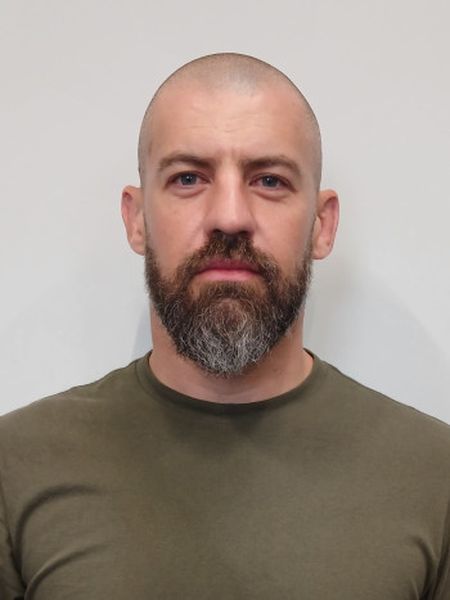
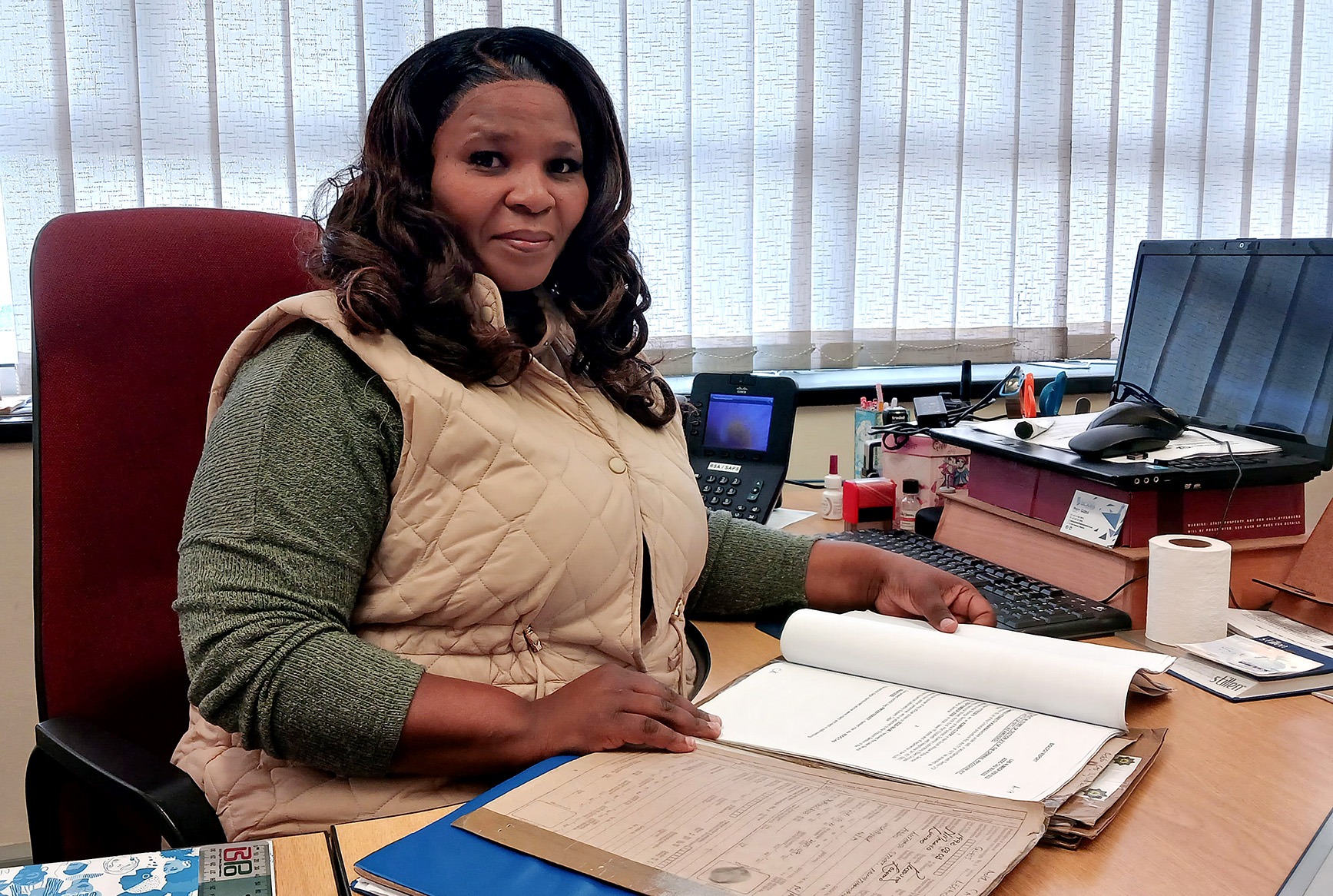
 Detective Sergeant Vuyokazi Bayi, attached to the Eastern Cape’s Serial Electronic Crime Investigation Unit, helped to secure an indefinite sentence after linking three old rape cases to Lechasa Glass, who was already serving a life sentence for several other rapes. (Photo: Riaan Marais)
Lechasa Glass has been behind bars since 2024 after receiving an effective life sentence for multiple counts of rape and robbery.
The 32-year-old Lesotho national was likely to come up for parole in his 50’s and could have spent his twilight years as a free man.
However, the chances of the serial rapist ever breathing free air again was effectively nullified when diligent forensic experts and painstaking detective work linked him to three more violent rapes, and he was sentenced to an indefinite term of imprisonment on 10 June.
And the detective behind this rare sentence, reserved only for the most dangerous of violent criminals, felt a deep sense of satisfaction to hear Glass will be spending the rest of his life in prison.
“He was thoroughly evaluated. This man committed horrendous crimes and still shows no remorse. He is dangerous and will surely commit more violent crimes if he is ever released. Glass is right where he belongs,” Sergeant Vuyokazi Bayi said.
Glass’s violent spree stretched over seven years, between 2015 and 2022, in the rural communities of Joubertina and Addo, where he was employed as a seasonal farm worker, picking apples and citrus depending on the time of the year.
The province’s Serial Electronic Crime Investigation Unit, which specialises in cases of serial rapists and online child pornography rings, began their investigation into Glass after a number of women reported being attacked.
Bayi explained that the modus operandi was always the same – women would be walking along remote roads between farms when a man would accost them and threaten them with a knife. At first, he would demand money, then take them to secluded places where he would rape them.
Bayi’s colleague, Warrant Officer Sonwabile Dlomo built a strong case against Glass, linking him to the rape and robbery of 13 victims, several of them under the age of 18.
/file/dailymaverick/wp-content/uploads/2025/06/067A8196.jpg "A child abuse survivor holds a teddy bear up to the light. Teddy bears can be used to facilitate emotional processing and build a therapeutic relationship for children abuse, neglect and sexual violence. (Photo: Felix Dlangamandla)")
In May 2024 Glass was convicted of robbery, robbery with aggravating circumstances and rape, and was subsequently handed six life sentences, along with several other sentences ranging between five and 15 years. They were ordered to be served concurrently.
But his conviction did not mean the end of the investigation, and two years later three dockets landed on Bayi’s desk that saw her picking up where Dlomo left off.
“Digging into these cold cases was one of the reasons I wanted to become a detective in the first place. And tying more cases to such an extensive rap sheet gave me a deep sense of satisfaction,” Bayi said.
She said building the case was a team effort, and gave credit to Dlomo and her forensic colleagues who tied DNA tests from the additional dockets to Glass.
These cases go back as far as 2018, and include the rapes of a 16- and 23-year-old. But the case that left the biggest impression on Bayi linked back to the youngest victim on Glass’s trail of devastation.
In February 2019, in the Joubertina region, a 13-year-old girl was walking with her two younger cousins, aged 10 and 12, when Glass approached them and threatened them with a knife.
“Glass had bad intentions for all three these girls, but while he was raping the 13-year-old, she did not plead for him to stop. She begged him to let the younger girls go, and they managed to escape the incident unharmed,” Bayi said.
As a mother of three, Bayi said working with child victims can become a difficult balancing act between keeping things professional and taking it personally. However, she believes being a parent makes her a better detective, and regular debriefing sessions provided by the South African Police Service (SAPS) helps her to cope with the psychological impact of the job.
Despite her six years with the Eastern Cape’s Family Violence, Child Protections and Sexual Offences Unit (FCS), she said Glass was by far the worst “predator” she has ever dealt with.
/file/attachments/orphans/Bayi1_553315.jpg "Detective Sergeant Vuyokazi Bayi, attached to the Eastern Cape’s Serial Electronic Crime Investigation Unit, says Lechasa Glass was by far the worst predator she has ever dealt with. (Photo: Riaan Marais)")
On 14 April he was convicted of the three additional counts of rape and three counts of robbery. Prior to sentencing he was sent to the Fort England psychiatric hospital for assessment where it was found he was mentally fit, committed these offences with clear intention and showed no remorse for his actions.
Bayi said it was concluded that he showed little chance of being rehabilitated and should he be released he would likely pick up where he left off.
On 4 June, the court sentenced him to imprisonment for an indefinite period. After serving his initial life sentence, due to expire in 2049, he will be brought back to court for review and reconsideration of his sentence. However, it is unlikely that we will ever be released from custody.
Provincial police commissioner Lieutenant-General Vuyisile Ncata praised Dlomo, Bayi and the members of the forensic team for their meticulous investigation, and highlighted the importance of DNA evidence in linking Glass to these violent crimes.
“We commend the investigating team, the NPA and the judiciary for ensuring that a dangerous predator has been removed from society indefinitely. We hope this brings closure to the many survivors and their families,” Ncata added.
“I hope this encourages other victims, no matter how old their cases, to come forward and speak out about their trauma. I want them to know that even cold cases can be solved.”
Beyond bringing closure to the 16 victims who came forward, Bayi said she believes this case will give hope to other victims too afraid to speak out.
“I have no doubt that Glass has more victims that we don’t even know about and who were too scared to lay charges. Hopefully they see this and they also find peace.
“And I hope this encourages other victims, no matter how old their cases, to come forward and speak out about their trauma. I want them to know that even cold cases can be solved,” Bayi said. DM
Comments
Scroll down to load comments...