



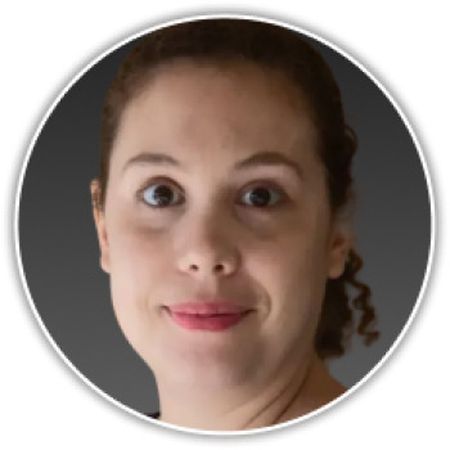
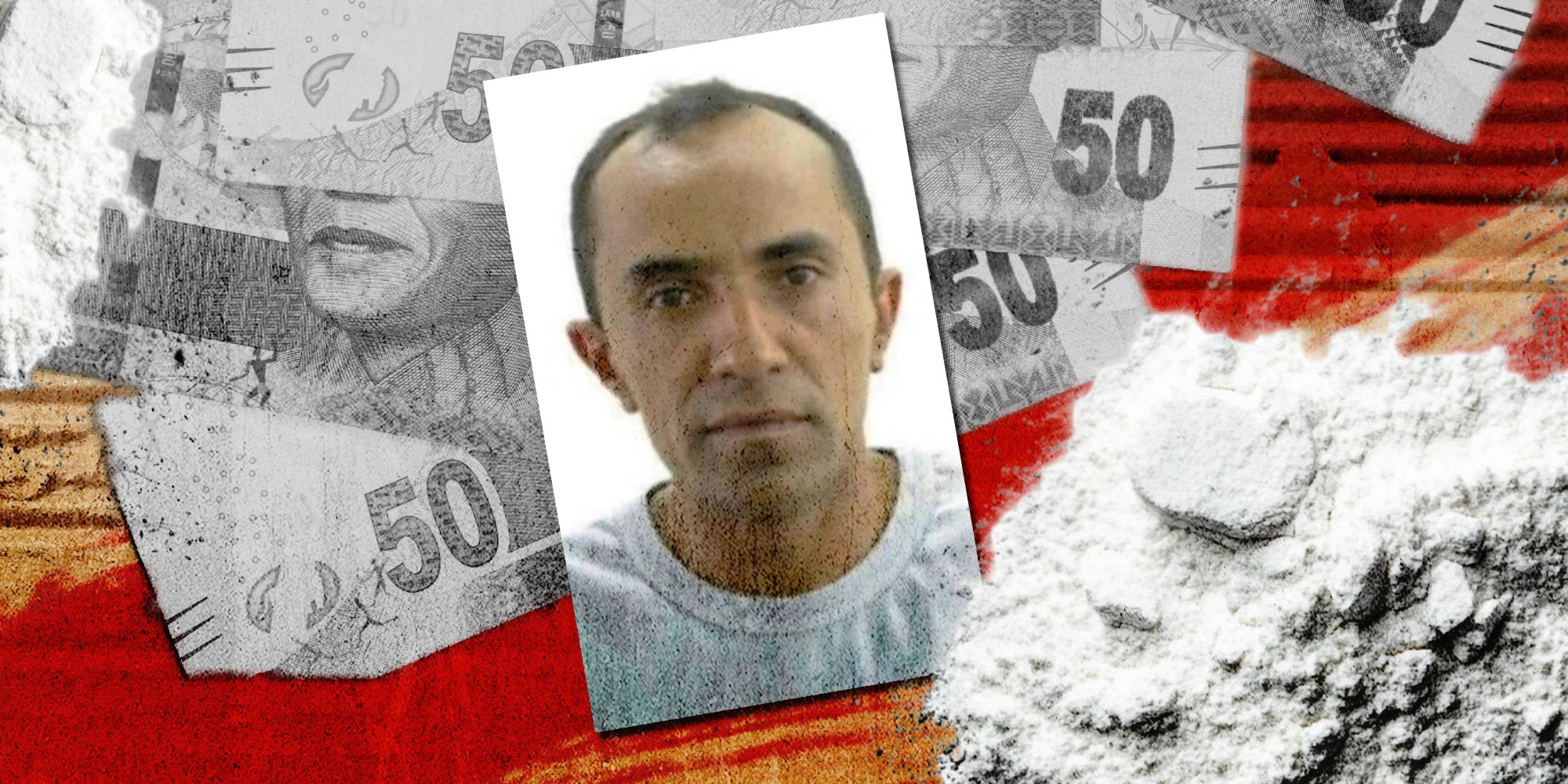
 Illustrative image: Money. (Photos: iStock) | Cocaine. (Photo: Magnific) | Gilberto Aparecido dos Santos. (Photo: Supplied) | (By Daniella Lee Ming Yesca)
Nelson Mandela’s face printed on cash – this is another clue connecting South Africa to one of Brazil’s most notorious gangs, a heavyweight in global cocaine trafficking that has infiltrated the fuel sector there.
By scrutinising various photographs of drug crackdowns in Brazil and comparing them with police operations in South Africa, Daily Maverick has established similarities between the two sets of investigations.
It is also clear that Primeiro Comando da Capital (PCC), or First Capital Command, has deep ties to this country, which may indicate who is behind some of the cocaine consistently landing here.
Read more: Blood ties: South Africa caught in a web of murderous, drug-smuggling Brazilian gangs
In 2022, Daily Maverick detailed how alleged PCC boss Gilberto Aparecido dos Santos, also known as Fuminho, was once in South Africa – he appeared to have been based in Johannesburg and using another name.
Sources in local police circles had said Dos Santos, who was subsequently arrested in Mozambique, and the PCC operated here (including pushing drugs via maritime routes to the Port of Durban, which traffickers seem to favour).
Now there is more evidence suggesting the same.
‘Global terrorists’ and South African money
A few weeks ago, towards the end of May, the US classified the PCC and another Brazilian gang, Comando Vermelho, as “specially designated global terrorists”, and described them as “the most violent criminal organisations in Brazil.”
On the same day that the US announced this designation, Brazilian authorities launched the second phase of an unprecedented long-term investigation into a billion-dollar money laundering and fraud scheme in its fuel sector.
This investigation, Operation Hidden Carbon, focuses on the PCC.
Brazilian authorities have named a businessman, Mohamad Hussein Mourad, as among those considered pivotal to the scheme.
News platform G1 was among the publications in Brazil that reported that passports and bundles of cash were confiscated as part of the recent Operation Hidden Carbon investigations. Among the currencies seized were South African rands.
A photograph shows R100 and R50 notes among the cash that was confiscated.
Madlanga Commission, cocaine and ‘collusion’
This again connects the PCC to South Africa, where drug trafficking is now a national focus.
The Madlanga Commission of Inquiry has been investigating accusations, first made in July last year, that a drug cartel has infiltrated South Africa’s criminal justice sector, politics and private security.
Certain police officers, including KwaZulu-Natal’s commissioner, Nhlanhla Mkhwanazi, have identified the cartel as the Big Five.
It is said to source drugs from South America.
These drugs arrive via the Port of Durban in KwaZulu-Natal and are smuggled to Gauteng, where the consignments are processed and then distributed locally and abroad. (This is also the province where Dos Santos was based ahead of his arrest in Mozambique.)
The Madlanga Commission has recently been hearing from police investigators about mass cocaine consignments that have arrived here from Brazil.
In two key cases, cocaine was stolen or went missing from state storage in this country, underscoring suspicions of police collusion with transnational traffickers.
While the Madlanga Commission has been hearing testimony from officers about their belief that colleagues either intentionally or through incompetence thwarted global drug investigations, more interceptions have occurred.
Crackdowns and clues
The drugs that have been seized provide more clues about who may be pushing the consignments into South Africa.
During recent proceedings, the Madlanga Commission heard that the branding on cocaine brick packaging indicates who owns it.
Different packaging designs in a consignment also point to various cartels using the same trafficking chain.
/file/attachments/orphans/Cocaine-worth-R36-million-was-discovered-in-Durban-in-June-2026-in-two-excavators-that-arrived-in-South-Africa-from-Brazil_115218.jpg "Cocaine worth R36-million was discovered in Durban in June 2026 in two excavators that arrived in South Africa from Brazil. (Photo: South African Police Service)")
Recent drug busts in South Africa include:
👃🗞️ 5 May – police intercept R13-million worth of cocaine at the Port of Durban. The cocaine arrived in South Africa from a South American country and was concealed in the air conditioning compartments of a bus. Photographs of the seized consignment show bricks with the letter “T” in a yellow circle on the packaging.
👃🗞️ 6 June – police discover 90kg of suspected cocaine with an estimated street value of R36-million at the Port of Durban. It was brought into South Africa on a vessel that travelled from Santos in Brazil. The suspected cocaine was concealed in two excavators. Like the May interception, photographs of the seized consignment show bricks with the letter “T” in a yellow circle on the packaging.
👃🗞️ 9 June – the South African Revenue Service (SARS) announces that in an operation with the Hawks, 30 bricks of cocaine were intercepted at the Port of Durban. The cocaine was concealed in a container on a vessel from South America. A photograph of this cocaine shows bricks with the word “Tesla” on the packaging. This crackdown “forms part of ongoing collaborative efforts between SARS and other international law enforcement agencies to combat illicit trade and transnational organised crime”.
Daily Maverick can reveal that cocaine with the same “T” packaging as that seized in Durban on 5 May and 6 June was previously discovered in Brazil.
The Brazil discovery reportedly happened in April when civil police officers searched a party venue in São Vicente, Brazil.

Tesla-branded cocaine was also found during that Brazilian crackdown, matching what was discovered at Durban harbour on 9 June.
In September last year, cocaine with Tesla-branded packaging was also seized in Western Cape in a truck that was travelling from Gauteng.
/file/attachments/orphans/Thirty-bricks-of-cocaine-were-discovered-at-the-harbour-in-Durban-in-June-2026-Some-had-Tesla-branding-on-it-similar-to-drugs-previously-intercepted-in-Brazil-and-Mexico_997190.jpg "Thirty bricks of cocaine were discovered at the Port of Durban in June 2026. Some had Tesla branding on it, similar to drugs previously intercepted in Brazil and Mexico. (Photo: South African Revenue Service)")
Daily Maverick has previously reported that cocaine with similar branding was also discovered in Mexico.
There has been increasing evidence, in the form of drug manufacturing facilities being discovered, suggesting Mexican cartels are active in South Africa.
Luxury label link
The brand of French luxury goods company Hermès has also featured in transnational cocaine trafficking.
In October last year, police announced that a suspect was arrested in Gauteng when cocaine worth R20-million was discovered on a smallholding in Midrand.
Photographs of that cocaine show bricks in Hermès packaging.
/file/attachments/orphans/In-October-2025-police-seized-R20-million-cocaine-with-Hermes-branding-in-Midrand-This-same-packaging-has-been-repeatedly-picked-up-in-Brazil_306009.jpg "In October 2025, police seized R20-million worth of cocaine with Hermès branding in Midrand. The same packaging has been repeatedly intercepted in Brazil. (Photo: SAPS)")
Daily Maverick has established that cocaine with the same packaging has repeatedly been intercepted in Brazil.
Some of that cocaine entered Brazil via Bolivia, and there were also suspicions that some of it may be linked to the PCC.
It is widely believed that the PCC has forged ties with various other organised crime groups, including Italy’s ‘Ndrangheta.
If the PCC is indeed operating in or via South Africa, it therefore connects this country to an array of transnational trafficking groups. DM
Comments
Scroll down to load comments...