



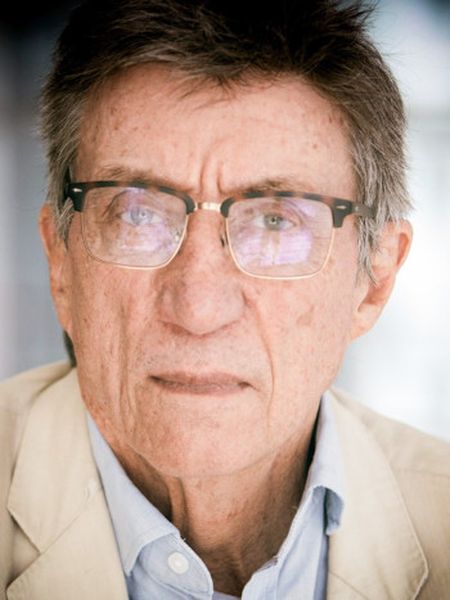
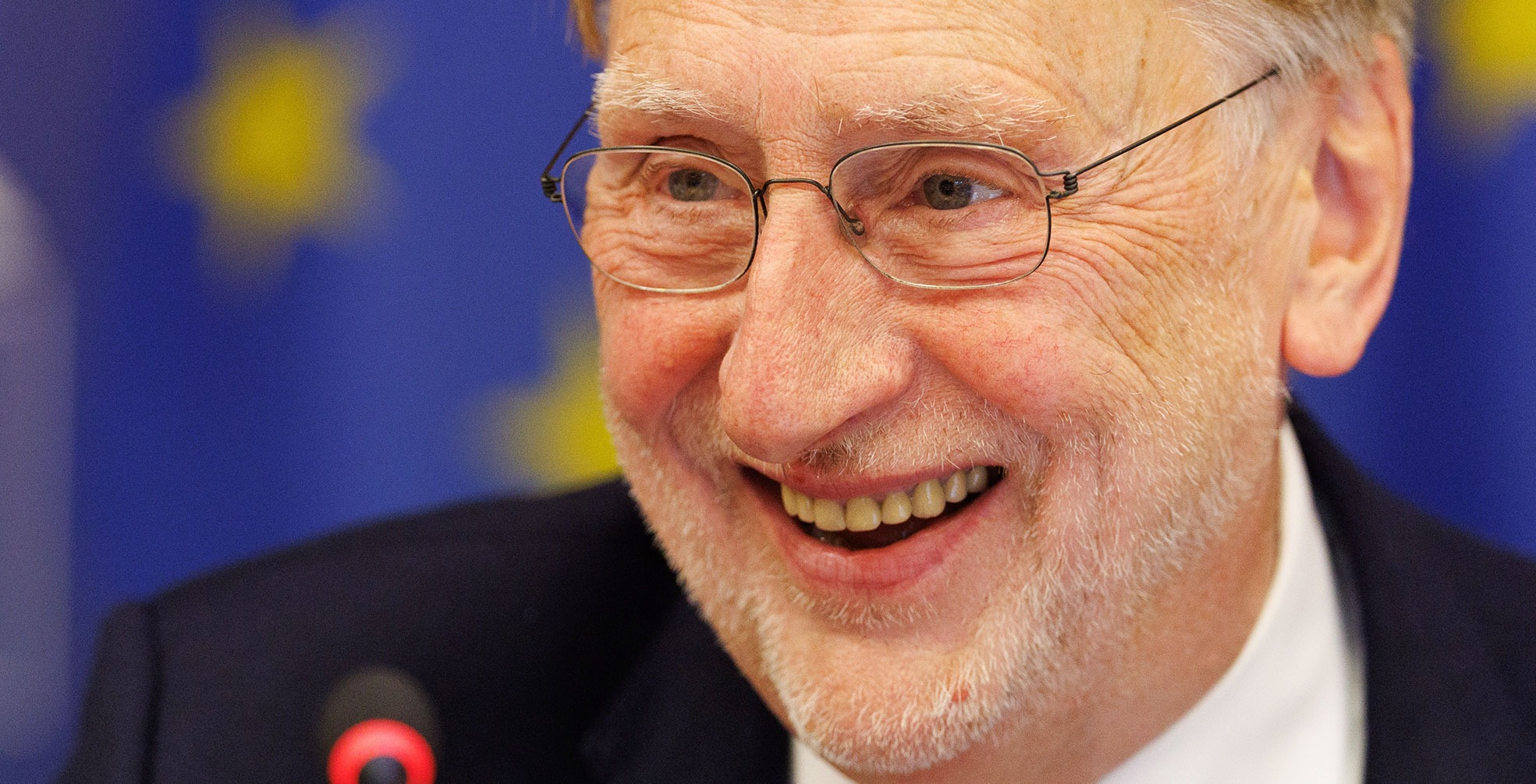
 Rapporteur Bernd Lange appears before the European Parliament’s International Trade Committee following the vote on the provisional agreement resulting from inter-institutional negotiations in Brussels, Belgium, on 2 June 2026. (Photo:EPA / Olivier Matthys)
South African industry should be given more time to adapt to carbon emission measures being adopted by the European Union, says the influential chair of the European Parliament’s trade committee, Bernd Lange.
Lange, who has just visited South Africa, said South African automobile manufacturers in particular needed more time to adjust to environmental policies such as the phasing out of internal combustion vehicles by 2035 and a “CBAM” levy on the carbon emissions from the production of the electricity used to make steel.
Lange noted in an interview that the European Parliament was now discussing legislation to stop the production of internal combustion engines in 2035, with some exceptions. There was still some discussion to make more allowance for internal combustion engines and those driven by other fuels like hydrogen.
“But, in general, 90% of new cars in 2035 will be battery electric vehicles and therefore, regarding the structure of the car industry in South Africa, it’s really important to go in that direction and develop a proper path for that.”
He noted that he himself drives a Volkswagen made in South Africa.
Lange said that the second phase of the EU’s Carbon Adjustment Mechanism (CBAM), which would kick in next year, would be “ a bit counterproductive” to the development of South Africa’s electric vehicle industry.
In the first phase of CBAM, levies are being imposed on the direct carbon emissions of steel production. This would impose some costs on South African steel producers. “But this will not be a big trouble for them” because they are “state of the art”.
He also noted that CBAM had been reformed to exempt about 90% of small and medium-sized enterprises.
But from next year CBAM would also be applied indirectly to the electricity used in the production of steel, including that in cars.
And that would affect South African automakers since steel manufacturers use electricity that is CO2-intensive because it is mainly generated in coal-fired power plants.
/file/attachments/orphans/11750940_300398.jpg "Electric vehicle charging points in London, Britain. (Photo: EPA / Neil Hall)")
Lange noted that the EU, through its Global Gateway initiative – which pledged €12-billion to South Africa last year – was helping South Africa to reduce carbon emissions by switching from coal-powered electricity production to renewable energy under the Just Energy Transition Programme.
This includes support for the production of green hydrogen. However, he noted that the EU has a regulation saying green hydrogen may only be classified as green if it is produced from power sources additional to existing renewable sources. This is to ensure it is not being produced from fossil fuel-fired electricity (which would defeat the object).
“So you have to establish new windmills or new photovoltaic [plants],” Lange said.
But because of the effort by South Africa to transition away from coal-fired electricity, the country should be given a little more time to adapt to the green energy requirements and the second phase of CBAM, he suggested.
Countries like South Africa had different conditions and so needed more time to adapt than fully industrialised countries, he said.
“And there, I guess, we should look a bit to the concrete timeline of the transition in the electricity sector in South Africa.”
But he also noted that any plan for the electric vehicle industry “has to be really accompanied with investment, also some research and the question of the competitive conditions like the energy price”.
“So, it has to be clear that this transition is also competitive.”
And so, Lange said, he also believed that South Africa should impose additional tariffs on the import of Chinese electric vehicles, to compensate for the “illegal subsidies” which he said the Chinese government is paying its electric vehicle manufacturers, creating unfair competition for Europe.
He said the EU was already doing this, imposing tariffs which ranged from 7.5% to 32.5%, depending on the different brands.
Asked if he was advising the South African government to do the same, Lange said that “it’s not my job to advise the government”, but added: “I demonstrate our experience.”
Lange also suggested that Sasol should be given more time to adapt its green aviation fuel to the strict environmental standards of the EU. Sasol wants to export green aviation fuel to the EU but under EU rules this fuel cannot be classified as green because it is produced in the same integrated production complex at Secunda where Sasol produces fuel from coal.
“Of course, these are really strict conditions which would make it really impossible to have it done in a factory which might not fulfil all the criteria of this strict regulation,” Lange said.
“And therefore, also if there is a guarantee and an end date, I am ready to discuss with the (European) Commission to get some exceptions on phasing in the best formulation.”
But he stressed that for all these extended deadlines “we have to have a clear timeline and a guarantee and an end date”.
/file/attachments/orphans/11750939_616291.jpg "Electric vehicle charging points in London, Britain. (Photo: EPA / Neil Hall)")
He added that it was hard to estimate how much extra time South Africa’s auto manufacturers and Sasol would need to adapt, “but of course it will take some years”.
Lange was speaking at Afrigen Biologics in Cape Town, a pioneering company which is developing advanced mRNA vaccines and which is being supported by the EU. Lange called it a flagship project of the Global Gateway initiative.
He noted that the €12-billion Global Gateway investment in South Africa was also helping to re-skill workers (such as in the coal industry) to help ensure that the Just Energy Transition was indeed “just”.
The €12-billion would also include support for the joint production and processing of critical minerals such as lithium.
The emphasis would be on adding value to the raw materials in South Africa, across the whole value chain, including the processing and refining and perhaps manufacturing of further products (such as electric vehicle batteries) here. DM
Comments
Scroll down to load comments...