




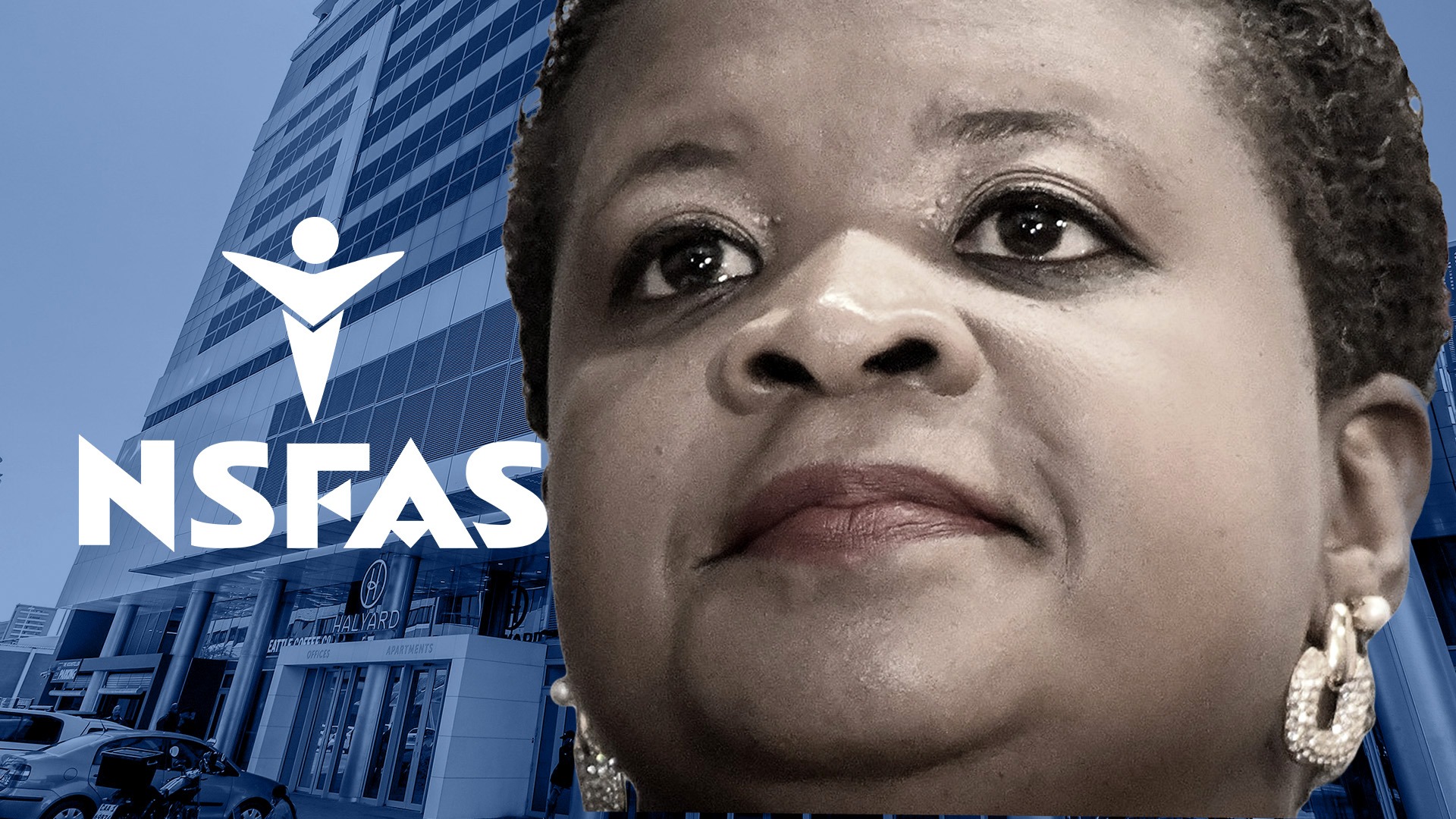
 Illustrative image: Deputy Minister Mimmy Gondwe (Photo: Frennie Shivambu / Gallo Images) | NSFAS head office. (Photo: Shelley Christians) | NSFAS logo. (Graphic: nsfas.org.za)
 Following systemic failures that forced Higher Education Minister Buti Manamela to place the National Student Aid Fund Scheme (NSFAS) under administration, Deputy Minister Mimmy Gondwe has proposed a drastic fix — dismantling the scheme and having National Treasury pay institutions directly.

Gondwe told Daily Maverick the proposal is not a challenge to Manamela, who recently appointed Professor Hlengani Mathebula to oversee the entity. Instead, she described it as a constructive response to Manamela’s own statement that all options are open, leading her to submit overhaul proposals for both NSFAS and the Sector Education and Training Authority (Seta) networks.
/file/attachments/orphans/WhatsAppImage2026-05-26at105919_793665.jpeg "The minister of higher education, Buti Manamela, tables his departmental budget vote on 26 May. (Photo: Phando Jikelo / RSA Parliament)")
Gondwe cited Finance Minister Enoch Godongwana, who previously suggested that pivoting to a direct funding model could save R700-million. However, she was quick to clarify that her objective is reform, not elimination.
“Do not get me wrong; I am not saying student funding must be done away with. My emphasis is on the current model that we have. It is not working. For the third time, it is now under administration, always receiving adverse outcomes. The office of the Auditor-General has been at pains to say that if we can get the model right, the accounting will follow,” she said.
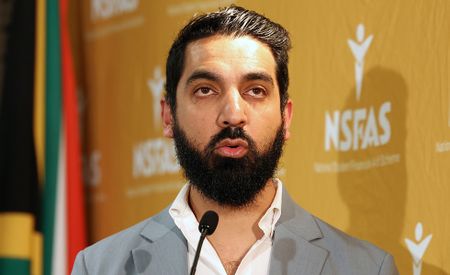
NSFAS provides bursaries and loans to South African students who apply to study at higher learning institutions, including universities and Technical and Vocational Education and Training (TVET) colleges. NSFAS partners with the Department of Home Affairs and the South African Revenue Service (SARS) to ensure that identity, citizenship and household income are verified.
Describing how verification would be conducted were NSFAS to be scrapped, Gondwe said, “SARS is rated as one of the best entities we have; it works very well, and everybody gets their tax refund. If the National Treasury holds the bursaries, there will be better controls. We have students from disadvantaged backgrounds who form a part of the missing middle cohort, and we need that funding … we have institutions that are able to then handle that funding themselves. We need to do away with the middleman.”
Assessments for reform are under way
/file/attachments/orphans/ED_597668_621051.jpg "Finance Minister Enoch Godongwana. (Photo: Jeffrey Abrahams / Gallo Images)")
The National Treasury confirmed that proposals to overhaul NSFAS’s administration are part of a wider budget review. The Treasury is currently hunting for structural efficiencies, vetting alternative delivery models that can strip out bloated overheads and get funds to students at a lower cost to the state.
“National Treasury is working with the Department of Higher Education and the Presidency on a sustainable student funding model that can be delivered in the most efficient and effective manner for presentation [to the] Cabinet. This work is still underway. A decentralised system would transfer some of the administrative costs to universities and colleges. However, the full extent of those costs and whether the model would result in overall cost reduction is still being assessed,” said the National Treasury.
Universities weigh in
Universities South Africa (USAf) CEO Dr Phethiwe Matutu told Daily Maverick that the ground-level reality for campuses had become untenable.
She argued that the scheme’s administrative tools and staff were hopelessly mismatched against the scale of its mandate, leaving universities to absorb the shockwaves. This operational paralysis is directly destabilising institutional balance sheets; by delaying student disbursements and capping accommodation allowances at unrealistic levels, the financial burden is being shifted onto the universities.
Ultimately, Matutu stressed, the system needs a fundamental re-engineering rather than superficial restructuring, noting that NSFAS had taken on secondary burdens like accommodation accreditation while failing to execute its core duties.
/file/dailymaverick/wp-content/uploads/2024/11/unnamed-6.jpg "Universities South Africa CEO, Dr Phethiwe Matutu, says NSFAS need to sort out funding issues so students can receive money in time. (Photo: Siyabonga Goni)")
“The replacement, first and foremost, should be a funding scheme which is sustainable, because what it’s doing now is transferring that unsustainability into universities,” she said.
Pushing back against proposals to bypass a centralised system, Matutu warned that letting universities directly assess student needs and apply directly to the National Treasury faced severe legal and operational roadblocks.
“We don’t have that kind of capacity right now, nor the legal functioning. To assess financial need, you have to look at a number of issues; you have to work with births, so that’s the Home Affairs database, checking bank records, verifying death registries, and cross-referencing income databases, and it is important to remember that universities are not a government entity or government department,” she explained.
Matutu cautioned that dumping funding and verification duties onto universities in a rushed, chaotic manner would merely decentralise the crisis. She warned that campuses were already being forced into roles they were never built for, such as acting as debt-collection agencies hunting down student arrears.
“It has been difficult for universities with all these NSFAS issues not being rectified. More importantly, its unsustainability is starting to affect universities, and it’s important that the government responds appropriately through appropriate policies,” she said.
Colleges comment on the proposal
/file/dailymaverick/wp-content/uploads/2023/03/tvet_20college_20blade_20nzimande.jpeg "A TVET college. (Photo: Supplied)")
George Mothapo, the secretary-general of the South African Public Colleges Organisation, said the specific funding mechanism was of secondary importance. He emphasised that the primary focus must remain on ensuring eligible students can access their allowances without administrative hurdles or delays.
“Should government consider a direct funding model through National Treasury, it would be important to ensure that robust governance, accountability, monitoring and reporting mechanisms are in place.
“Any transition must be carefully managed to avoid disruptions to students and institutions. The ultimate objective should be a funding system that is student-centred, efficient, transparent and capable of supporting teaching and learning across the post-school education and training sector,” said Mothapo.
‘That one is completely out’
Siyabonga Nkambako, the president of the South African Union of Students, the umbrella body representing all South Africa’s student representative councils, said, “We do not agree with the scrapping of NSFAS. That one is completely out.
“If the minister of finance is saying we must scrap NSFAS, how are they going to be able to come up with all of these eligibility criteria, and how are they going to verify these eligibility criteria? We know where the problems are with NSFAS, and that’s why we need to strengthen those problems and try to resolve the institutions so that they can be effective.”
Buhlebethu Magwaza of Youth Capital — an organisation advocating for key policy changes to unlock young people’s ability to tap into earning opportunities — said they were cautious about supporting a complete dismantling of NSFAS without a clear understanding of what would replace it and how students would be protected during that transition.
“The current crisis understandably creates frustration, and there may be legitimate debates about whether the existing model remains fit for purpose. However, replacing one system with another does not automatically solve the underlying problems.
“A move to direct disbursement through institutions may address some challenges, but it could also create new ones. Universities and TVET colleges vary significantly in their administrative capacity, and there may still be a risk that students could experience different levels of service depending on where they study.”
Dr Hellen Agumba, a senior lecturer at the University of Johannesburg’s Faculty of Education, argues that while NSFAS has severe administrative and governance failures that must be fixed, the centralised fund itself represents a vital social justice principle that protects vulnerable and rural students. Shifting to direct university funding without a strict equity framework risks causing a fragmented system where institutions under financial pressure might deprioritise the most marginalised applicants.
“My concern with moving to direct university funding without a robust equity framework is that it shifts accountability away from a national standard and toward institutional discretion. There is a real risk that the students who are hardest to reach and most expensive to support, those from deep rural areas, will be deprioritised,” said Agumba.
The chairperson of the Portfolio Committee on Higher Education, Tebogo Letsie, has strongly opposed dismantling the scheme, telling Parliament that universities often inflate accommodation prices for students, increasing student debt.
/file/attachments/orphans/WhatsAppImage2026-05-20at170758_488472.jpeg "Tebogo Letsie. (Photo: Phando Jikelo / RSA Parliament)")
“This view is anti-intellectual and is not supported by any scientific evidence. Mismanagement of funds at these institutions has already necessitated SIU [Special Investigating Unit] investigations and recoveries worth over R2-billion from the same institutions that have already been banned.
“The growing student debt is alarming. Universities charging accommodation fees above their cap leave students indebted and unable to register,” said Letsie. DM
Comments
Scroll down to load comments...