




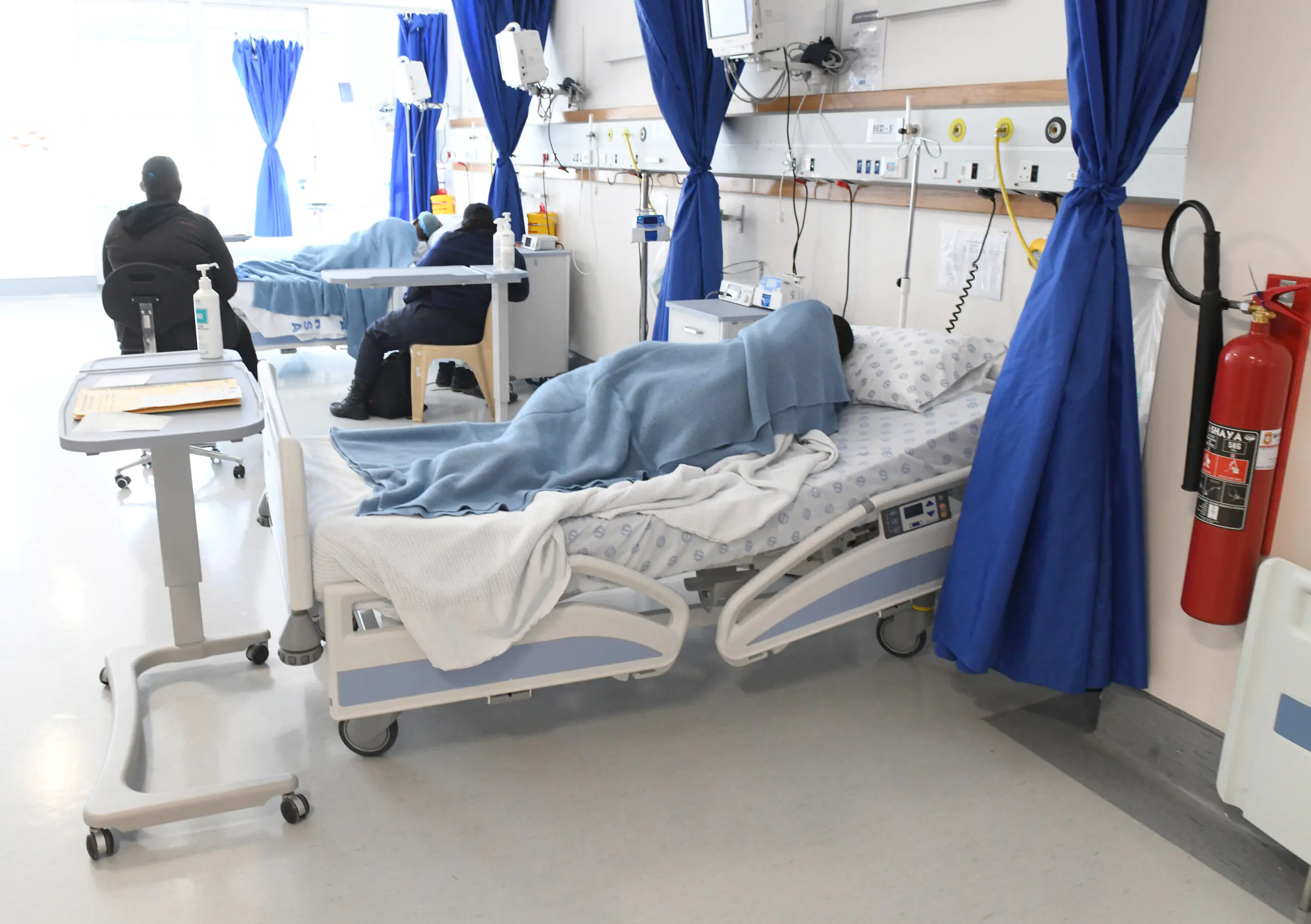
 (Photo: Nasief Manie / Spotlight)
 This is the thread running through the latest claims statistics from Liberty, Momentum Life Insurance and the Professional Provident Society (PPS), which together paid out almost R24-billion in life-risk and related claims in 2025.
The figures offer a grim X-ray of the country’s health and household finances. Death cover remains the largest payout category for life insurers, but the sharper story is the rising cost of illness while people are still alive, still working, still paying debt, still funding school fees and still expected to keep the household engine running.
Liberty paid R12.63-billion in claims in 2025, including R7.79-billion to 27,976 retail clients and their beneficiaries through its Lifestyle Protector product range. The retail payments worked out to about R31-million every working day. Its corporate benefits business paid out a further R2.6-billion.
Momentum Life Insurance paid R6.88-billion in claims in 2025, with R5.92-billion paid through its Myriad product range. That works out to about R26.3-million paid every working day.
PPS, which serves graduate professionals, paid R4.4-billion in life-risk claims, a 20% increase on 2024. PPS processed 23,016 claims, equal to about 92 claims a day, with about R17.6-million paid daily to members and beneficiaries.
The lesson here is that life insurance can no longer be viewed only as a policy that pays when someone dies. The bigger household question is increasingly: what happens if you survive, but cannot work, need care, or have to rebuild your life around a serious diagnosis?
Tom Crotty, Liberty’s head of risk optimisation and product house integration, says life insurance should be seen as part of a broader financial plan, rather than a grudge purchase.
“Life insurance is all about taking away uncertainty,” he says. “You know that something’s going to happen at some point in your life, you just don’t know when it’s going to be, you don’t know how impactful it’s going to be.”
The cancer numbers
Cancer is the red line through the insurers’ numbers.
Liberty’s data shows cancer was the leading cause across all retail claims at 32.5%, followed by cardiovascular claims at 22.2% and central nervous system disorders at 5.7%. Among Liberty’s critical illness claims, cancer accounted for 42.6% of claims, followed by cardiovascular disorders at 25.3%.
At Momentum, cancer accounted for 43% of critical illness claims. Critical illness payouts rose by more than 15% year on year, exceeding R1-billion for the first time. Momentum’s data also shows that 87% of its clients who died from cancer or cardiovascular conditions in 2025 did not have critical illness cover with the insurer.
“These outcomes show that many South Africans may be financially prepared for death, but not necessarily for the financial consequences of surviving a serious illness,” says Joretha Bothma, head of product development, underwriting and claims at Momentum Life Insurance.
PPS adds a professional-income lens to the same story. Cancer accounted for 17% of all PPS life-risk claims, with R697.5-million paid. The insurer said breast cancer remained the most common cancer type claimed, reflecting national patterns.
The World Health Organization’s Global Cancer Observatory estimates that more than 111,000 South Africans are diagnosed with cancer each year, with cancer among the leading causes of death nationally. Behind those figures are months of treatment, lost income, medical scheme shortfalls, travel, recovery time and family members who often have to step in as unpaid carers.
Liberty paid R1.24-billion in critical illness claims in 2025, up from R1.21-billion in 2024. One Liberty case shows how this risk can stretch across years. A client who took out a policy in 2009 was diagnosed with cancer in her left breast in 2014. Liberty paid the claim in full. More than a decade later, in December 2025, she was diagnosed with breast cancer in her right breast. Crotty says related cancers would not usually lead to a second payout, but in this case the second cancer was found to be unrelated to the first. Liberty paid again.
Disability and income protection
Disability and income protection are the other flashing warning lights in the claims data.
Liberty paid R924-million for loss of income due to disability, a 19.4% increase from R773-million in 2024. Musculoskeletal disorders were the leading cause, making up 21.1% of these claims, followed by cancer at 15.2% and cardiovascular conditions at 10.3%.
PPS reported that musculoskeletal and connective tissue conditions made up 14% of claims, with R479.9-million paid. These included arthritis, spinal disorders, fractures, tendon injuries and joint-related impairments. PPS said physiotherapists, medical doctors and attorneys submitted the highest number of claims in this category, reflecting the pressure on professions where stamina, fine motor skills, concentration and long hours are part of the job.
Momentum’s figures tell a similar story. It paid R602-million in lump-sum disability claims and R310-million in income protection claims. Musculoskeletal conditions were the leading cause of income protection claims, accounting for about a third of claims overall. Cancer, nervous system conditions and psychiatric conditions also featured.
“Many of these conditions do not end careers permanently, but they can prevent people from earning an income for extended periods,” says Nafeesa Gaida, head of claims at Momentum Life Insurance. “Income protection plays a critical role in maintaining financial stability during recovery.”
One of Liberty’s largest disability claims involved a client in their fifties with severe sleep disorders linked to narcolepsy and sleep apnoea. Crotty says the client had been partially working for about two years, but by mid-2025 it was determined that the condition had a total and permanent effect on their ability to earn an income. Liberty paid out more than R38-million.
This is an example of a less-obvious disability that is just as financially devastating as a car crash, paralysis or a visible injury.
The young are not invincible
Momentum’s case studies also show how early these risks can arrive. The youngest death claim paid in 2025 was for a 25-year-old woman who died after a uterine rupture. The youngest terminal illness claim was for a 34-year-old man diagnosed with terminal skin cancer. The youngest critical illness claimant was a 26-year-old man diagnosed with spastic paraparesis, while the youngest lump-sum disability claimant was a 29-year-old woman with psychiatric conditions including post-traumatic stress disorder, major depression and anxiety.
The claims data challenges the idea that young people can safely delay risk cover.
Liberty’s youngest life insurance claim in 2025 was for a 22-year-old client who had been covered for just over a year and died in a motor vehicle accident. The oldest client was 103 and had been covered for 37 years. Momentum reported that 62% of death claims among clients under 30 were due to unnatural causes, mainly motor vehicle accidents.
At Liberty Corporate, group life assurance payouts increased by 2%, but the insurer recorded a 15% increase in deaths in the 0-to-34 age band.
“Young adults aren’t low risk. They are just differently exposed,” says Sinethemba Khoabane, head of group risk at Liberty.
The ripple effect of a claim can go far beyond the person insured. Liberty paid R42.7-million in education cover to 468 children and young adults in 2025. The largest annual tertiary tuition payment was R763,680 for a student studying at an international university. Crotty says Liberty expects to pay a further R650-million in future tuition and allowance claims for the children already on these benefits.
PPS says its data shows how serious illness and injury are affecting professionals in an environment of rising healthcare costs and pressure on household finances.
“At a time when many graduate professionals faced severe illness or long-term incapacity, PPS played an important role in safeguarding their income and supporting their families,” says Motshabi Nomvethe, head: segment and growth at PPS.
The underinsurance problem
The broader issue is underinsurance. Liberty cites Asisa research showing South Africans had a R50.3-trillion insurance gap in 2025. This is the gap between the cover households have and the cover they would need to remain financially stable after the death or disability of an income earner.
The practical takeaway is that households need to ask harder questions than what happens when someone dies.
❓What happens if they live, but cannot work?
❓What happens if cancer treatment takes a year?
❓What happens if a back injury, stroke, psychiatric illness or permanent impairment cuts off income?
For families already stretched by debt, school fees, medical costs and rising living expenses, the answer can be financially brutal. DM