




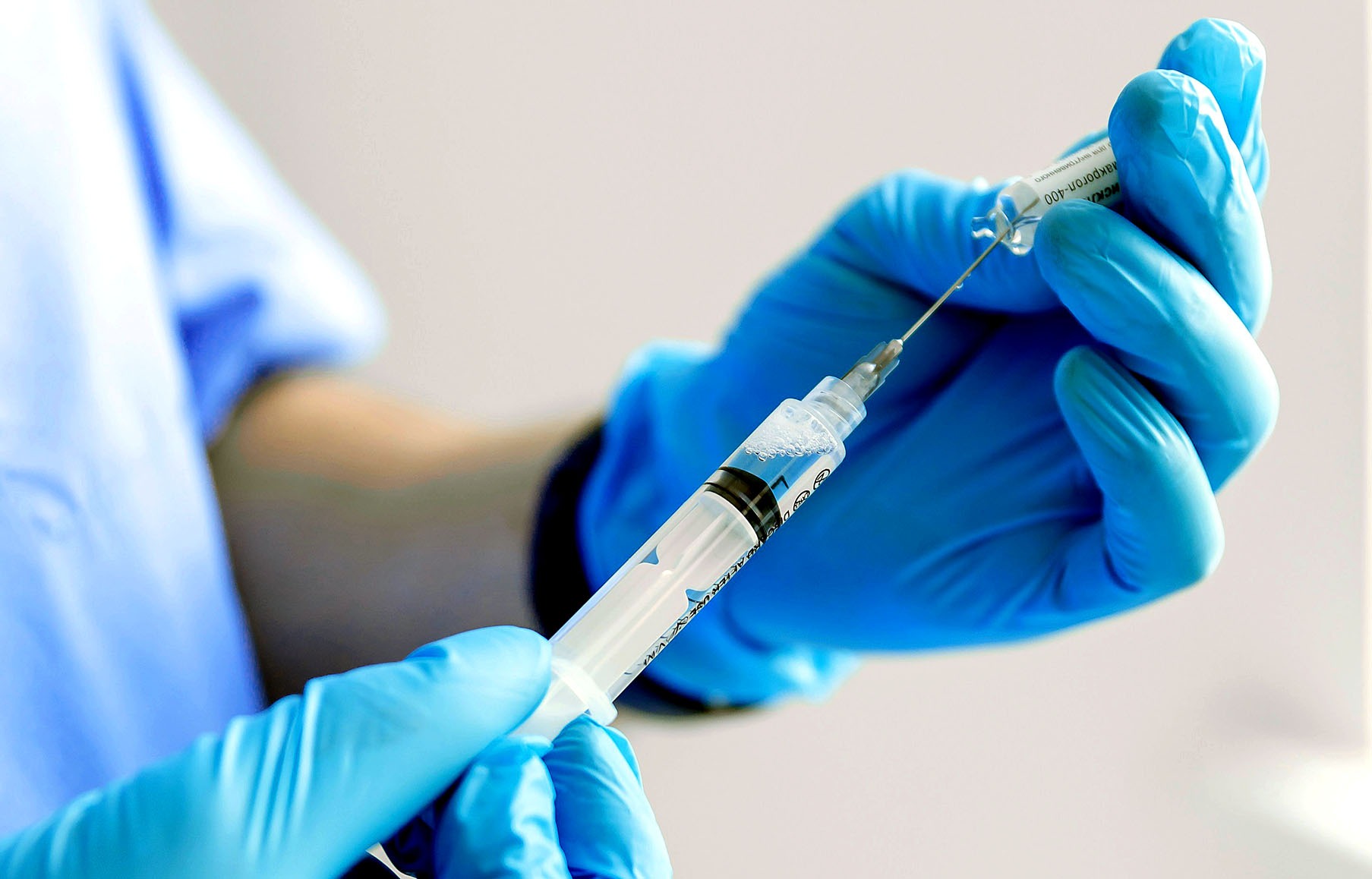
 Lenacapavir is injected just under the skin, typically in the stomach area, where it forms a small depot that very slowly releases the drug over time. (Photo: Pixabay)
 When 29-year-old Keegan Daniels* visited a public hospital outside Cape Town earlier this year to be placed on medication to prevent HIV infection, he says he wasn’t sure what to expect, but it definitely wasn’t to be reprimanded, lectured and told that anal sex “is abnormal”.
Oral pre-exposure prophylaxis (oral PrEP) refers to antiretroviral tablets taken to prevent HIV infection. When used as prescribed, oral PrEP has been shown to reduce the risk of HIV infection from sex, including in men who have sex with men (MSM), by about 99%, according to a 2022 meta-analysis.
During the short consultation, Keegan claims the doctor, who appeared unfamiliar with prescribing PrEP, chastised him for addressing him as “sir” rather than “doctor”, and made assumptions about his sexual orientation.
“I am gay, but when he told me I was ‘homosexual’ instead of asking me, I felt as if I was there to be shamed instead of helped,” says Keegan, who identifies as a gay man.
Keegan tells Spotlight that he sought out oral PrEP after an experience that left him worried about his HIV risk. As a man who has sex with other men, he is also part of a population disproportionately affected by HIV. According to the World Health Organization (WHO), men who have sex with one another are up to 26 times more likely to acquire HIV than the general population. This is largely driven by biological risk factors associated with anal sex combined with other social and structural vulnerabilities faced by this group.
The consultation became increasingly uncomfortable, Keegan says, when the doctor began discussing the importance of marriage as a method to prevent HIV and the risks associated with anal sex.
“He may not have meant it that way, but it felt like a judgement,” Keegan says.
His experience highlights long-standing concerns from activists, researchers and healthcare providers about discrimination experienced by members of marginal groups at public sector clinics. One solution to such discrimination has been to create special clinics for groups like men who have sex with men where they could access HIV treatment, prevention and other services without judgement. But this alternative was dealt a major blow last year with the closure of many such specialised programmes funded through the US President’s Emergency Plan for Aids Relief (Pepfar).
There are now concerns that the destruction of such specialised services could limit the reach and impact of the latest addition to South Africa’s HIV prevention toolkit. Last Friday, South Africa officially launched its public sector roll-out of an injection that provides six months of protection against HIV infection at a time. The jab, a form of injectable PrEP, contains the antiretroviral drug lenacapavir. (See Spotlight’s special briefing on lenacapavir for more details.)
PrEP in South Africa
The recent history is worth revisiting. South Africa became the first country in Africa to start rolling out oral PrEP in 2016. Initially, the strategic focus of the programme was on “key populations”, groups that bear a disproportionate burden of HIV infection and who are at the highest risk of new infections. Key populations include sex workers, men who have sex with men, transgender persons, people who inject drugs and people in prisons or other similarly closed settings.
UNAids estimates that in sub-Saharan Africa, key populations and their sexual partners accounted for roughly 39% of new HIV infections in 2020, despite representing a much smaller proportion of the population.
“PrEP is central to South Africa’s HIV response because treatment alone will not end the epidemic,” says Department of Health spokesperson Foster Mohale.
“South Africa still has a very large HIV burden, with millions living with HIV and substantial ongoing new infections, especially among adolescent girls and young women, key populations and pregnant and postpartum women,” he adds.
According to a 2024 paper published in the journal Frontiers in Reproductive Health, there were more than 5.6 million oral PrEP initiations globally between 2016 and 2023. Of these, more than 1.2 million were in South Africa.
“After a decade, South Africa is home to the largest and most successful PrEP programme in the world, even though it has not delivered the impact we wanted,” says Mitchell Warren. He is the executive director of Avac, a US-based advocacy organisation, largely focused on HIV prevention, that does extensive work in South Africa. Warren’s point about the impact not being what we wanted, refers to the fact that, comparatively large as our PrEP programme is, uptake has been much lower than what was hoped.
He says that the oral PrEP programme started to gain more traction around the time of the Covid-19 pandemic. “A lot of that was thanks to Pepfar, through the support around programmatic delivery of PrEP and most notably the initiatives designed for key populations,” Warren says.
Making sense of the numbers
The most recent figures show that more than 2.1 million individuals have been initiated on oral PrEP in South Africa, Mohale tells Spotlight.
However, most of these are considered to be people restarting PrEP and not new users, according to Professor Francois Venter, executive director of Ezintsha at Wits. He says the real figure for overall PrEP users is closer to 500,000.
This view is roughly in line with estimates from Thembisa, the leading mathematical model of HIV in South Africa. The two types of indicators here are important to distinguish. Since many people start and then stop taking PrEP, looking just at PrEP initiations provides a very limited view. This is why Thembisa also includes estimates of the total number of people taking PrEP at specific points in time (technically the middle of each calendar year).
According to Thembisa, just more than 350,000 people were taking PrEP as of mid-2025 – a slight decline compared with the 2024 number. Before this decline the programme had been showing solid year-on-year growth.
Aid setback
When trying to understand why PrEP numbers stopped growing, and instead declined slightly in 2025, one very likely culprit stands out – aid cuts.
Venter argues that the relative success of South Africa’s PrEP programme was underpinned by an ecosystem of specialised key population services, most of which were funded by the United States Agency for International Development (USAid) under Pepfar.
“Most of these 500,000 estimated PrEP users in South Africa started in these key populations programmes,” says Venter.
“But one sudden decision by the Trump administration essentially destroyed PrEP in South Africa, and because South Africa is so significant in terms of HIV incidence and prevalence, it also threw the global PrEP response into chaos.”
In February 2025, the Trump administration terminated large numbers of USAid-funded health projects and massively reduced funding for many HIV programmes. While a limited waiver allowed some treatment services to continue, HIV prevention activities were largely excluded. Programmes focused on helping people avoid HIV infection, including many PrEP services, were among the hardest hit.
The cuts all but decimated specialised clinics and services for key populations in the country, according to Venter.
“The dismantling of the key population programme is an absolute disaster for PrEP. Clinics gone, just shut down. About 80% of the specialised key population services were funded by USAid,” says Venter.
Despite the health department’s assurances that these PrEP users from key populations will be integrated into the normal existing services in our healthcare system, he says “there is absolutely no evidence that this has happened”. Venter adds: “I suspect the vast majority stopped taking PrEP.”
More than 8,000 Pepfar-funded staff involved in HIV programmes lost their jobs, important HIV prevention research projects were halted, civil society organisations were forced to retrench staff and attenuate their outreach programmes and, most alarmingly, thousands of PrEP users were lost in the system, according to Eugene van Rooyen, the legal and policy adviser for the Sex Workers Education and Advocacy Taskforce (Sweat).
“It is impossible to know exactly how many of these clients stopped taking PrEP. We did a survey late last year [2025] that showed that less than half of the former users of key populations services in Cape Town were still on treatment,” he says.
The Sweat survey aimed to find out what happened to these individuals after the services stopped but did not disaggregate PrEP users from people on antiretroviral treatment.
“Regardless, the results are a tragedy. All those years of gaining trust in these communities, and all the millions invested in the PrEP programme, all down the drain,” Van Rooyen says.
The concerns raised by activists are echoed in findings from Ritshidze, South Africa’s largest community-led monitoring programme. Ritshidze, which surveys thousands of public healthcare users annually and monitors more than 400 healthcare facilities across the country, was established to track the quality of HIV and TB services from the perspective of people using them.
Its most recent report found early signs that the Pepfar funding cuts may already be affecting access to HIV services. About 56% (189 out of 340) of facility staff surveyed reported reduced capacity after the Pepfar withdrawal, while reports of stigma and discrimination remained common.
Vertical services vs integration
While Keegan says he experienced stigma and challenges accessing PrEP through the general public sector, his older cousin Jason* describes an entirely different experience when he first started PrEP.
“I started PrEP three years ago at the Wits RHI Transgender Clinic in Bellville [Cape Town], it was easy, comfortable, safe. I felt empowered and had zero problems getting onto PrEP there,” says Jason, who is also a part of the MSM community. Although he doesn’t identify as a transgender person, he says the clinic staff welcomed him and his peers. It was a space that removed many of the barriers key populations face when accessing healthcare. But it was also one of the many clinics that ceased to exist after the funding cuts.
The Department of Health maintains that “the PrEP programme has not collapsed, because it is anchored in the public health system”. Their argument has broadly been that people who went to specialist clinics should be redirected to public sector clinics. To address discrimination, provincial health departments have run several programmes aimed at sensitising clinic staff to the needs of key populations. This has included staff involved in administering the lenacapavir injection.
As for PrEP, Mohale says South Africa made “a deliberate decision to move PrEP out of the early pilots that commenced in 2016 into the broader public health system at scale”. Today, he says, “approximately 99% of public primary healthcare facilities offer oral PrEP”.
“The key success factor is that PrEP is not a vertical programme, it is integrated into primary healthcare and combination prevention,” says Mohale.
What all of this means for lenacapavir
“This is not merely a medical advance. It is a practical intervention that can transform lives. It reduces barriers to adherence. It expands choice. It strengthens dignity. And it empowers people to take control of their health and their future,” President Cyril Ramaphosa said in a prepared speech at the launch of South Africa’s lenacapavir roll-out last Friday.
The first phase of the roll-out will see lenacapavir available in 360 health facilities across the country. This is roughly 10% of the country’s public sector clinics. While it remains to be seen how high demand will be, there are clearly limits to what level of demand can be accommodated. Initially, South Africa will only have enough lenacapavir for about half a million people. This is partly why specific groups like young women and girls, MSM and sex workers are being prioritised.
Thus, in the fact that there is some prioritisation of specific groups the lenacapavir roll-out partially mirrors the roll-out of oral PrEP a decade ago. But unlike the initial oral PrEP roll-out, specialised key population clinics will play little part.
Mohale explains that the integration of services is the philosophy underlining the roll-out of the lenacapavir programme, a philosophy he says is fundamental to the success of PrEP in South Africa.
Venter disagrees: “Key population programmes exist for a reason – they work. People need verticalised services.”
Meanwhile, a statement released by a coalition of several civil society groups criticised the roll-out plan as being “unambitious, low-scale, and in danger of being more about pomp than public health impact”.
“A programme that does not adequately prioritise key and vulnerable populations such as sex workers, outside of clinics, will leave those most in need of HIV prevention services, even more vulnerable,” Katlego Rasebitse, from the Sisonke Movement, says.
A roll-out beyond clinics?
The introduction of lenacapavir has mostly been received with resounding optimism. But some have also raised concerns and have cautioned that the roll-out won’t be without obstacles.
“Getting hundreds of thousands of otherwise healthy individuals to come to public health facilities to get lenacapavir is not a likely pathway to scale. We have got to be very clear, dropping lenacapavir into clinics is not a pathway to success,” says Warren, who has also praised South Africa and the Department of Health for launching the national injectable PrEP programme.
“There are many innovative ways to deliver PrEP outside of facilities, like mobile clinics, outreach services, among others. There is a lot of work around implementation science being done in South Africa that can be used to make this programme ambitious enough to be a global PrEP success story,” he says.
There are several implementation science research projects under way looking at innovative ways of delivering PrEP, including lenacapavir, outside of traditional settings.
Unitaid has launched a project, valued at $22.5-million, that “will support South Africa to expand access to lenacapavir through innovative, community-based delivery and demand-generation approaches that complement national roll-out through public health facilities”.
Largely focused on reaching key populations, the project aims to generate real-word evidence on these innovative delivery models, evidence that “will help inform national scale-up”. It is exploring a range of delivery settings including pharmacies, mobile clinics and even hair salons.
‘I was trying to do the right thing’
When Keegan walked out of the doctor’s consultation room that day in April, he says that he felt angry, self-conscious and deeply uncomfortable. Instead of continuing the process to get onto PrEP, he left the hospital.
“I have been through a lot of trauma in my life, a lot of stigma because of my orientation. It took a lot for me to start healing. This experience brought me back to that space of self-doubt. I left there feeling like I’m nothing. I’m a piece of dirt,” he says.
His cousin, Jason, had an appointment the next day, at the same place for the same reason. Since the closure of the clinic in Belville, Jason had chosen to pay for his monthly PrEP pills himself, instead of facing the challenges anticipated in a regular public health facility, but he says this route had stopped being financially feasible.
“By that time I had cooled down and Jason convinced me to go back to the hospital with him,” says Keegan.
After the mandatory blood draws and HIV testing, he filled his prescription at the hospital pharmacy.
As Keegan sat down, he says he showed Jason the box.
“That isn’t PrEP, Keegan, those are pills for HIV-positive people,” said Jason. He had experience with oral PrEP and recognised the ARVs by the packaging. His partner, living with HIV, uses the same medication.
After a protracted process, several conversations with nurses and the doctor, Keegan says he eventually received the correct medication. He told Spotlight that, even though he is educated and informed, he only started PrEP “through luck”. There are many other people from marginalised groups “who probably won’t have my luck”.
“What will they do?” he asked.
“I was trying to do the right thing. The responsible thing for my health. In the end, I didn’t feel like I was doing the right thing. I felt like I was being punished.”
Despite this experience, both Keegan and Jason are excited at the prospect of the twice-yearly injectable PrEP.
“You won’t catch me coming back to this hospital, but I would find a clinic that treats people well. Even if I have to drive for hours, I would, just to have this injection every six months, instead of drinking pills every day,” Keegan says. DM
* Names have been changed to protect the identity of sources.
This article was first published by Spotlight – health journalism in the public interest. Sign up to the Spotlight newsletter.
/file/dailymaverick/wp-content/uploads/2024/08/image1-1.jpg)