




 Illustrative image: Generated with Google Gemini Flash Image 2.5
I am still at a stage of life where I am slightly surprised that something happens as I planned it. I always expect something to go wrong.
I have found that one of the most important paths to familial happiness is the planning session between my wife and me at some point in early January. It’s when we can work out school holidays, family holidays, when we can go away, when we can’t and all of that stuff that makes up a family calendar.
Not long ago a calendar was a thing on a wall where everyone could see it. Now it’s something I have to sit down and peer at on my phone.
There is huge value in planning. Especially if you are properly motivated, properly resourced and are able to make it happen.
Yesterday, two big JSE-listed companies demonstrated this in a fundamental way.
PPC Cement has been in a difficult position for a long time. The volume of cement it sold in South Africa simply would not go up. The reason for that is a story all on its own, but it reveals that the government is not able to plan and execute the building of infrastructure.
So PPC brought in an expert and a team and give them the mandate to turn things around.
The result, as PPC CEO Matias Cardarelli proudly told The Money Show last night, was a company that is making a lot more money.
It’s not that they’ve raised prices; you simply can’t do that in the cement market at the moment.
They’ve just modernised and improved systems. In the end, they’ve just cut their cost base.
And while it’s true that cement volumes are up 18% in Zimbabwe (he says there is economic growth there) the real story is that they had a plan, they implemented it, and it made a real difference to the company.
Something similar happened at the mining, agricultural and chemicals group Omnia.
Their real problem was their chemicals division. So they drew up a plan, cut back on some of what they sold, and while revenues were down in that sector, they were able to increase their profits.
Their CEO, Seelan Gobalsamy, is thrilled with the results. And so he should be – it matters to everyone connected to that group, including its customers.
Unfortunately, there is a huge difference between the way a company implements a plan and the way the government does it.
Obviously you can’t really compare the two. A company is able to control so much more around the problems it deals with. A government has a huge number of variables to manage and very little that it actually controls.
And, of course, as that lesser-quoted philosopher Mike Tyson once put it, “everyone has a plan until they’re punched in the face”.
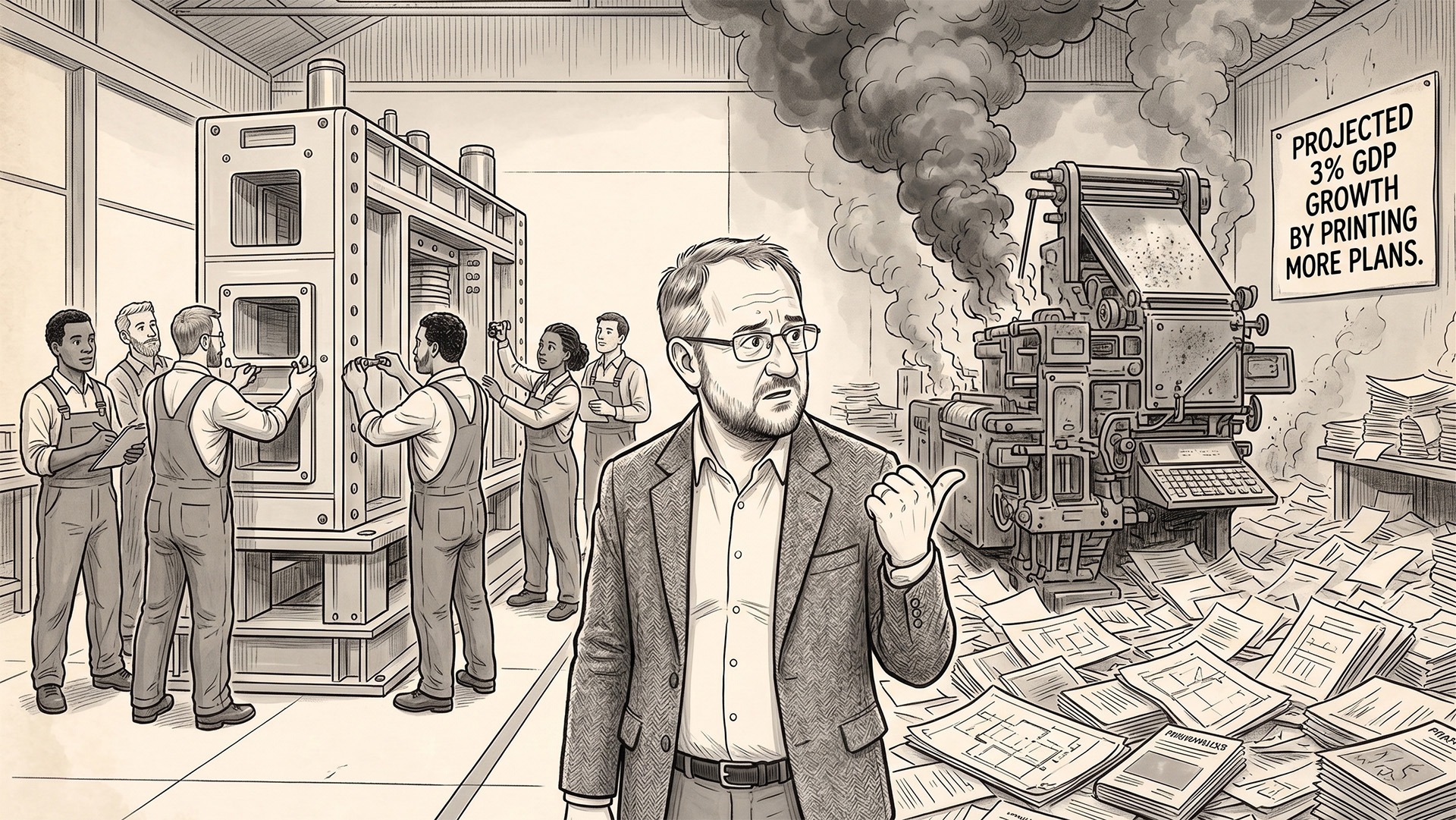
Yesterday came the launch of a new industrialisation programme from the government, a plan that is supposed to halt our deindustrialisation.
It suggests that if everything goes right, if the plan is implemented properly, it could help raise GDP to 3% a year.
I think you know already what I’m going to say next. This is so unlikely to happen that I don’t know if it’s even really worth looking at.
There is such a long list of previous government plans that have gone nowhere.
Remember the plan to “create 100 black industrialists” from 2017?
Or Jacob Zuma’s “Nine Point Plan” from 2015?
Or, slightly laughably, government’s plan from 2009 to end all protests by 2014...?

The biggest and bestest plan we’ve ever had, the plan that would have radically changed our reality, was the National Development Plan in 2012. Zuma made it the centrepiece of the ANC’s Mangaung conference.
And hardly any of it was implemented.
It’s a great pity because Trevor Manuel and others made sure a huge amount of time, effort and thought went into it.
I think the real lesson from all this is that if you don’t have political backing, if the politics is not right, the plan will not happen.
And sometimes, despite the fact that there is huge value to a plan, I’m not sure it’s really worth having one.
Much has been made of how the communications ministry’s AI plan turned out to include references that had been made up, proof that it had been written by AI.
Now the minister, Solly Malatsi, has a really strong group of people drafting a real plan (including Professor Benjamin Rosman, a world expert on the subject).
But the AI world is moving so fast that I’m not sure a plan helps at all. I think it might be better to have this group of really impressive people holding a virtual meeting every month and basically changing government policy as they go. Nothing written on a (stone) tablet will do the trick.
So often government types here and in other places make the same mistake – they think the “plan” is the solution. It isn’t. The “solution” is the implementation.
And that’s where you really see the difference between the government and private companies. DM
Comments
Scroll down to load comments...