




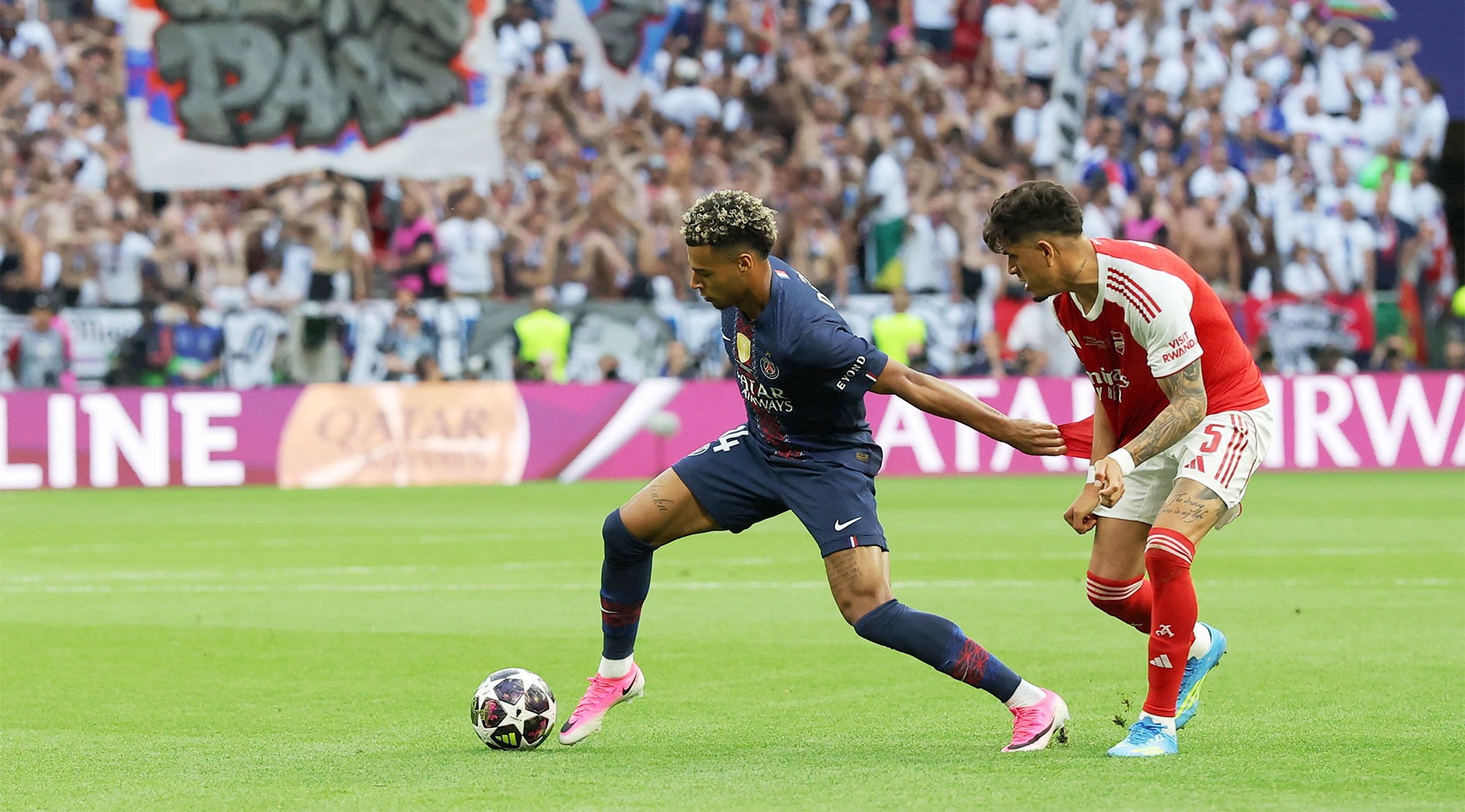
 Desire Doue, who represents France at international level, in action for Paris St Germain against Arsenal in the Champions League final. (Photo: REUTERS / Bernadett Szabo)
Four sets of brothers will compete at the World Cup, all for different countries in a reflection of how steady migration around the world has had an impact on football.
Désiré Doué and his older brother Guéla are French-born, but while Paris St-Germain (PSG) starlet Désiré plays for Les Bleus, Guéla is an overlapping fullback for the Ivory Coast from where their father hails.
/file/attachments/orphans/2276257593_561628.jpg "Guéla Doué of RC Strasbourg in action during the UEFA Europa Conference League against Rayo Vallecano de Madrid. (Photo: Sathire Kelpa / Eurasia Sport Images / Getty Images)")
The Williams brothers Iñaki and Nico are both Basque-born, and the 23-year-old Nico was player of the match when Spain beat England in the European Championship final two years ago.
Older brother Iñaki, who turns 32 next week, played once for Spain too, but only in a friendly, which qualified him after a hiatus to switch allegiance and declare for Ghana, the country from where his parents migrated.
Also in the Ghana side is the 30-year-old Dutch-born defender Derrick Luckassen, who was added at the last minute to the World Cup squad as an injury replacement and joins his half-brother Brian Brobbey at the tournament.
Brobbey, 24, is a back-up striker for the Netherlands, going into the tournament in Canada, Mexico, and the US on the back of a strong second half of the Premier League season with Sunderland. They share the same mother but have different fathers.
Australia selected Scottish-born centre-back Harry Souttar, 27, while his two-year-older brother John will be playing for Scotland. They were born in Aberdeen, but their mother is Australian, and Harry switched his allegiance seven years ago after being capped at junior level by the Scots.
In the opening stage of the tournament, there are no scheduled meetings between any of the siblings, but only last week, Désiré watched from the stands in Nantes as Guéla swept home the opening goal to help the Ivorians beat France 2-1 in a warm-up friendly.
/file/attachments/orphans/UP1EL651I518R_582153.jpg "Spain's Nico Williams celebrates after scoring. (Photo: REUTERS / Annegret Hilse)")
Teasing
“Sure, we teased each other a bit before the match,” Guéla told reporters afterwards. “In the end, we’re family and we’re very happy for each other.”
The two brothers, born in Angers in northwestern France, took their first steps together at Stade Rennais, but Guéla, who is three years older, was overshadowed by his younger brother’s prodigious talent, which has seen him move to PSG and win back-to-back Champions League honours.
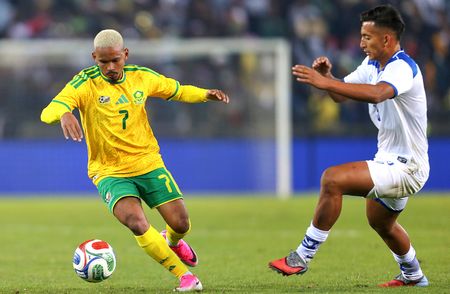
Migration to Europe over the last decades has opened a major pool of talent for African national teams who dip into the diaspora ranks for players.
World Cup participants such as Algeria, Cape Verde, the Democratic Republic of Congo, Morocco, Senegal, and Tunisia have more European-born players in their 26-man squad than those born at home.
/file/attachments/orphans/2279852351_241786.jpg "Iñaki Williams of Ghana. (Photo: Ryan Hiscott / Getty Images)")
There has been only one case of siblings squaring off against each other at the World Cup, and it happened in back-to-back tournaments.
Jérôme Boateng was at the back for Germany against his older half-brother Kevin-Prince Boateng, who suited up for Ghana, in a 1-0 win for the Germans in Johannesburg in 2010.
Four years later, the pair were at opposite ends again in Fortaleza, Brazil when the group game ended 2-2.
“Of course, it was something special, but somehow it was also different four years later,” said Jérôme Boateng.
“In 2010, it was truly something new, something extraordinary. I don’t want to say it’s become commonplace – because a World Cup is never commonplace. But we also played against each other quite a few times in the Bundesliga,” he added. Reuters/DM
Comments
Scroll down to load comments...