




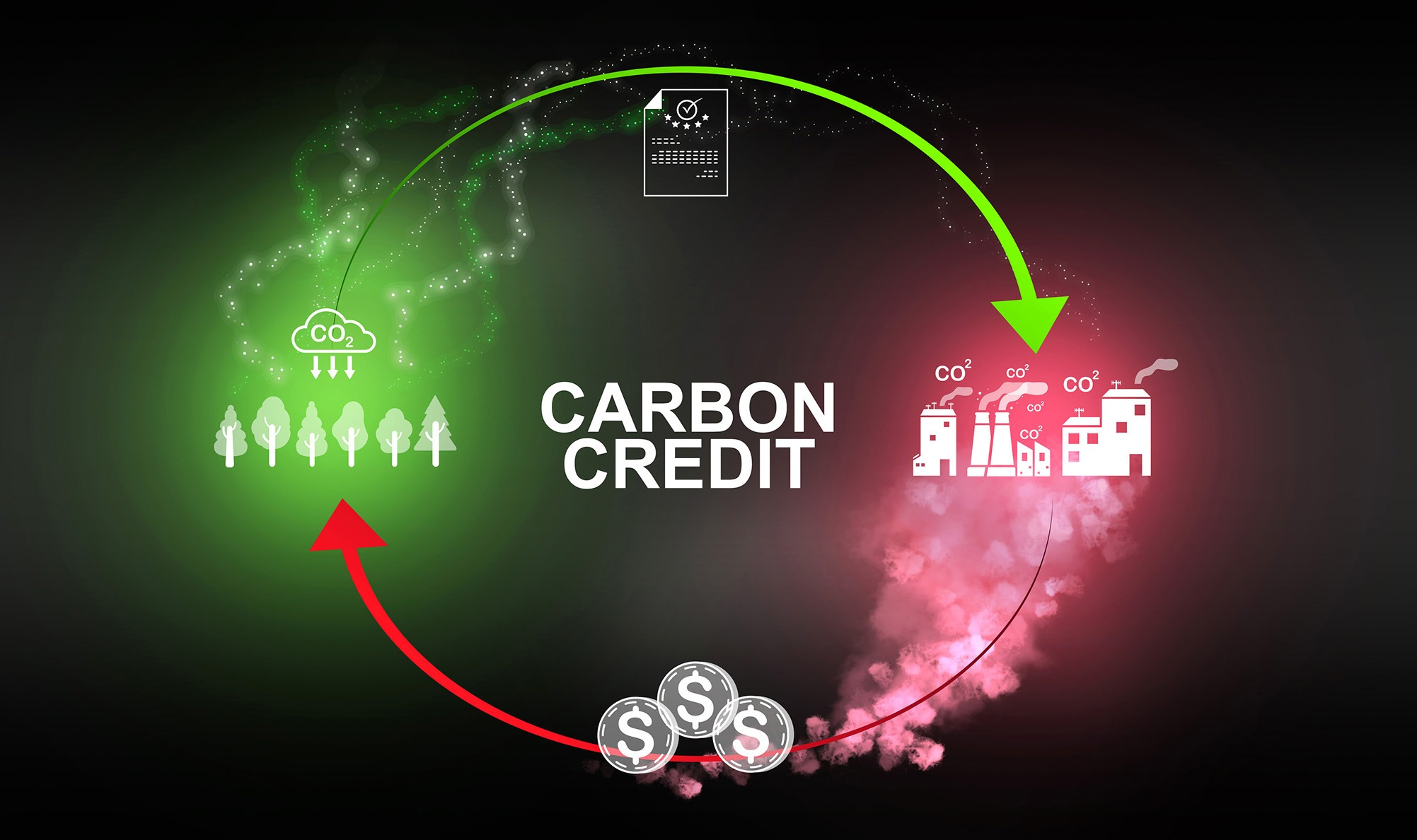
 Zambia has committed up to $275m over 15 years to a grid resilience programme aimed at strengthening and modernising its electricity distribution network. (Image: iStock)
 /file/dailymaverick/wp-content/uploads/2025/10/label-Op-Ed.jpg)
Zambia has launched one of the most innovative sovereign finance transactions seen on the continent in years, and its real significance lies in how readily it can be repeated elsewhere in Africa.
The country is using a $600-million loan from the African Development Bank (AfDB), together with its own resources, to buy back its expensive $1.36-billion sovereign bonds. In return, Zambia has committed up to $275-million over 15 years to a grid resilience programme aimed at strengthening and modernising its electricity distribution network.
The programme will be coordinated by GreenCo Power Services, part of the Africa GreenCo Group, on a corporate social responsibility basis, with implementation managed by a separate, independent entity run by private-sector professionals.
This is not just a buyback. It deliberately links sovereign debt management to investment in the electricity sector as an engine of growth, and it does so with African development finance. That combination makes it worth watching.
The outcome is not yet settled. On 4 June, Zambia extended its early-participation deadline to 9 June and improved the terms of the offer, in what it has called its “final increase”. Whether enough bondholders tender to carry the transaction through remains to be seen.
One hopes they do, because what is being attempted here is larger than this single series of notes.
African capital and Zambian leadership
The AfDB’s role is central, but so is that of the Lusaka government. The easier course would have been to leave the restructured bonds in place and move on. Instead, the government has chosen to retire them in full and tie that to a transformative national development programme.
This is an African multilateral arrangement providing catalytic capital that makes the deal possible on terms that generate real fiscal savings for a member state. The AfDB’s board has approved the transaction, which the Zambian government and the AfDB present as a blueprint for similar initiatives elsewhere in Africa.
That replicability is the heart of it. Many African governments are carrying heavy debt while their power systems go underfunded, and the two problems are almost always treated separately.
Zambia and the AfDB are showing they can be solved together: debt relief unlocks fiscal space, and part of that space is ring-fenced for the grid infrastructure on which growth depends. Other African countries now have a model to follow — a model built from within the continent rather than imported into it.
What this means for Zambia
The implications for Zambia are significant:
- More money for the power sector: Instead of scarce government funds being used to service expensive debt, some of that fiscal pressure is relieved, creating room for investment in electricity infrastructure that would otherwise have to compete for a shrinking budget.
- A stronger distribution network: The focus is not on building power stations, but on strengthening the distribution system, the part of the network closest to the customer. That means fewer bottlenecks, lower technical losses, improved reliability, a greater ability to connect new customers, and easier integration of new renewable energy projects as they come online.
- Better resilience against drought: Zambia’s electricity system remains heavily dependent on hydropower and is highly vulnerable to drought. Recent droughts have caused severe shortages. A more resilient network helps Zambia manage imports, distributed generation, solar, batteries and regional trading during future supply crises.
- An improved investment climate: The transaction also signals that Zambia’s restructuring is reaching a credible conclusion and that the country is becoming investable again, which should improve investor confidence in both the power sector and the wider economy.
Implications for GreenCo
For GreenCo, this could be a turning point.
The company, which is known as a leading renewable energy offtaker, electricity supplier and trader across the southern African power pool, is being entrusted by the Zambian government and the AfDB to coordinate a national infrastructure programme.
That is a significant elevation in standing and credibility. It also validates a broader view that Africa needs independent energy-systems architects, and that electricity traders and market intermediaries are themselves critical market enablers, for both generation, transmission and distribution infrastructure investment and regional power-market integration.
In selecting GreenCo to coordinate this programme, the AfDB and the Zambian government are effectively endorsing it as a trusted partner in the design and coordination of power-system development, and not merely a trader operating within it.
For Africa GreenCo, this may prove a watershed moment, elevating the company from a renewable energy trader to a regional electricity-market infrastructure institution — exactly the evolution that many observers of African power-market reform have long argued is needed to unlock large-scale private investment in the sector.
The bigger picture
The most important takeaway is that this is not simply a debt-restructuring deal. It is effectively a recognition that electricity market infrastructure is now being viewed as an economic enabler, worthy of sovereign and development-finance support.
In the same way that ports, railways and roads enable economic growth, Zambia and the AfDB are treating electricity market institutions and grid infrastructure as strategically important to growth and the economy, and financing them through the very operation that manages the sovereign’s debt.
For the continent, the value is larger still. The transaction stands as proof that African capital and African institutions can lead in linking fiscal discipline to energy development, and that the model can travel from Lusaka to other capitals carrying the same twin burden of heavy debt and inadequate power.
This will not, on its own, fix weak utility balance sheets, drought exposure or the wider financing gap across African power systems. But it shows that debt management and energy development need no longer be treated as separate problems.
The bondholders will decide the immediate outcome. The larger idea is worthy of taking note. DM
Chris Yelland is the managing director of EE Business Intelligence.
© Copyright 2026 – EE Business Intelligence (Pty) Ltd. All rights reserved. This article may not be published without the written permission of EE Business Intelligence.