




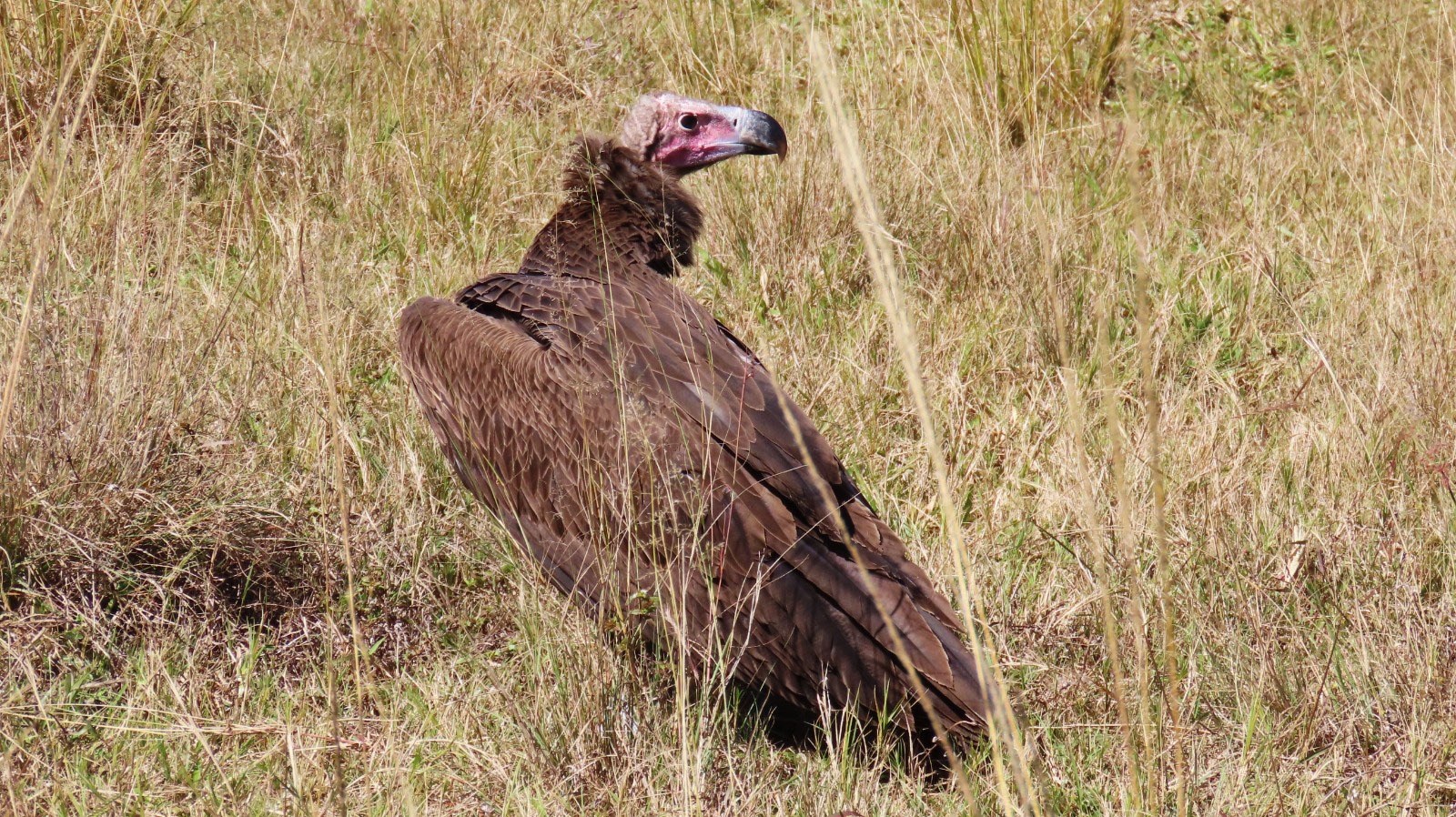
 A male captive-bred lappet-faced vulture, bred at VulPro’s facility at Shamwari Private Game Reserve, was released on 14 May 2026 in Limpopo. Since then, it has flown more than 1,500km and is now in Namibia, possibly with other lappet-faced vultures. (Photo: Supplied / Vulpro)
 A young lappet-faced vulture that hatched in captivity in Eastern Cape is soaring far beyond what conservationists had dared hope.
Less than a month after being released into the wild, the bird had flown more than 1,500km across southern Africa, travelling through Botswana before reaching Namibia’s Etosha region, one of the species’ remaining strongholds on the continent.
The bird is believed to be the first captive-bred lappet-faced vulture released in Africa.
“It is a significant milestone. As far as we understand, he is the first captive-bred lappet-faced vulture ever to be released in Africa,” said Vulpro founder and CEO Kerri Wolter.
The male chick hatched on 26 September 2025 at Vulpro’s breeding facility at Shamwari Private Game Reserve in Eastern Cape.
With only about 160 breeding pairs remaining in South Africa, the species is considered critically endangered locally.
“There was a lot of debate whether we release him or whether we incorporate him into our captive-breeding programme,” Wolter said.
After genetic testing confirmed he was male, conservationists decided he could contribute more to the species in the wild.
“There is no baseline data. We don’t know the survival rates of a captive-bred lappet-faced vulture once released. We don’t know how they move. We don’t know how well they integrate into wild populations.”
/file/attachments/orphans/Photo-1_615512.jpg "Possibly the first captive-bred lappet-faced vulture ever released in Africa, this bird was bred and raised at the Shamwari Private Game Reserve in Eastern Cape before being released into the wild in Limpopo. (Photo: Supplied / Vulpro)")
First flight
After leaving the nest in Eastern Cape, the young bird spent several months developing independence before being moved to Hartbeespoort in North West.
Because lappet-faced vultures do not naturally occur in Eastern Cape, releasing him there was not an option, Wolter said.
Instead, Vulpro sought to mimic nature as closely as possible. The young bird was housed with other tree-nesting vulture species and released at Dabchick Wildlife Reserve in Limpopo at roughly the age wild juvenile lappet-faced vultures would naturally leave their parent’s wings.
“Remember, that was his maiden flight. He had never flown. He just took off. I like the saying that he flew where his wings took him.”
Wolter said reserve staff monitored him closely in the days after release and supplementary food was provided at a safe feeding site away from power infrastructure and other threats.
For four or five days, he remained close to the release site. Then he took to the skies.
“Remember, that was his maiden flight. He had never flown. He just took off. I like the saying that he flew where his wings took him,” Wolter said.
With a wingspan of nearly 2.8m, the young vulture headed north.
Tracking data later showed him crossing Botswana and entering Namibia, where he remains.
Whether instinct, genetics or something scientists do not yet understand guided him there remains a mystery.
“Did his DNA tell him where to go? It’s impossible to know. But the fact that he almost knew where other lappet-faced vultures would be, and that’s where he flew, is incredible,” Wolter said.
Namibia is widely regarded as one of the species’ major strongholds and conservationists suspect the young bird may have joined wild vultures there.
“He’s surviving. He’s doing incredibly well. His maiden flight was successful. He appears to be doing pretty well from the tracking. We’re incredibly proud of this bird,” Wolter said.
The achievement is also a significant moment for a conservation partnership that began two years ago when Vulpro relocated dozens of vultures from Hartbeespoort to Shamwari in what was then South Africa’s largest vulture translocation project.
Conservation beyond the Big Five
For Shamwari CEO Joe Cloete, the success highlights the need to focus conservation efforts beyond Africa’s iconic big game species.
“A lot of the attention over the last 20, 30 or 40 years has always been on the big animals – rhinos, elephants and wild dogs,” Cloete said.
“People have largely forgotten about species like vultures.”
Vultures play a critical ecological role by rapidly disposing of carcasses that could otherwise spread disease through ecosystems.
Across Africa, populations continue to decline due to poisoning, collisions with energy infrastructure, habitat loss and other human-driven threats.
“The vulture numbers are declining rapidly around Africa and indeed around the world for many reasons,” Cloete said.
“It is such a massive effort that Vulpro are trying to make to get these vultures back into the wild.”
/file/attachments/orphans/Photo-3_399634.jpg "With an impressive wingspan of 2.8 metres, the young lappet-faced vulture has already travelled more than 1,500 km since its release and is currently believed to be in Namibia. (Photo: Supplied / Vulpro)")
Despite heavy rainfall and flooding disrupting operations in Eastern Cape this breeding season, Vulpro has already confirmed fertility in 24 eggs and expects more.
To improve hatching success, the fertile eggs are removed from the nest and replaced with dummy eggs, while the real eggs are incubated under carefully controlled conditions, Wolter said. Once the eggs hatch, the chicks are reunited with their parents, who continue to raise them.
Last year, the programme produced 30 chicks and Wolter hopes to match that success this year.
Meanwhile, a pair of bonded female Cape vultures reunited earlier this year just in time for Valentine’s Day are thriving, Wolter said.
As Daily Maverick reported, the birds were originally separated in the hope that they would pair with males and contribute to Vulpro’s breeding programme, but neither accepted a new mate.
“They are totally in love. They don’t have eyes for anyone else. The one chased me the other day because I got too close to their nest,” Wolter said.
Although any eggs they produce will be infertile, conservationists hope the pair could one day serve as surrogate parents. DM