




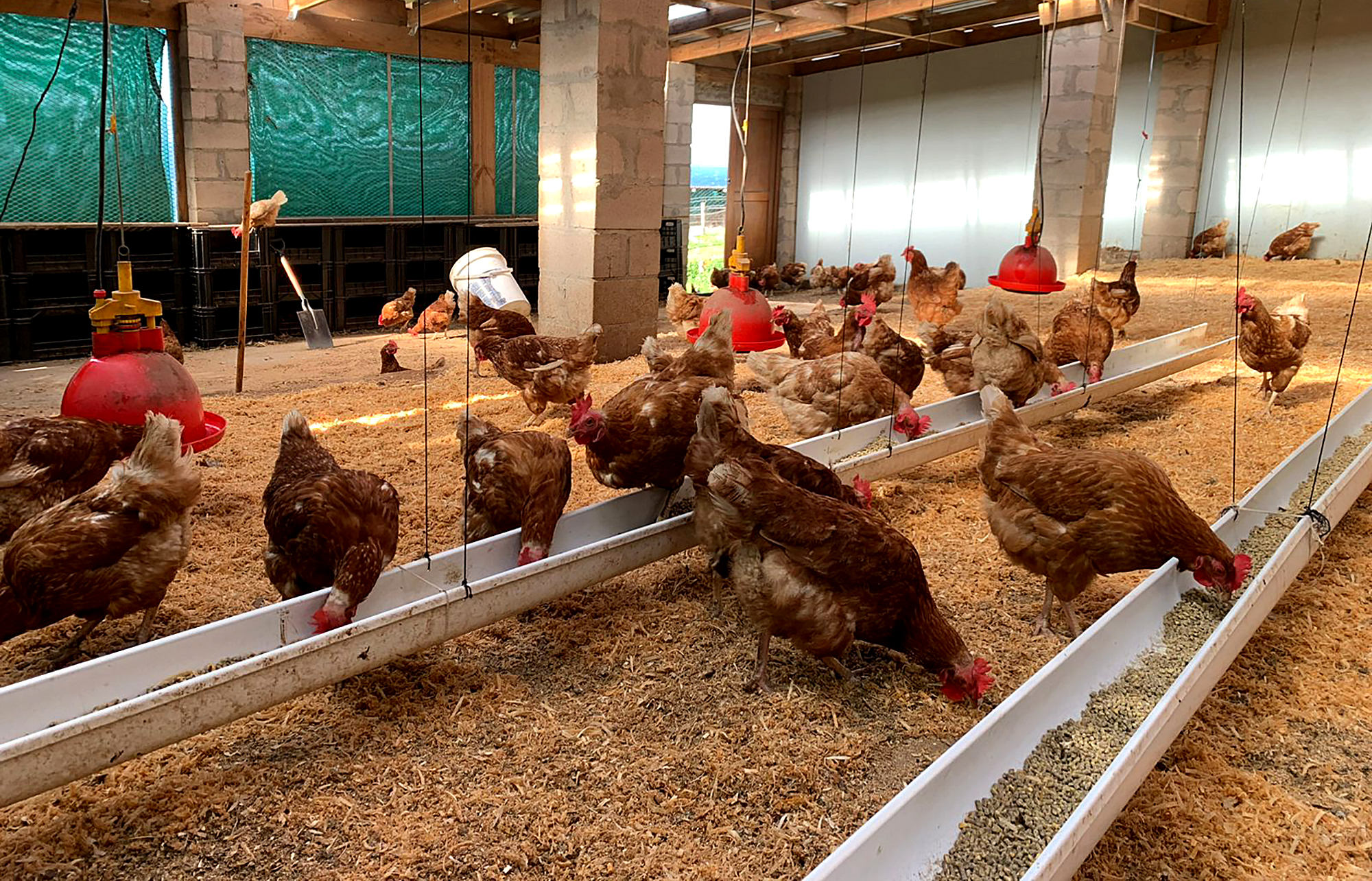
 South Africa’s chicken market is mature and the next big step for growth has to come from selling into new markets. (Photo: Supplied)
 South Africa’s poultry industry believes it has the makings of a citrus-style export success story, but says the state needs to get out of the coop and into the game.
That was the central message from a FairPlay webinar on Thursday, 4 June, during which poultry industry figures argued that exports are no longer a nice-to-have. They are becoming essential to the survival and growth of an industry facing flat local demand, global competition and the recurring threat of bird flu.
Hosted by FairPlay founder Francois Baird, the webinar featured Izaak Breitenbach, general manager of the South African Poultry Association (SAPA), and Gerald Walter, group executive of the commercial division at Sovereign Foods.
Poultry industry ‘ready to export’
Breitenbach said the poultry industry had already done much of the hard work needed to prepare for export growth. Anti-dumping duties had helped steady the industry after years of pressure from imported chicken, and producers had invested in new capacity, including about 120,000 tonnes of cooking capacity for poultry meat.
“This industry is ready to export cooked meat to different countries in the world, but yet we are not doing it,” he said.
He argued that local consumption growth was limited in South Africa’s mature chicken market and the next big step had to come from selling into new markets.
“If there is one thing that will change this grain value chain materially, it would be exports,” Breitenbach said, adding that poultry could follow a path similar to citrus, where a competitive industry built export scale over time.
Potential export markets
The possible prize is large. The industry has its eye on the UK, European Union and Saudi Arabia. Documents have been submitted to the EU and Saudi Arabia, while the UK has already inspected the South African sector, but the industry says it is still waiting for the process to move forward.
For Breitenbach, the immediate blockage is not chicken plants failing to meet standards. It is the lack of progress in getting importing countries to inspect and approve South Africa’s systems.
“When I say that we are awaiting inspections; it’s not actually inspecting the industry and its facilities,” he said. “It is inspecting the ability of the Department of Agriculture to enforce the requirements of the importing countries.”
That point goes to the heart of the industry’s complaint. Export approvals depend on government veterinary systems, certification, disease surveillance and the ability of the state to give foreign authorities comfort that South Africa can enforce the rules.
Walter said Sovereign Foods had spent more than a decade building an export business, especially in the Gulf region. The company had identified markets, found customers, travelled repeatedly, invested in a Dubai-based company, set up warehousing and distribution and built a reputation for South African chicken.
He said the Gulf was an attractive market because it imported poultry and because South Africa’s halaal standards, including hand slaughter, gave it an edge.
“We hold products that none of the world can actually supply,” Walter said. South African producers could offer smaller portions, flexible bird sizes, calibrated fillets, raw products, cooked products and cuts that suited restaurants, hotels, retailers and re-processors.
That flexibility, he said, helped South Africa compete against bigger exporters such as Brazil, where larger birds and more standardised cuts did not always suit every market.
The currency advantage
The export case is also a currency case. Walter noted that many poultry industry costs were dollar-based, so earning export revenue in dollars gave producers a natural hedge.
But he was scathing about the lack of official support.
“We don’t have that assistance locally. We just don’t get that help,” he said. “It’s literally non-existent.”
He said Sovereign had often had to deal directly with foreign veterinary authorities itself. In Dubai, for example, he said he had personally sat down with officials to resolve issues.
The next prize for Sovereign and the wider industry is Saudi Arabia, which Walter described as a massive growth market. China is also attractive for some cuts that South Africa oversupplies and China undersupplies.
The problem is access.
“We’ve got customers set up there already,” Walter said of Saudi Arabia. “We can supply them, just need access.”
Bird flu adds another layer of difficulty. Highly pathogenic avian influenza (HPAI) has hammered the poultry industry in recent years, and outbreaks can close export routes. One source of frustration is the way compartments are defined. Walter said an outbreak far from a poultry operation could still shut exports from an entire province.
He said the industry wanted smaller compartments, such as a 30km radius, so unaffected producers could keep trading when disease was contained elsewhere.
Avian influenza vaccination
Breitenbach said avian influenza vaccination was a central part of the second poultry master plan, alongside exports and increasing local chicken consumption. Vaccination, he argued, would reduce infections and support export continuity if done properly.
Agriculture Minister John Steenhuisen, on Wednesday, 3 June, announced a regulatory shift to allow the introduction of HPAI vaccinations in South Africa, following a formal objection by SAPA under the Animal Diseases Act.
The notice said the department would move away from the old “stamping-out” model, which required the destruction of healthy and sick birds, towards a state-regulated vaccination defence plan.
“Our poultry farmers need direct support, and we are changing policy to give them a legal mechanism to protect their livelihoods,” Steenhuisen said.
The policy shift is intended to combine vaccination, biosecurity and testing, reduce mass culling, set up clearer outbreak rules and maintain international trade standards.
For the poultry industry, this could be a meaningful shift, but the webinar made clear that policy announcements will not be enough. The industry wants execution: more veterinary capacity, faster certification, stronger follow-through with foreign governments, and a more active role from Agriculture, Trade and Industry, and International Relations.
Breitenbach said the industry had raised exports, compartmentalisation and vaccination with the minister. He said SAPA had received positive feedback from Steenhuisen’s office, but progress remained slower than the industry needed.
South Africa’s poultry industry is already the country’s largest consumer of maize, tying chicken production directly to grain farmers, feed producers, jobs and food prices. If exports grow, the benefits would not stop at poultry farms.
For now, the industry’s message is simple: it has invested, it has products that foreign customers want, and some producers have shown exports can work. What it lacks is a state that can move at the speed of the opportunity.
As Walter put it, the industry cannot remain stagnant. “We need to grow, like anybody.”
The chicken is ready to fly. The gate to the coop, for now, is still stuck. DM