



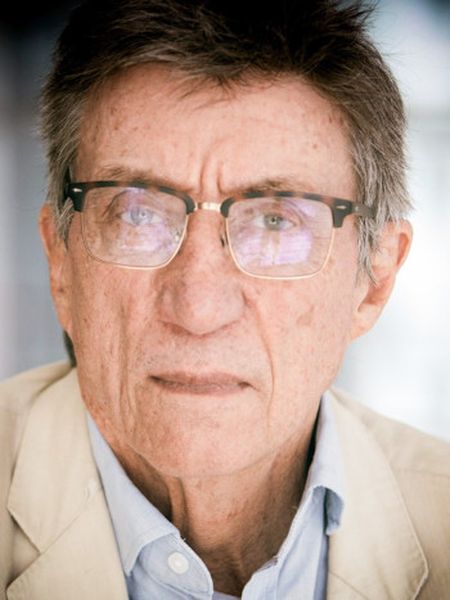
 Brazil’s Ambassador to South Africa, Benedicto Fonseca Filho. (Photo: Flickr)
 Brazil and South Africa are kindred spirits on the global stage, where their two left-leaning governments have become key allies in championing the interests of the Global South, especially through institutions such as the BRICS bloc and the G20.
At home, they share the major challenge of trying to overcome their own poverty and inequality.
Bilaterally, country to country, the picture is rather different from the global one, with comparatively meagre commerce between them and a huge trade deficit for South Africa. This is partly a function of the immense disparity in economic size; at $2,28-trillion last year, Brazil’s economy was more than five times larger than South Africa’s at $427.1-billion.
But the nations are working hard to boost bilateral relations, including in trade.
‘Striking similarities’
Brazil’s ambassador to South Africa, Benedicto Fonseca Filho, sums up relations like this: “Brazil and South Africa are two vibrant multiracial democracies that, in spite of each having its own particularities, face similar challenges and share striking similarities as regards cultural and historical backgrounds.
On that basis, we have been able to develop a strong relationship, premised on a common worldview and a shared purpose to foster peace and security as well as economic and social development.”
He notes in particular that the fight against hunger, poverty and inequality is a priority being pursued by both Brazil and South Africa domestically and globally. He points to South Africa’s support for the Global Alliance Against Hunger and Poverty, developed during the Brazilian G20 Presidency and Brazil’s support for South Africa’s efforts during its G20 presidency to establish a permanent International Panel on Inequality.
Brazil has clearly done better than SA, though, in reducing its own poverty and inequality. In 1994, South Africa’s Gini Coefficient – which measures inequality – was a very high 65 (on a scale where 0 would represent perfect equality and 100 perfect inequality). Brazil’s was only slightly lower at about 60. Today, South Africa’s Gini Coefficient is barely unchanged, at about 63, where Brazil’s has dropped significantly, to 51.6.
In an interview this month, Fonseca said Brazil had achieved this by launching several programmes to tackle poverty and hunger, which had uplifted some of the most underprivileged members of society. Brazil’s famous Bolsa Familia programme has been widely recognised as key to this.
African diaspora
Another strong, emotional tie between the two countries is Brazil’s large African diaspora, which Brazil recognised and was proud of, Fonesca said.
“There is no Brazil without Africa. It speaks directly to Brazil’s demography and culture.” The country’s afrodescendants had shown a renewed interest recently to reconnect to Africa, and so in 2024, Brazil hosted the Conference of the African Diaspora in the Americas in Salvador, Bahia, “a state where African heritage is clearly perceived.”
Asked if the African diaspora was well integrated into society, he said, “Some challenges related to the period of slavery persist; however, the Brazilian government and society have been steadfast in combating racism and discrimination of any sort…”
Globally, Brazil and SA have both battled strong headwinds from US President Donald Trump, who slapped large tariffs last year on both countries.
Trump, tariffs and BRICS
Trump unsuccessfully tried to bully Brazilian President Luiz Inacio Lula da Silva into dropping treason charges against his predecessor, Jair Bolsonaro, for attempting a coup against him in 2023. Trump boycotted SA’s G20 presidency last year and barred it from participating in the US G20 this year, because he claimed, absurdly, that South Africa was committing genocide against white Afrikaners. Last year, Trump also threatened a specific tariff for BRICS countries.
/file/attachments/orphans/RC2T8LACF7YN_993554.jpg "From left: China’s ambassador to India Xu Feihong, Indonesia’s Foreign Minister Sugiono, Iran’s Foreign Minister Abbas Araqchi, South Africa’s Foreign Minister Ronald Lamola, Russia’s Foreign Minister Sergei Lavrov, India’s Foreign Minister Subrahmanyam Jaishankar, Brazil’s Foreign Minister Mauro Vieira, Egypt’s Foreign Minister Badr Abdelatty, Ethiopia’s Foreign Minister Gedion Timothewos and the United Arab Emirate’s Minister of State for Foreign Affairs Khalifa bin Shaheen Al Marar pose for a photo during the BRICS foreign ministers’ meeting at Bharat Mandapam in New Delhi, India, on 14 May 2026. (Photo: Reuters / Adnan Abidi)")
Fonseca noted that Brazil had “made very clear at the highest level”, including in meetings of the US G20 presidency, that “South Africa is a founding member of the G20 and Brazil supports its full participation. The G20’s operating rules do not allow a rotating presidency to unilaterally veto the participation of a permanent member, since such a measure would be contrary to the spirit of the group and the rule of consensus.”
Despite the headwinds, “As like-minded nations from the Global South, Brazil and South Africa actively collaborate to promote inclusive economic growth, equitable trade policies, a robust agenda for climate action and social development, and the reform of global governance institutions,” – in the G20, Brics, the United Nations, IBSA (the India, Brazil, South Africa forum) and other platforms, Fonseca said.
Fonseca also emphasised the importance of IBSA, dismissing suggestions that it had been overshadowed by BRICS. He insisted it remained relevant and active, with regular meetings of its leaders to pursue cooperation in areas such as science, technology and innovation.
BRICS tensions
Does Brazil believe the expansion of BRICS, from five to 10 members, has created a problem for the coherence of the bloc, notably because of the tensions between new members Iran and the United Arab Emirates (UAE), which are on opposite sides of the current war in Iran?
These tensions prevented BRICS foreign ministers from achieving a consensus communique at their last meeting in May.
“The expansion of BRICS has made the group more diverse, which naturally entails new challenges, but also points to new possibilities of cooperation among its members,” Fonseca replied.
“BRICS should remain faithful to its vocation as a forum for dialogue, cooperation and reform of global governance,” he added.
In January this year, BRICS ostensibly strayed beyond this mandate when the South African Navy controversially hosted the so-called “BRICS-Plus” joint naval “Exercise Will for Peace” with warships from South Africa, Iran, Russia, China and the UAE. Brazil and India were conspicuously absent.
Fonseca explained why: “It is indeed important to clarify that the Will for Peace exercise, although undertaken by a few BRICS+ members, was not a BRICS-sponsored activity in the diplomatic calendar, as clarified by the Indian rotating presidency.”
Trade relations
/file/attachments/2991/13955710_398539.jpg "Brazilian President Luiz Inacio Lula da Silva. (Photo: EPA / Andre Borges)")
Despite their like-mindedness globally, Brazil and South Africa do not trade very much with each other. Brazilian President Lula lamented during Ramaphosa’s state visit to Brazil in March 2026 that total trade had stagnated for about 20 years. Last year, the figure was R32.5-billion. Lula said it should rise to at least R160-billion.
Trade was indeed “far below the potential to be achieved by two large and diversified economies that are strategic partners and gateways to their respective regions,” Fonseca said.
Trade was relatively concentrated in a few sectors and products, and so both countries were trying not only to increase volumes but to diversify trade, especially in value-added products.
That required bringing the respective business communities closer together, which had happened on the state visit, as well as addressing non-tariff barriers, improving logistics and connectivity, and identifying concrete opportunities in sectors such as agribusiness, aerospace, defence, energy, mining, tourism and advanced manufacturing.
/file/attachments/orphans/ANCCONFday1111_169460.jpg "South African President Cyril Ramaphosa. (Photo: Leila Dougan / Daily Maverick)")
“Improving market access is also part of the answer,” Fonseca noted, adding that Lula and Ramaphosa had agreed to explore the expansion of the Preferential Trade Agreement between Mercosur, the Southern Common Market of which Brazil is the biggest member, and the Southern African Customs Union (Sacu), of which South Africa is the biggest member.
Trade balance, SA’s poultry issue
The trade balance now greatly favours Brazil, with Brazilian exports in 2025 totalling R27.3-billion and South African exports to Brazil only R5.2-billion, leaving South Africa with a huge trade deficit of R22.1-billion.
“The trade imbalance is a real issue, and both governments recognise that a stronger economic partnership should be more diversified and more balanced over time,” Fonseca acknowledged.
The trade imbalance could be reduced over time by diversifying South African exports to Brazil and discussing greater access to the Brazilian market, particularly for South African exports of wines, fruit, mining-related products, chemicals, agro-processing and manufactured goods, he said.
But Fonseca flatly rejected accusations by SA poultry producers that Brazil was “dumping” large volumes of poultry exports on SA (ie pricing them below cost). He insisted that “Brazilian poultry exports are internationally competitive due to production scale, integrated supply chains, climate conditions, feed availability, safety standards, technology and productivity.”
Bilateral vs global relations
He also dismissed any suggestion that the bilateral relations between the two countries were not as rich as their global relations. He noted, for instance, the “continuously expanding Strategic Partnership” between them and the more than 35 bilateral agreements signed over the past three decades.
He said Brazilian aerospace, industrial machinery and transport manufacturing companies were already active in South Africa, while South African energy, telecommunications, finance, pharmaceuticals and mining companies had investments or operations in Brazil.
But the state visit had explored expanding commercial ties in these and other fields, including agriculture.
“The first two topics selected for cooperation are animal health and the development and use of bioinputs in agriculture, drawing, on the one hand, on Brazil’s recognition as free of foot-and-mouth disease without vaccination and, on the other hand, on both countries’ shared interest in reducing reliance on the use of chemicals as fertilisers or defensives,” he said.
Through bioinputs, Brazil is rapidly replacing synthetic chemicals such as fertilisers and insecticides with biological agents.
Fonseca said the two countries had also discussed greater cooperation in the production of biofuels, processing critical minerals and boosting digital government and industries, including AI, space science and health-related science and technology.
Defence ties
The forthright Lula raised some eyebrows during Ramaphosa’s state visit by telling the South African President their two countries should collaborate more on defence because “if we do not prepare ourselves in matters of defence, one day someone may invade us”.
Fonseca noted that Brazil and South Africa had already signed a Framework Agreement on Defence back in 2003 and had “developed a very fruitful cooperation”. He cited the ongoing partnership between Brazil’s multinational aerospace corporation Embraer and SA’s state-owned defence manufacturer Denel.
Fonseca noted that Embraer was also providing technical training in SA and that South Africa’s Airlink airline had the largest fleet of Embraer aircraft in Africa.
Fonseca also cited Brazil and South Africa’s joint development of the fifth-generation missile, the A-Darter, which can be attached to the Gripen jet fighters used by both air forces.
Senior military officers are being jointly trained, and the joint Ibsamar naval exercises are held annually between their navies, and also the Indian Navy.
Investor confidence
Are potential Brazilian investors deterred by policies such as Broad-based Black Economic Empowerment, (B-BBEE), Employment Equity, as well as high crime and poor infrastructure, especially energy and transport, as others are?
“In my contacts with representatives of Brazilian companies operating in South Africa, B-BBEE has not been mentioned as an area of particular concern,” Fonseca said.
“On the other hand, businessmen in general frequently voice concerns in regard to the provision of energy and to infrastructure constraints. There is, however, in my view, a recognition of the efforts that have been undertaken by the South African government to overcome existing shortcomings, as exemplified by the successful end of load shedding.”
Ramaphosa also said during the state visit that Brazil could teach South Africa a lot about soccer, while South Africa could teach Brazil a lot about rugby. Fonseca said that although Brazil had never been known as a rugby country, “we certainly would benefit from learning from your experience as four-times world champion”, especially because Brazil’s women’s national rugby team was the strongest in South America, currently above traditional rugby countries such as Argentina, Chile, and Uruguay.
Fonseca has been at his post for nearly three years and has been in the foreign service since 1985, rising to ambassadorial rank in 2010 and serving as Consul-General in Boston from 2019 to 2023 before coming to South Africa.
He is married with two children.
“I must say I really enjoy being in South Africa and I consider [it] a privilege and an honour to be able to serve my country in a nation with such a rich and inspiring history and culture and, in addition, to contribute to the strengthening of our bilateral relations. The South African and Brazilian peoples share many similarities to the point that, in some cases, it is even difficult to distinguish between them. I feel welcome here, and I assume South Africans feel the same in Brazil.” DM