




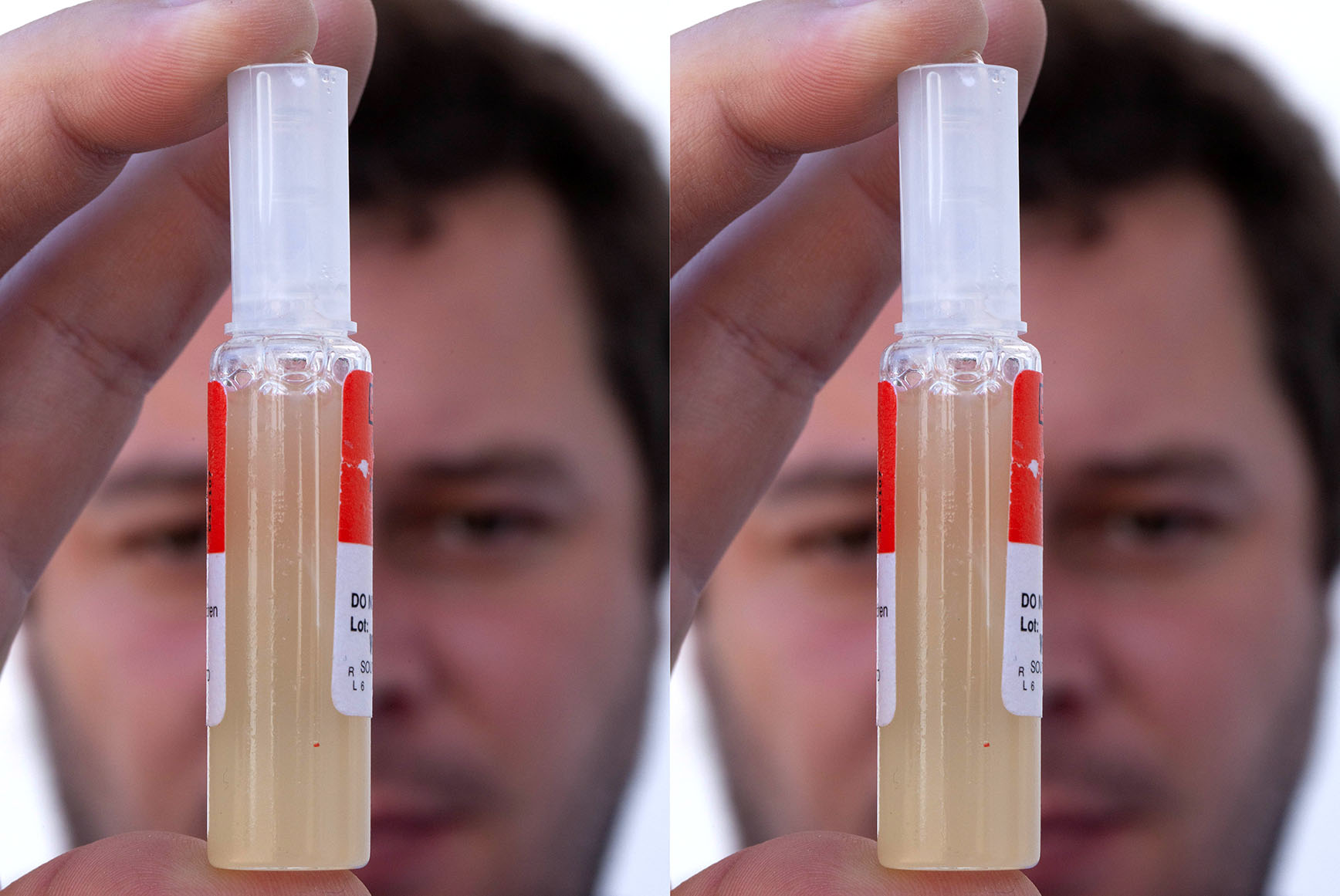
 The National Health Laboratory Service has confirmed ongoing stockouts of essential antivenom serum for snake, spider, and scorpion bites, projected to last until mid-July. (Photo: Johan Marais, African Snakebite Institute / Spotlight)
 The National Health Laboratory Service (NHLS) has confirmed that there is a stockout of most antivenom serums, including polyvalent snake antivenom and antivenom for scorpions and spiders, which will persist for the next few weeks.
The first announcement of the stockouts was on 14 May.
NHLS spokesperson Mzi Gcukumana said the interruption was temporary.
He said South African Vaccine Producers’ antivenom production remained “fully operational”, but confirmed that, for now, antivenom was only available for boomslang and Echis (saw-scaled viper) bites.
He emphasised that the stockout does not mean production has been suspended, but declined to give the reasons for the shortage, saying he was not authorised to comment further.
“The NHLS has a statutory responsibility to ensure the availability of lifesaving antivenom products and remains steadfast in fulfilling this mandate. Through robust production planning, rigorous quality assurance processes and continuous operational oversight, the organisation continues to prioritise the manufacture of safe, effective and high-quality antivenom that meets the highest regulatory and clinical standards.
“Antivenom production is a highly specialised biological manufacturing process that requires stringent testing, quality control and regulatory compliance at every stage. These safeguards are non-negotiable and are essential to ensuring patient safety, product efficacy and public confidence in these lifesaving interventions,” said Gcukumana.
He said new batches of antivenom would be released on the following dates:
- Polyvalent antivenom: 1,300 units will be released on 15 July;
- Scorpion antivenom: 717 units are expected to be released on 19 June; and
- Spider antivenom will be released on 30 July
History of stockouts
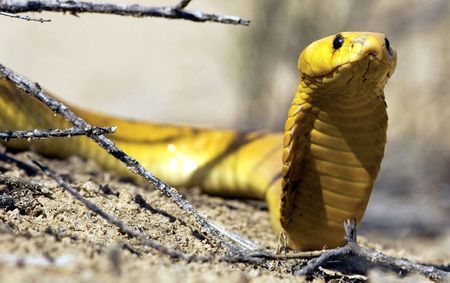
In early 2023, medical personnel, vets and snake catchers reported acute antivenom shortages, especially of polyvalent antivenom, effective against the bites of 10 venomous snakes found in southern Africa.
By 2 April that year, the shortage had escalated to what was labelled as an “absolute catastrophe”.
At the time, load shedding and the damage it had caused to ageing equipment were blamed for the crisis.
Later that month, on 20 April, the NHLS indicated that it had increased production and had distributed antivenom to 124 facilities. However, demand still outstripped supply, and experts appealed to the minister of health to intervene.
By November, more than 6,100 vials of antivenom had been distributed across 302 institutions, and the crisis appeared to have been resolved.
However, the following year, from April to October 2024, production of antivenom was halted due to infrastructure upgrades. This again led to widespread outages.
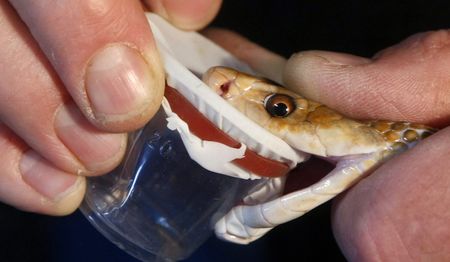
In March 2025, the NHLS admitted that, due to renovations, all manufacturing of snake, scorpion, and spider antivenom had ceased. Stockpiles were depleted for boomslang antivenom.
On 24 March that year, the minister of health confirmed that an electronic stock-monitoring system would launch on 1 April 2025 to improve early warning and distribution.
Regulatory reforms
In April this year, researchers from the universities of the Witwatersrand and Pretoria, Ramsha Majeed, Janette Bester and Morne Strydom, published a paper in the South African Pharmaceutical Journal arguing that regulatory reforms, improved surveillance, supply chain governance and clinical guidance were needed to improve the situation.
Some of the actions they proposed were that snakebites be listed as a notifiable medical condition, that Section 21 import authorisation processes for antivenom products be streamlined and that the South African Vaccine Producers (SAVP) be changed into a public-private partnership.
“Through strong stakeholder engagement and leveraging technical expertise, the chronic antivenom shortage could be reversible. Without immediate regulatory and strategic reform, preventable deaths and disability from snakebite will continue,” the researchers noted.
Full-blown crisis
Steven Meighan, a snake catcher with Deep South Reptile Rescue in the Western Cape, described the current shortage as a full-blown crisis. “I define a crisis as a situation where an essential medicine that must be provided cannot be provided,” said Meighan, noting he recently dealt with a case in the Western Cape where a fisherman bitten by a puff adder was treated only for symptoms because no antivenom was available.
/file/dailymaverick/wp-content/uploads/2023/04/MC-Snakes-Estelle_1.jpg "Snake catcher Steve Meighan with a puff adder. (Photo: Supplied)")
Meighan explained that Panaf Premium, a World Health Organization-approved antivenom manufactured in India, can be imported through special Department of Health authorisation. Widely used across sub-Saharan Africa, this polyvalent antivenom treats bites from mambas, cobras, and puff adders. DM