



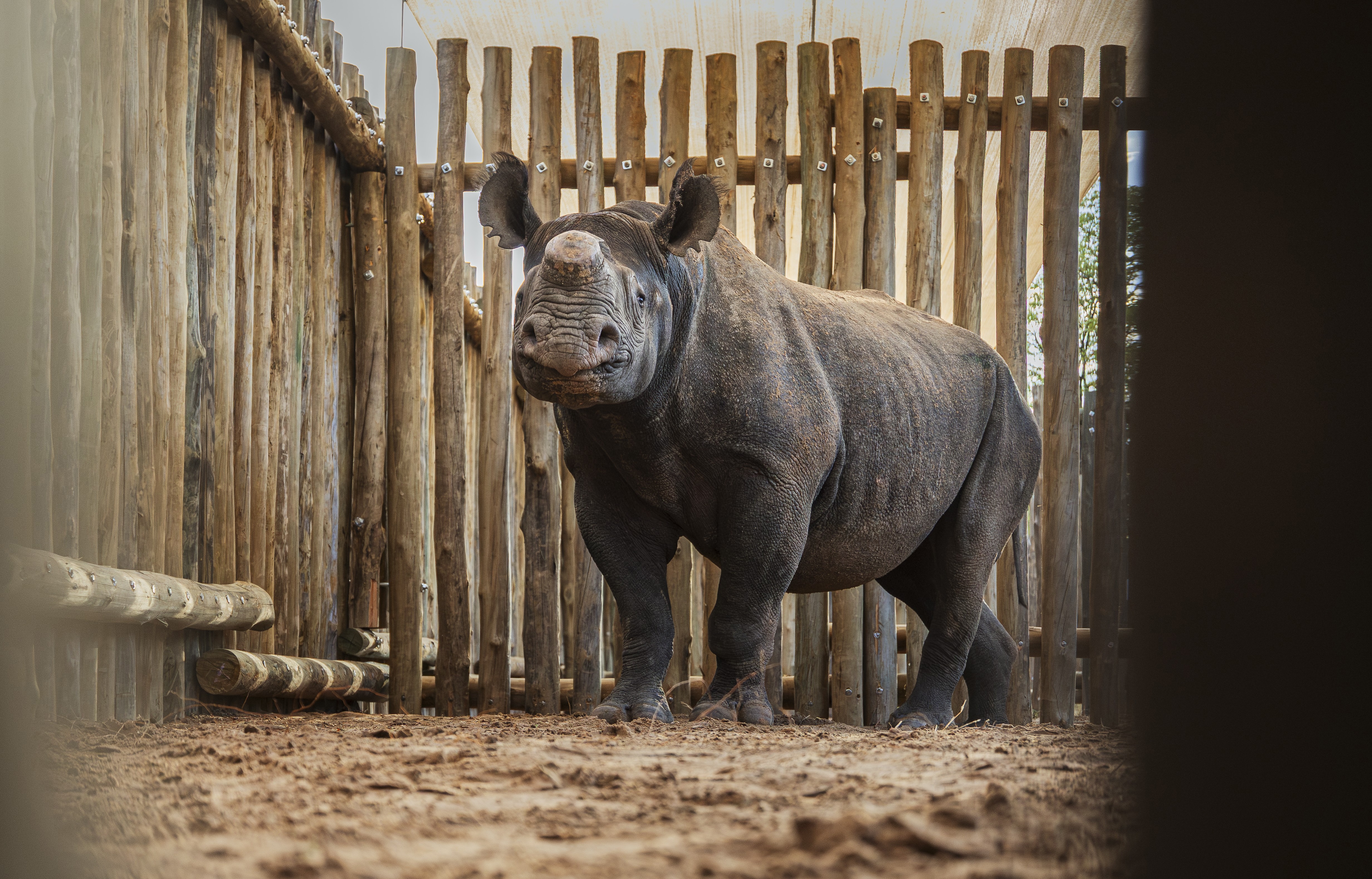
 An adult black rhino, with its horns removed for security reasons, contemplates its new surroundings. The animals are being kept in a temporary holding facility prior to being released into Matusadona National Park. (Photo: Wiki West)
The once abundant population of black rhinos in northern Zimbabwe was almost wiped out by gangs of Zambian-based poachers during the late 1980s and early 1990s, prompting a desperate effort to save the survivors.
Under the leadership of former Zimbabwe parks chief warden Glen Tatham, scores of these endangered animals were moved from Matusadona and other parks in the Zambezi Valley to more secure sanctuaries in central or southern Zimbabwe during Operation Stronghold.
Now, an undisclosed number of their descendants have been flown home to the 147,000ha Matusadona National Park on the southern shores of Lake Kariba.
In a statement, the African Parks group said the foresight of moving survivors to other areas had proved critical. This had ensured that the animals were safeguarded through one of its most difficult periods, also preserving the genetic lineage of the animals from the region.
“Some of the translocated animals are direct descendants of those moved out of Matusadona more than three decades ago.”
The park, now managed by African Parks in terms of an agreement with the Zimbabwe Parks and Wildlife Management Authority , was once the core area of the country’s largest contiguous population of black rhino.
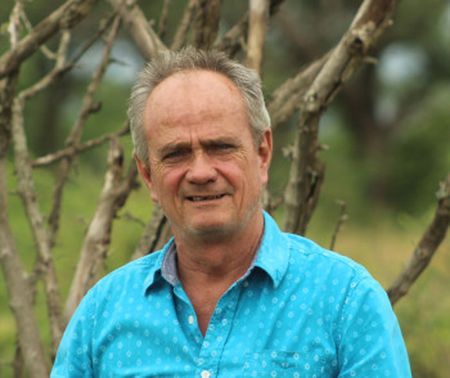
Matusadona Park Manager Michael Pelham recalled: “I was here in the 1990s when we lost them. I helped capture the last survivors, we crated them and flew them out to safety, not knowing if the species would ever come back.
“Having witnessed the rhino’s catastrophic decline in Matusadona, it is incredibly emotional to see their return. This reserve is synonymous with black rhino, and walking through this landscape recently, there has been an overbearing sense that we are missing an icon.
“No words can describe the feeling of seeing these animals arrive back here.”
/file/attachments/orphans/tonyzimrhino2MatusadonaBlackRhinoTranslocation_RhinoCratesbeingCarefullyOffloadedinMatusadonaWikiWest_816347.jpg "Wildlife relocation teams are silhouetted beneath the fuselage of a transport aircraft as rhinos are unloaded en route to Matusadona. (Photo: Wiki West)")
/file/attachments/orphans/tonyzimrhino3BlackRhinocaptureinImireRhinoandWildlifeConservancyZimbabweMarcusWestberg62_396142.jpg "A black rhino is shepherded into a capture crate at Imire Rhino and Wildlife Conservancy in Zimbabwe. (Photo: Marcus Westberg)</p>
<p>")
The returned animals were sourced from Imire Rhino and Wildlife Conservancy; Matobo National Park, and one other undisclosed location, loaded into crates and airlifted to the park.
Following a period of monitoring in containment bomas, they will be released in phases into a secure Intensive Protection Zone in the national park.
Each animal is fitted with a tracking device, enabling real-time monitoring and rapid response to any signs of stress or conflict after release.
/file/attachments/orphans/tonyzimrhino4MatusadonaBlackRhinoTranslocation_RhinoArrivingintheparkWikiWest_177038.jpg "A wildlife translocation truck transports a rhino to its new home on the banks of Lake Kariba. (Photo: Wiki West)")
The translocation was made possible through philanthropic support from the European Union, Global Wildlife Fund and Thomas and Sara de Swardt, with funding for preliminary preparation provided by the Rhino Recovery Fund.
ZimParks Director-General Professor Edson Gandiwa described the return as a historic event for the park.
“It is a testament to what is possible when government, conservation organisations and local partners work together with shared purpose. DM


Comments
Scroll down to load comments...