




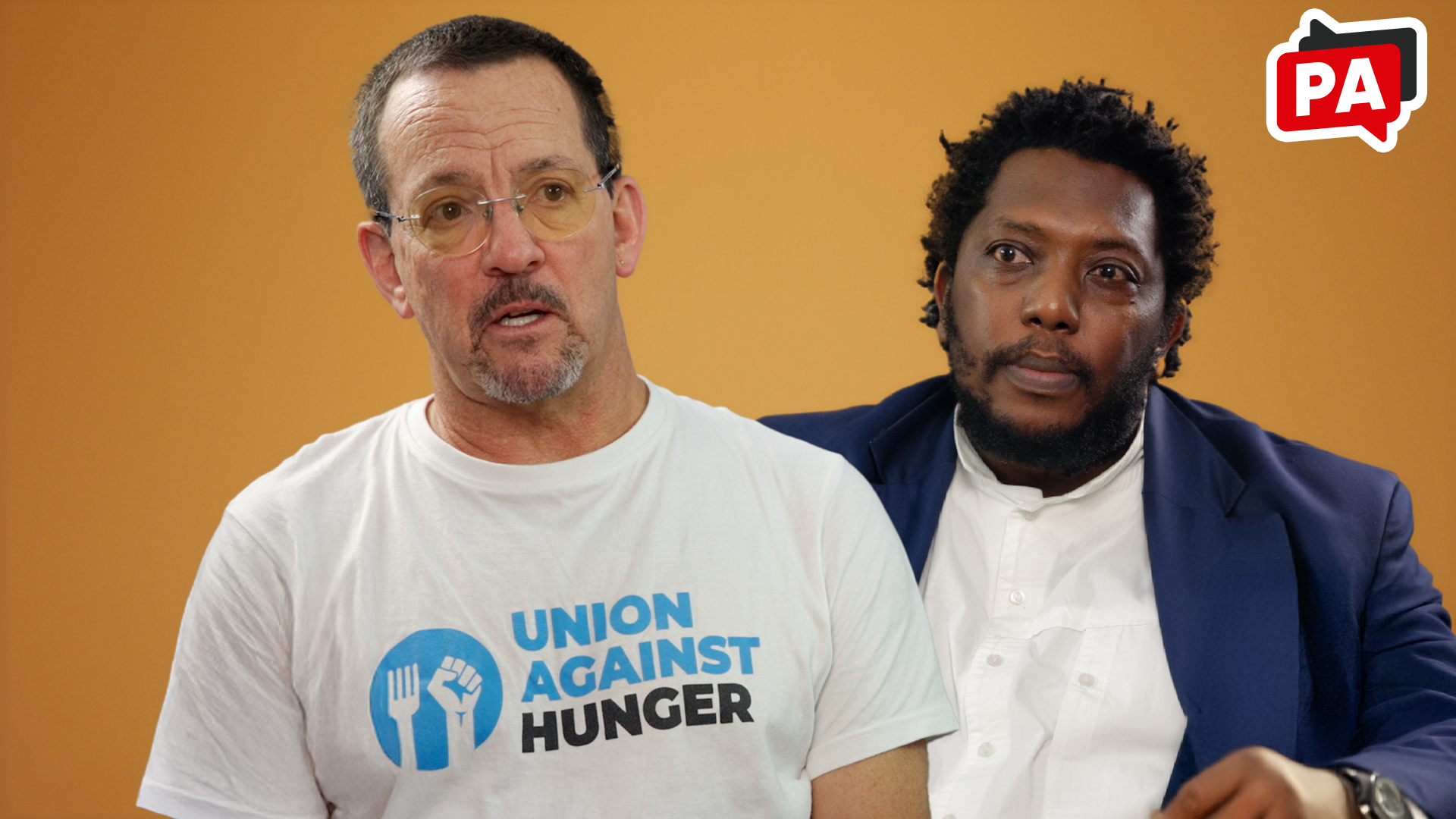
 Illustrative image: Politically Aweh
 Host KG Mokgadi sits down with veteran activist and former editor of Maverick Citizen Mark Heywood to unpack South Africa’s deepening food crisis, and why hunger should be treated as a political emergency. Heywood pulls no punches in his criticism of South Africa’s political leaders and corporations which oversee a food system that produces enough food for all while millions of people still go hungry.
Known for his fight for access to HIV treatment with the Treatment Action Campaign and defending constitutional rights through SECTION27, Heywood is now a co-founder of the Union Against Hunger. This is a civil society movement campaigning to end hunger and malnutrition. The movement argues that in a country producing more than enough food, hunger is not inevitable but political.
As food prices rise and climate disasters, pandemics and global conflicts intensify economic pressure, food insecurity is becoming one of the defining issues of our time. Yet, says Heywood, it remains dangerously absent from mainstream political debate.
Because hunger is not just about empty plates. It is about inequality, dignity, mental health and violence. Families are forced to choose between groceries and transport, parents skip meals so children can eat, and millions survive on grants that fall below the food poverty line.
“One of the explanations of domestic violence, of gender-based violence, is hunger that exists in families,” Heywood says. “Hunger breeds depression. Hunger contributes to mental ill health. Hunger contributes to despair … We’ve got this whole vicious circle, this toxic broth, that conspires against the people of this country – particularly poor people.”
The conversation explores why activists and court cases are still needed to force government action on rights already guaranteed in the Constitution, and whether organised people power can still drive change.
“We’re trying to build a new social movement that says that the levels of hunger in SA are unacceptable and unlawful,” he explains. “If we can build enough power around the right to food, then we can force change in the same way that we did with access to Aids medicines.”
At a time when many South Africans feel politically exhausted, the episode also becomes a conversation about the necessity, and joy, of activism itself.
For Heywood, activism is not only about protest, but about reclaiming agency, building community, and refusing to accept injustice as inevitable.
He argues that activism should not be left to “activists” alone. Whether through local campaigns, workplace organising, or speaking out against injustice, ordinary people can turn frustration into collective power, and rediscover hope in the process.
The episode also examines the climate crisis and the growing influence of fossil fuel companies through sport sponsorships. A former Comrades runner, Heywood questions how companies driving environmental destruction continue to use beloved sporting institutions to clean up their public image, particularly as climate disasters worsen hunger and inequality.
It is a reminder that hunger, inequality, climate injustice and corporate accountability are deeply interconnected.
The conversation asks urgent questions: What would it take to make food justice a political priority? And what might become possible if more people chose to act? DM
For more from Politically Aweh, subscribe on YouTube, visit our website or follow us on Instagram, Facebook, TikTok or X.