



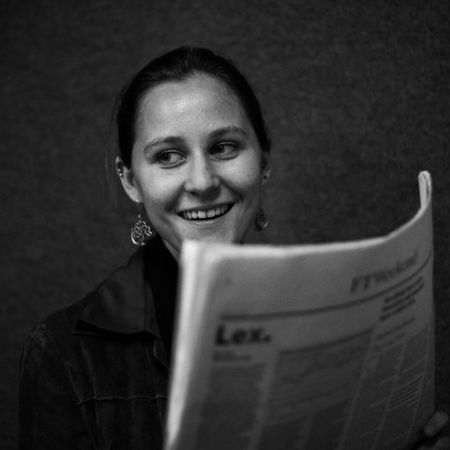
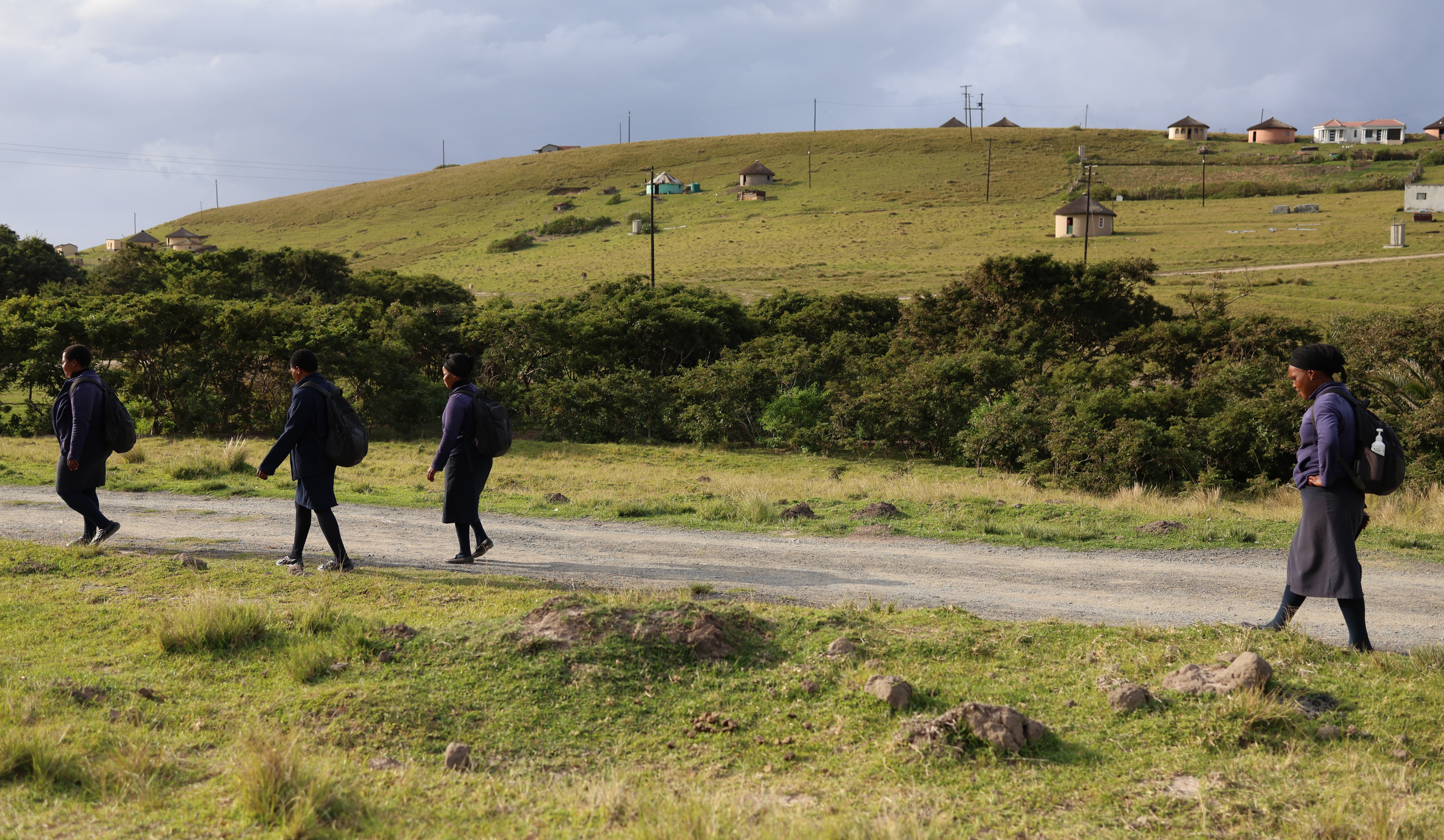
 Nomakhaya Community Health Workers travel through the villages of Xhora Mouth, Eastern Cape, providing essential healthcare services, health assessments and support to community members. (Photo: Felix Dlangamandla)
The battle for emergency medical services (EMS) has a long history in the deep rural community of the Xhora Mouth Administrative Area in Elliotdale, Eastern Cape.
In March 2026, residents won a significant victory when the South African Human Rights Commission (SAHRC) secured an order from the provincial division of the high court in Bisho compelling the Eastern Cape government to provide two fully equipped and staffed ambulances to the region within six months.
Now, the question has become how to ensure that the provision of these ambulance services is effective and sustainable.
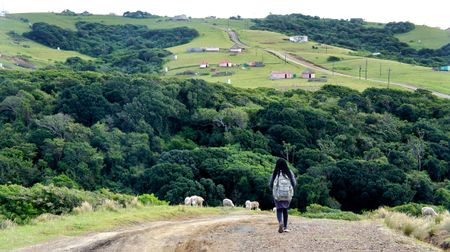
The Xhora Mouth area is made up of four villages dispersed across rolling hills on a remote stretch of the Wild Coast. Very few residents own cars, largely relying on a limited number of taxis that come through the villages in the early mornings and late evenings to reach the surrounding areas. The roaming network of dirt roads connecting them to other communities is known to be hard on vehicles, especially after storms and heavy rains.
/file/attachments/orphans/WFD_3848_720409.jpg "Tabisa Kabanqa boards the ferry to cross the Xhorha River in the Eastern Cape, where residents rely on the service for daily travel between neighbouring villages. (Photo: Felix Dlangamandla)")
People needing to access the nearest local government clinic or hospital have two options. They can walk down to the Xhora River that runs alongside the villages, pay R10 for passage across on a rowing boat, and then travel on foot to the Nkanya Clinic in KwaMhlothe – a journey of about two hours. Or they can organise a private taxi at a cost of more than R1,000 to take them on the 90-minute trip via road to Madwaleni Hospital.
There are no emergency medical services in the area. Speaking to Bongezwa Sontundu, the health programme manager at the Bulungula Incubator, during a visit to Xhora Mouth in late May, Daily Maverick was told that ambulance deployments to the local villages remained a rare occurrence, with waiting times of about five hours when the services were called.
The nonprofit organisation, which is based in the community, has a fund to hire a taxi for transport to the hospital in urgent cases.
/file/attachments/orphans/WFD_3073_862965.jpg "Bulungula Incubator health programme manager Bongezwa Sontundu conducts a routine home visit to assess the health and well-being of elderly residents. (Photo: Felix Dlangamandla)")
/file/attachments/orphans/WFD_3121_272416.jpg "Bongezwa Sontundu, Veliswa Dyubhele and Vuyokazi Mafenya of the Bulungula Incubator health programme make their way to a routine home visit. (Photo: Felix Dlangamandla)")
EMS in Xhora Mouth
In a report issued by the Eastern Cape Department of Health detailing progress on providing the court-mandated emergency services, dated 20 March 2026, it noted that it had recruited 16 emergency care officers and designated two ambulances to the area. However, it said that Madwaleni Hospital had been chosen as a temporary EMS operational base pending the construction of a permanent facility to serve the Xhora Mouth community.
Dr Eileen Carter, provincial manager for the SAHRC in the Eastern Cape, told Daily Maverick that the commission continued to monitor the department’s progress on compliance with the high court order.
“The commission also recently conducted a community outreach and feedback engagement in Xhora Mouth with [residents] and traditional leadership to provide feedback on the litigation and obtain updates regarding lived experiences and implementation concerns.
“Community members welcomed the order, but did raise concerns regarding implementation and requested greater clarity regarding the operational arrangements for emergency medical services,” she said.
/file/attachments/orphans/WFD_4031_418487.jpg "From left: Tembisa Ntali, Noluvo Mandukwini, Tess Peacock and Sinovuyo Hlala, of Equality Collective, work to support community-led initiatives that promote social justice, equality and improved access to essential services in rural communities. (Photo: Felix Dlangamandla)")
Tess Peacock, founder and director of the Equality Collective nonprofit in Xhora Mouth, emphasised that there needed to be a “systemic and coordinated” solution to the lack of emergency services in the area, beyond the allocation of ambulances.
This requires both a base facility for the vehicles that could serve the broader rural region encompassing the four villages in Xhora Mouth, and a plan to improve the local road network.
“You can’t talk about ambulances without roads. We don’t have good roads. These ambulances basically last five minutes... because they go up and down every day, and it’s very hard on the vehicles. They just don’t last,” she explained.
Ambulances have twice previously been allocated to the area, once in 2015 and again in 2018. Both times, the vehicles operated in the community for only a short period before the service lapsed, said Peacock.
/file/attachments/orphans/WFD_3130_261291.jpg "The Bulungula Incubator health programme’s Vuyokazi Mafenya and Veliswa Dyubhele conduct a routine home to an elderly resident. (Photo: Felix Dlangamandla)")
Constructing a clinic
In April 2025, construction was due to begin on a new government clinic in the deep rural region of Elliotdale. It would have served the villages in Xhora Mouth and the surrounding area, and been a potential base for ambulance services. Daily Maverick reported that the project stalled right on the brink of breaking ground when the US administration under President Donald Trump instituted significant cuts to foreign development funding.
The original plan was for construction to be funded using $795,372 (then about R14.5-million) from the US Africa Command’s Overseas Humanitarian, Disaster and Civic Aid programme, and R25-million from the Eastern Cape Department of Health.
Nosintu Gwebindlala — founder of the Nosintu Gwebindlala Foundation and wife of Chief Vuyani Zwelikhanyile Gwebindlala, senior traditional leader of the Jalamba Traditional Council — told Daily Maverick that since the cut in US funding, she had seen little progress in getting the infrastructure project under way once more.
In its March 2026 progress report on the provision of ambulance services, the Eastern Cape Department of Health said it was “in the process of planning and constructing a permanent clinic/EMS Station to serve the Xhora Mouth community”, adding that timelines were subject to infrastructure procurement and construction processes.
Daily Maverick asked the department for further information on the ambulance service and proposed clinic, but had not received a response at the time of publishing.
/file/attachments/orphans/WFD_3733_866813.jpg "Nomakhaya Community Health Workers travel through the villages of Xhora Mouth, Eastern Cape, providing essential healthcare services, health assessments and support. (Photo: Felix Dlangamandla)")
/file/attachments/orphans/WFD_3355_227642.jpg "Vuyokazi Mafenya of Nomakhaya Community Health Workers helps provide essential healthcare support and services in the rural community of Xhora Mouth. (Photo: Felix Dlangamandla)")
Health solutions
Despite the persistent challenges with the provision of ambulances in Xhora Mouth, the accessibility of primary health services in the area has come a long way in the past 20 years, due in large part to the work of the Bulungula Incubator, in partnership with the community and provincial health department.
The nonprofit’s health interventions centre on two essential programmes: the Bulungula Health Point, a centralised facility for primary healthcare services that acts as an outreach point of Nkanya Clinic; and the nomakhayas, a team of home-based carers who conduct household visits across all four villages in the area.
/file/attachments/orphans/6I1A1534_126292.jpg "Veliswa Dyubhele of Nomakhaya Community Health Workers provides essential healthcare support and services in Xhora Mouth. (Photo: Felix Dlangamandla)")
There are 20 nomakhayas active in the Xhora Mouth community, as well as four male community health workers who were brought on board more recently. Each morning, those on duty for the day meet at the Bulungula Incubator office at 8.30, where they plan their route. The journey is made on foot, stopping off at different homesteads along the way to provide basic health services.
In their backpacks, they carry all the equipment they might need – devices for testing blood sugar and pressure, pregnancy tests, condoms, gloves, gauze, surgical spirits, deworming tablets, vitamins and even a scale and measuring tool for monitoring growth in children.
“We bring health in every hut,” said Sontundu.
/file/attachments/orphans/WFD_3174_746099.jpg "Vuyokazi Mafenya and Veliswa Dyubhele weigh a child during a routine health assessment. (Photo: Felix Dlangamandla)")
/file/attachments/orphans/WFD_3227_171231.jpg "Nomzamo Zintoyinto and Veliswa Dyubhele measure the height of a child in Xhora Mouth. (Photo: Felix Dlangamandla)")
Veliswa Dyubhele, who has worked as a nomakhaya for 11 years, said she was so accustomed to the weight of the pack that she could tell immediately upon picking it up if an item was missing.
Daily Maverick joined the nomakhayas for part of their long trek through the community. In one household with a child of two years old, a member of the team laid out a reed mat and tipped a bag of toys on to it before coaxing the toddler over to play. The shared activity allowed the community health worker to both monitor developmental markers and demonstrate fun early-learning activities that the family could use at home.
The nomakhayas provide regular growth monitoring for every child under the age of three in the community, according to Sontundu. They visit pregnant and new mothers, guiding them on how to ensure proper nutrition and stay on track with immunisations for their babies.
Reflecting on her work as a nomakhaya, Dyubhele said that helping her fellow community members brought her joy. She noted that residents respected and trusted the community health workers, calling on them in times of need.
When people require additional medical care, the nomakhayas refer them to the Bulungula Health Point or the government clinic.
/file/attachments/orphans/WFD_4266_422141.jpg "Cynthia Matshangana arrives early at the Bulungula Health Point with her child, Hlalume. (Photo: Felix Dlangamandla)")
/file/attachments/orphans/WFD_4281_200064.jpg "Cynthia Matshangana at the Bulungula Health Point with her child Hlalume. (Photo: Felix Dlangamandla)")
/file/attachments/orphans/WFD_3398_285856.jpg "Afika Nkwenkwe at the Bulungula Health Point in Xhora Mouth. The facility serves as a vital healthcare hub for surrounding villages. (Photo: Felix Dlangamandla)")
Dyubhele said that the health point, established in 2012, had made a big difference in Xhora Mouth. Whereas before, residents would avoid travelling to the government clinic because of the cost and distance involved, they now had much-needed services closer to home.
“We used to have a lot of defaulters [from antiretrovirals for HIV] because it was difficult to get to the [government] clinic. Now, people just have to go there to be started on treatment. Then, the health point issues ARVs,” said Sontundu.
The facility, which has two professional nurses and one mental health counsellor on staff, provides a range of primary healthcare services, including HIV testing, immunisations, ARV and chronic medication distribution, noncommunicable disease support, and acute and minor ailment care. It also assists with issues related to child nutrition, sexual and reproductive health and maternal and neonatal well-being.
/file/attachments/orphans/6I1A1799_266867.jpg "Rejane Woodroffe, founder of the Bulungula Incubator, has played a key role in driving community-led development initiatives and improving access to education, healthcare and sustainable livelihoods in Xhora Mouth. (Photo: Felix Dlangamandla)")
Réjane Woodroffe, director and founding member of the Bulungula Incubator, told Daily Maverick that all the organisation’s interventions involved close cooperation with both the government and local community. In the case of the health programmes, the Eastern Cape Department of Health financed the consumables and nurses’ salaries for the Bulungula facility, as well as part of the stipends paid to the nomakhayas.
“We use the three-legged potjie analogy. All three legs need to be strong: the community and government, and then civil society, which is a role for NGOs like ourselves,” she said. DM
Comments
Scroll down to load comments...