



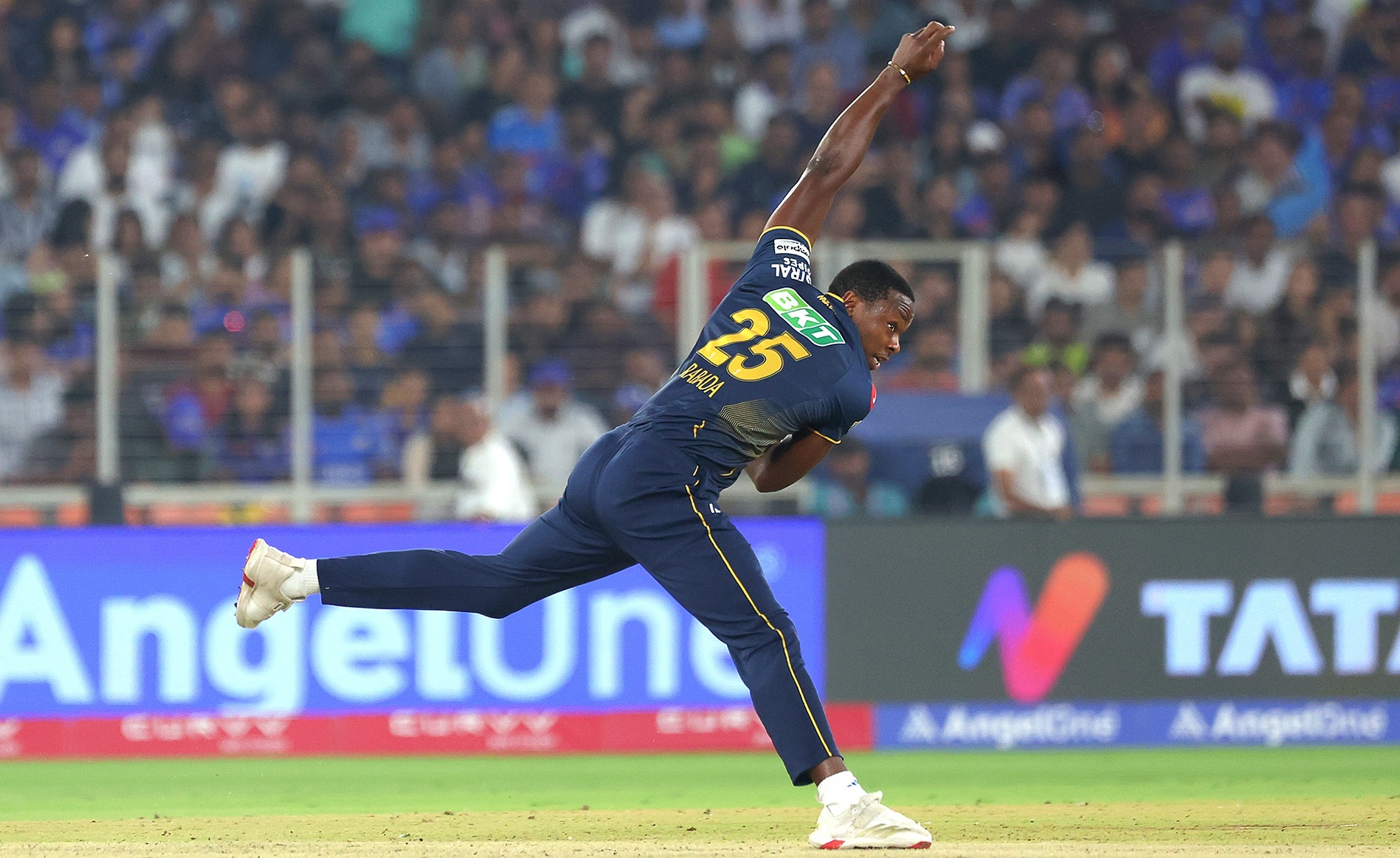
 Kagiso Rabada ended as the leading wicket taker in IPL 2026 with 29 scalps. The Gujarat Titans lost the final against Royal Challengers Bengaluru. (Photo: Pankaj Nangia / Getty Images)
As the 2026 Indian Premier League (IPL) heads into its final weekend, several names and performances stood out. But for South African cricket fans, no player has made a bigger statement than Kagiso Rabada.
Although he could not carry his team, the Gujarat Titans, directly into the final, Rabada’s pace and wicket-taking dominance have been central to the franchise’s run to the qualifiers.
The 31-year-old has consistently bowled speeds of 150km/h, reminiscent of the form he showed in his early twenties.
He is also currently in the running for the Purple Cap this year, sitting second on the wicket-taking charts with 26 wickets and an average of 21.03.
The last time Rabada took more than 11 wickets in a single IPL season was back in 2022, when he took 23 for Punjab Kings.
As of 26 May, Rabada also has the most powerplay wickets (18) by any bowler in an IPL season.
It’s no secret that Rabada had his struggles in the past few seasons of the IPL, but in 2026 the Proteas spearhead is certainly back to his best for Gujarat Titans.
Proteas bowling coach Piet Botha told Daily Maverick that Rabada’s resurgence has been the result of months of hard work coming together.
“Kagiso has always been an athlete, and he’s always been a hard worker and a professional,” said Botha.
“The thing with fast bowlers is if you don’t look after yourself, it doesn’t matter how good you are. Physically, you’re conditioned for bowling, but if you don’t look after yourself in terms of your prep and your training then everything can go downhill quickly.
“But he’s always really professional, and at the level he’s playing at, he’s also always got professionals around him that can look after him.”
/file/attachments/2992/13256363_864492.jpg "Kagiso Rabada has a new training regime to improve his T20 bowling stats and the work has paid off. (EPA/JONO SEARLE AUSTRALIA AND NEW ZEALAND OUT)")
Sprint training sparks revival
For years, Rabada has been mentioned in the greatest fast bowler conversations in the Test and the 50-over formats. T20 cricket, however, remained the one format where questions lingered.
According to Mitchell McClenaghan, bowling coach for MI Cape Town in the SA20, Rabada’s current form is no fluke.
Speaking on ESPNcricinfo’s TimeOut show, McClenaghan said Rabada entered 2026 determined to change that perception.
“He wants to show everyone how good he is,” he said.
“We sat down with KG before the SA20 and he realised his T20 game was not up to par. For someone like KG who’s achieved so much, realising that there’s some improvements he needs to make in his T20 game was quite massive.
“From that point on, I knew, leading into this IPL he had a real bone to pick with his performances in the IPL in the last couple of years.”
McClenaghan added that Rabada’s “phenomenal shape” and pace are closely linked to work he has done with a sprint coach during the off-season – specifically under the guidance of Olympic sprinter Akani Simbine’s coach.
/file/attachments/2992/TL_2561529_186877.jpg "Rabada has been working with sprinting superstar Akani Simbine's coach Werner Prinsloo to add explosiveness to his bowling. (Photo: Anton Geyser/Gallo Images)")
“You need to train like a sprinter, you have to be fast, you have to be explosive. If you can’t run, you can’t bowl,” said McClenaghan.
Botha similarly explained that fast bowling is all about explosive power.
“Anybody who does explosive power exercises trains specifically for that,” said Botha.
“Our fitness trainer at the Proteas works very hard on doing specific exercises that maintains or advances explosive power.
“When it comes to sprint work and the running-in, you have to have a proper running-in technique because it’s about the alignment of things.
“You’ll see all the fast bowlers in the world, they attack the crease when they run in to bowl, and it’s trying to get that correct as well.”
Rabada this year is far more explosive and snapping through the crease. His quicker delivery strike means less time at the crease which means the ball is getting to the batter much faster.
Asked whether it was unusual for Rabada to maintain such pace at 31, Botha argued that many fast bowlers peak in their late twenties and early thirties because they better understand how to manage workloads and effort levels.
“A big part is how do you manage yourself, and that’s just a little bit of experience,” said Botha.
“I always use the example of Dale Steyn. Dale Steyn was a fast bowler who could consistently bowl 145 to 150km/h, but he had many spells in Test cricket where he operated at 135.
“Then he’ll have a phase where he’ll just step it up and he’ll suddenly bowl 150. So, he was a guy who knew how to switch it on and went to bowl within himself, and that takes a bit of experience.”
Powerplay weapon
Another factor in Rabada’s success has been how the Gujarat Titans have used him with the new ball.
Of his 26 wickets this season, 18 have come in the powerplay – the most by any bowler in that phase during a single IPL season.
The move to use Rabada more aggressively upfront began during the T20 World Cup earlier this year, said Botha.
Rabada faced criticism during the World Cup after taking only five wickets in seven matches. However, Botha said a lot of it was out of Rabada’s control, including a few dropped catches as well as understanding the importance of positioning.
/file/attachments/2992/TL_2328982_433965.jpg "Proteas bowling coach Piet Botha. (Photo: Ashley Vlotman/Gallo Images)")
In fact, Botha said the World Cup helped shape a new approach to Rabada’s bowling role.
“I found the World Cup was actually where a lot of the change came,” said Botha.
“There was a phase in the World Cup where we started opening the bowling with him.
“We felt we were almost holding him back by using him in the middle and him having to take a lot of pace off and trying to have a way of how to defend.
“Where giving him a new ball, we look for wickets. If we can get two or three wickets in the powerplay, we’re actually on the front foot.
“It makes him effective because he can run in, hit good lengths, because he’s actually now got a little bit of freedom in his mind where he can just run in and bowl.”
Although the Gujarat Titans lost the qualifier, they still have another opportunity on 29 May to reach the final, and potentially give Rabada one last chance to secure the Purple Cap. DM
Update: While Rabada may not have been able to carry his team over the final hurdle, he still celebrated a personal milestone by claiming the Purple Cap after the final against Royal Challengers Bengaluru (RCB) on 31 May.
Having spent much of the closing stages of the tournament in second place, Rabada overtook RCB’s Bhuvneshwar Kumar to finish as the IPL’s leading wicket-taker. He ended the 2026 season with 29 wickets from 17 matches at an economy rate of 9.68.
The accolade marked the second Purple Cap of his career, adding to the one he won with Delhi Capitals in 2020 after taking 30 wickets. The
achievement placed Rabada in an exclusive club, becoming only the fourth player in IPL history to claim the award twice.
This story first appeared in our weekly Daily Maverick 168 newspaper, which is available countrywide for R35.
/file/attachments/2992/DM-29052026001CPTJHB_831844.jpg)
Comments
Scroll down to load comments...