




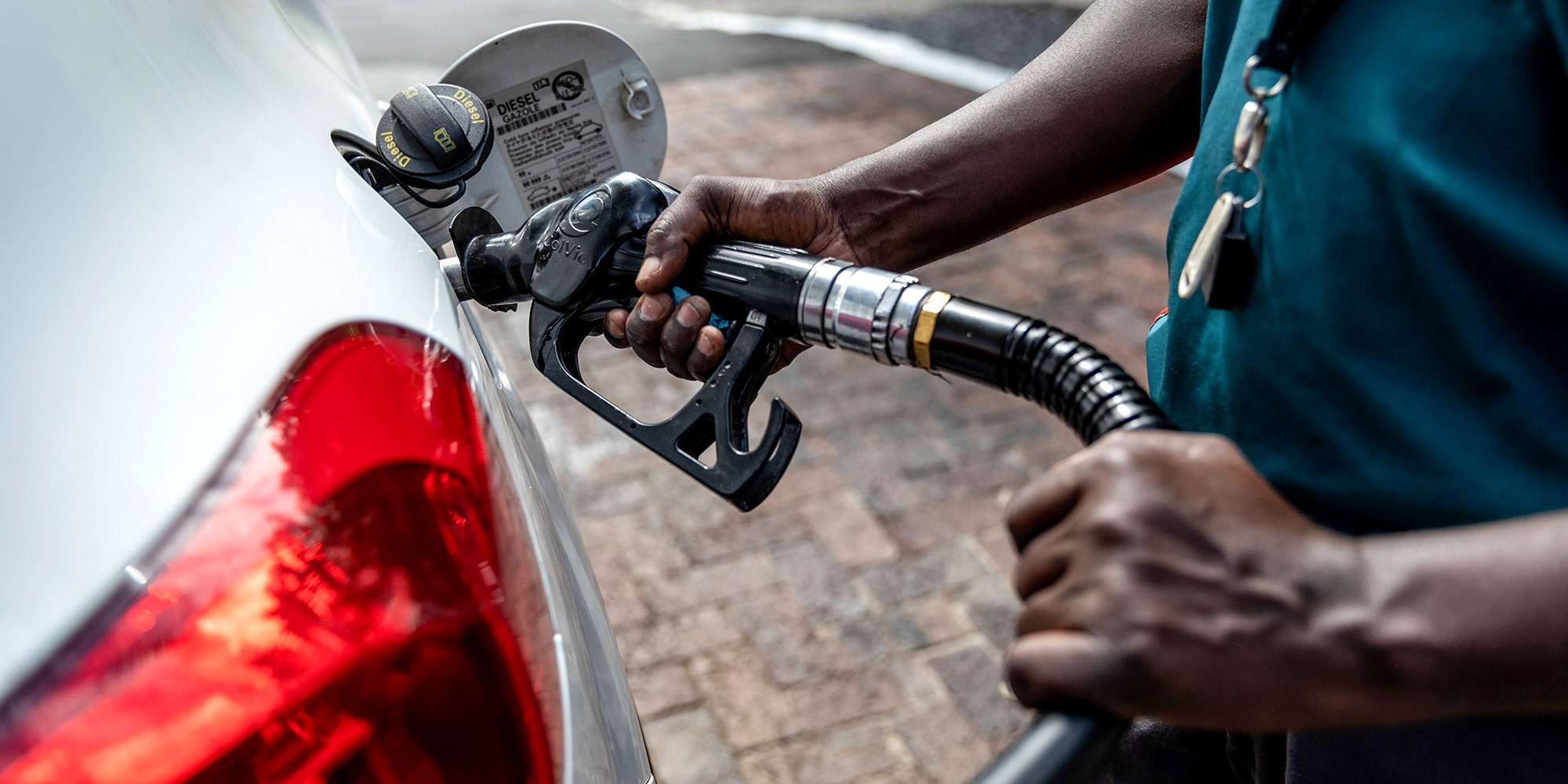
 Petrol prices in South Africa will rise by R1.43/litre, effective from 3 June 2026, while diesel prices see a significant decrease of up to R3.23/litre. (Photo: Dwayne Senior / Bloomberg via Getty Images)
The petrol price will rise a further R1.43/litre from Wednesday, 3 June 2026, while the diesel price will fall as much as R3.23 a litre, the Department of Mineral and Petroleum Resources (DMPR) said on Monday when it announced its monthly adjustment to fuel prices.
This double-edged sword will have a mixed impact on SA’s current inflation trajectory. The petrol hike will keep much of the country’s transport costs elevated – taxis and e-hailing services come to mind – while the decrease in diesel prices will ease costs for farmers and companies such as the big retailers that rely on diesel lorries for moving goods.
The move underlines the relative stability that has returned to global oil markets as they navigate the fallout over the Iran conflict, while the rand’s surprising resilience has also served to cushion the blow.
The adjustment is made from calculations based on the average price of the global benchmark Brent Crude, the rand’s exchange rate with the greenback, and other metrics that have an impact on diesel and paraffin.
“The average Brent Crude oil price increased from $101.00 to $104.59 during the period under review. This is due to the continued tension between the US and Iran, the closure of the Strait of Hormuz,” the department said in a statement.
“The prices of middle distillates (diesel and paraffin) decreased more than petrol prices because of lower seasonal demand as the northern hemisphere moves into summer,” it added.
Short-term relief measures
The rand for its part saw its average exchange rate with the dollar gain slightly during the month of may to 16.52/dollar from 16.65/dollar. And short-term relief measures remain in place.
“In line with the announcement by the minister of finance, the amount of general fuel levy relief has accordingly been reduced by R1.50 per litre for petrol and R1.96 per litre for diesel, effective from Wednesday 3 June 2026 to Tuesday 30 June 2026,” the department said.
It all adds up to the petrol price increase that takes effect on 3 June and the decrease in the diesel price, as well as that for the wholesale price of illuminating paraffin, which falls almost R6.0 a litre.
The sharp increases of April and May have been blunted, and if the rand can remain steady and the global oil price does not soar in June, then the worst may be over for South African consumers and the economy on this front.
But the “second-round effects” such as inflation expectations and wage demands that are high on the Reserve Bank’s radar screen are still playing out, and more rate hikes may be in the pipeline.
The July adjustment will hinge on the rand’s performance this month and how the Iran conflict unfolds. Both are shrouded in the mists of uncertainty in these early days of June. DM
Comments
Scroll down to load comments...