




 Umpire Marais Erasmus
Talented home cooks are not restaurant chefs. Golf’s weekend warriors do not turn pro. Burying bottles filled with pineapple peels, sugar and yeast at the bottom of a shoe cupboard for a while does not a beer brewer make.
Our relationship with so much changes when we are expected to produce on schedule, to a high standard and, particularly, in return for enough money to pay the bills and maybe even live a little. It’s the difference between amateurs, however gifted or mediocre, and professionals. Umpiring is no different.
While he was a teacher, Erasmus knew he had a safety net. He ended that career in November 2007, and suddenly there was nothing between the tightrope he walked to provide for his family and the ground below. Except being paid to umpire.
“I loved umpiring and it was going well, and maybe that’s why I didn’t put too much pressure on myself,” Erasmus says. “But when I left teaching and umpiring was the only thing, that’s when I felt pressure – now this had to work. Early on I told myself I could go back to teaching. But, after five or six years, I knew I didn’t want to go back.”
Pressure? Marais Erasmus? Who knew? He exudes a quiet but unshakeable assurance, a feeling that he knows what is going to happen next and has prepared for it. This cannot be true, but that’s how it feels when you’re in his presence. It’s the perfect quality for an umpire to have. It tells the players, the crowd, the television audience and the media who is the adult on the field.
If you make an appointment to see Erasmus, he will not ask for confirmation on the day that your meeting is to go ahead. Maybe he’s old-fashioned that way, but it’s more fun to think of him as prescient. He will arrive before you do, even if you’re bang on time. When you walk through the door he will glance up as if he knew you would be right there at that exact instant.
A small, sweet smile will tug at the corners of his magisterial mouth and light up a face that will look like it has met a moonbeam. Some people, you will think as you look at him, simply sail through life.
Watching him walk onto the field paints the same picture. He glides lightly as he goes, on his way to do something enjoyable, invariably chatting genially with his colleagues. Most of them, anyway. Pressure? This bloke?
Happily, then, Erasmus didn’t have to worry about having to go back to teaching: “I kept seeing progress. By my sixth season I was at international level. I was never frustrated.”
Instincts
Erasmus’s story might have been concluded there. He became a professional umpire. He rose through the ranks. He joined the International Cricket Council’s Elite Panel. He maintained a level of excellence throughout that was difficult to match, much less surpass. He retired from the big time at the top of his craft. Done.
But we need more than that. Becoming successful as an umpire involves not only having the required instincts but also the confidence to trust those instincts. Gut feel is important, as is a deep background in the game; typically grounded in playing it. But, mostly, umpiring is about skill and knowledge.
We can all sit on our couches and decide a ball has pitched outside leg stump, thus nullifying an appeal for leg-before. If we’re correct, we reckon, loudly, that we could be umpires. If we’re wrong, we’re quietly grateful that we’re not umpires. Real umpires don’t have that luxury. They are expected to get it right. When they don’t, they’re criticised.
The Decision Review System, which was trialled in India’s Test series in Sri Lanka in July and August 2008 and adopted in November 2009, has changed the equation at the top of the game. Mistakes can be undone and, as importantly, correct calls can be upheld.
The revelation that an umpire has spotted the merest brush of ball on batting glove is as central to cricket’s drama as a crisp cover drive or a zigzagging leg break. The difference between players and umpires is that the latter aren’t often given their due when they show their excellence.
Here’s one argument why that doesn’t happen: it’s their job. Why should they be praised for doing it properly? Fair enough, except that it’s Kagiso Rabada’s job to bowl fast and Suryakumar Yadav’s job to hit the ball hard and score runs.
And when they do their jobs well they are praised to high heaven. Umpires, not so much. About all they share with players is that, when they get it wrong and so don’t do their jobs to a satisfactory standard, they will be denounced.
/file/attachments/orphans/TL_2012138_247793.jpg "Umpire Marais Erasmus signals a wide delivery during an ODI between South Africa and the Netherlands at Willowmoore Park in Benoni on 31 March 2023. (Photo: Christiaan Kotze / Gallo Images)")
Even in this there is unfairness. If Rabada goes for 20 runs in one over and takes a hattrick in his next, the expensive over isn’t going to make the highlights. If Yadav takes 30 balls to get off the mark and then scores a century, his slow start will no longer exist in the public consciousness.
But let an umpire make a solitary error amid a slew of correct and even exemplary decisions, and it’s the mistake that will stick out. There is a journalistic logic to this: we don’t write or talk about all the airplanes that do not fall out of the sky. Crashes make the news. Or, as the crude cliché captures, if it bleeds it leads.
Besides, people like Rabada and Yadav win matches; not people like Erasmus. Even so, more words should be spent on the brilliant decisions made by people like Erasmus – which can have a direct impact on the winning and losing of matches.
Staying power
His first-class debut as an umpire was a match between South Africa A and The Rest – a composite side made up of players from seven provinces – at the LC de Villiers Oval in Pretoria in February 2003.
Erasmus’s colleague was Hugo Lindenberg, a former Border slow left-arm bowler whose dark, full beard – attached to a lean face, which topped an even leaner body – made him look foreboding. In fact he is as genial and easy-going a soul as you could hope to meet. Lindenberg also made his first-class umpiring debut in that match.
He would stand in just four first-class games. His only international was a women’s ODI between South Africa and England in February 2004. Two years and nine days later, Erasmus stood in the first of his 249 internationals.
Because you’ve played first-class cricket, written your exams and even stood at international level doesn’t mean your career in professional umpiring has been cleared for take-off. It takes far more than that. DM
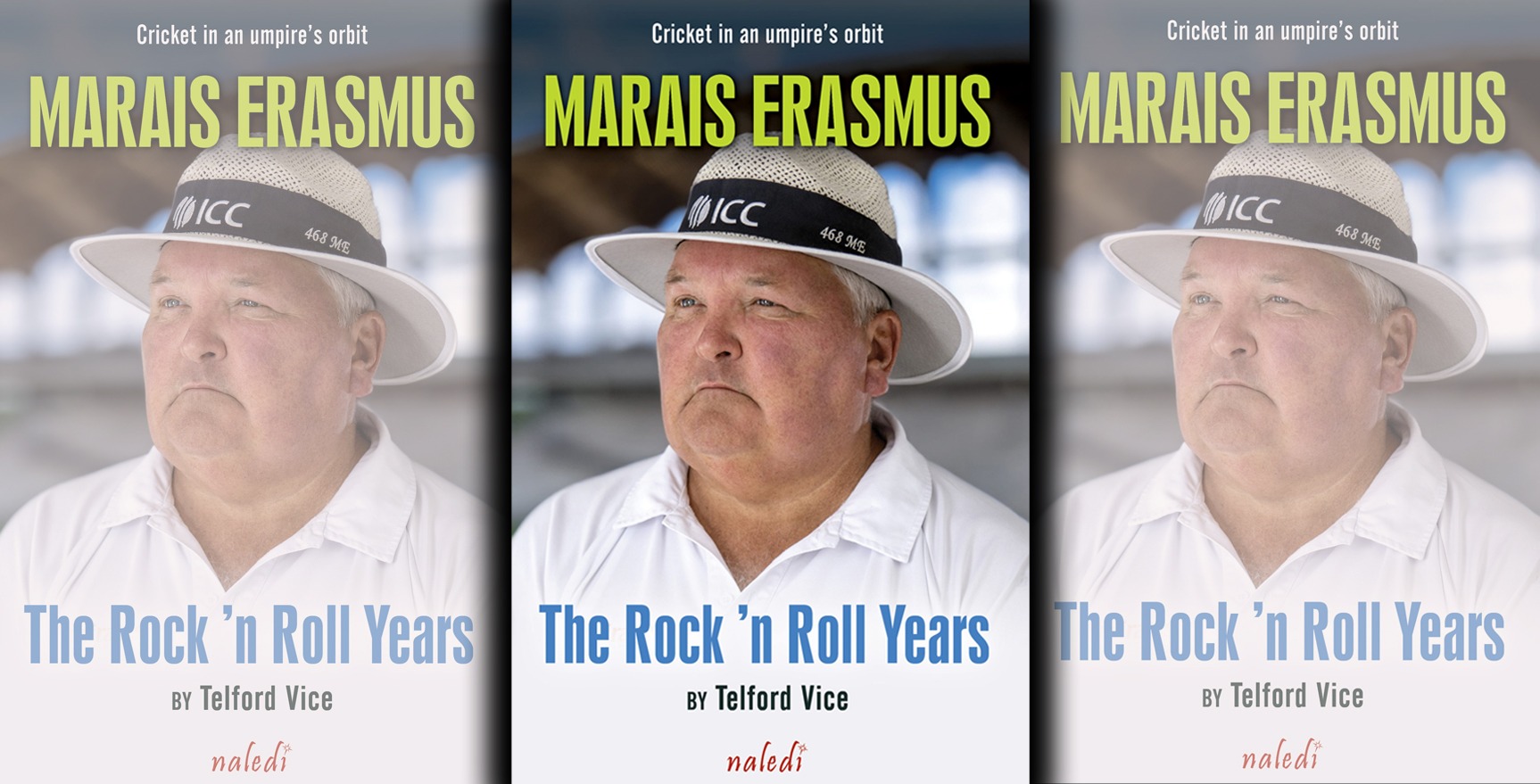
“Marais Erasmus: The Rock ’n Roll Years; Cricket in an Umpire’s Orbit” by Telford Vice is available for preorder at https://naledi.co.za/product/the-rock-n-roll-years/ and will be published on June 15
This story first appeared in our weekly Daily Maverick 168 newspaper, which is available countrywide for R35.
/file/attachments/2992/DM-29052026001CPTJHB_831844.jpg)
Comments
Scroll down to load comments...