



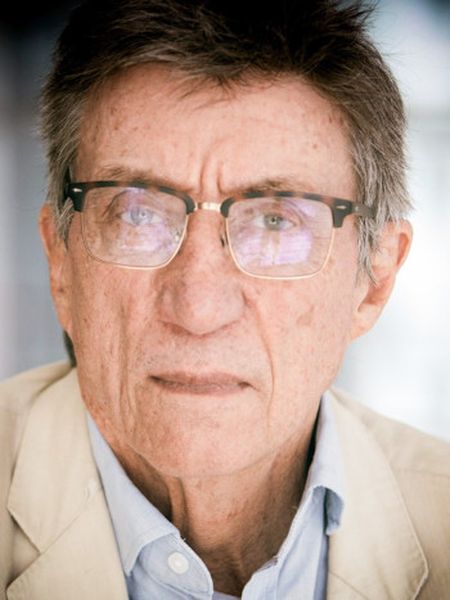
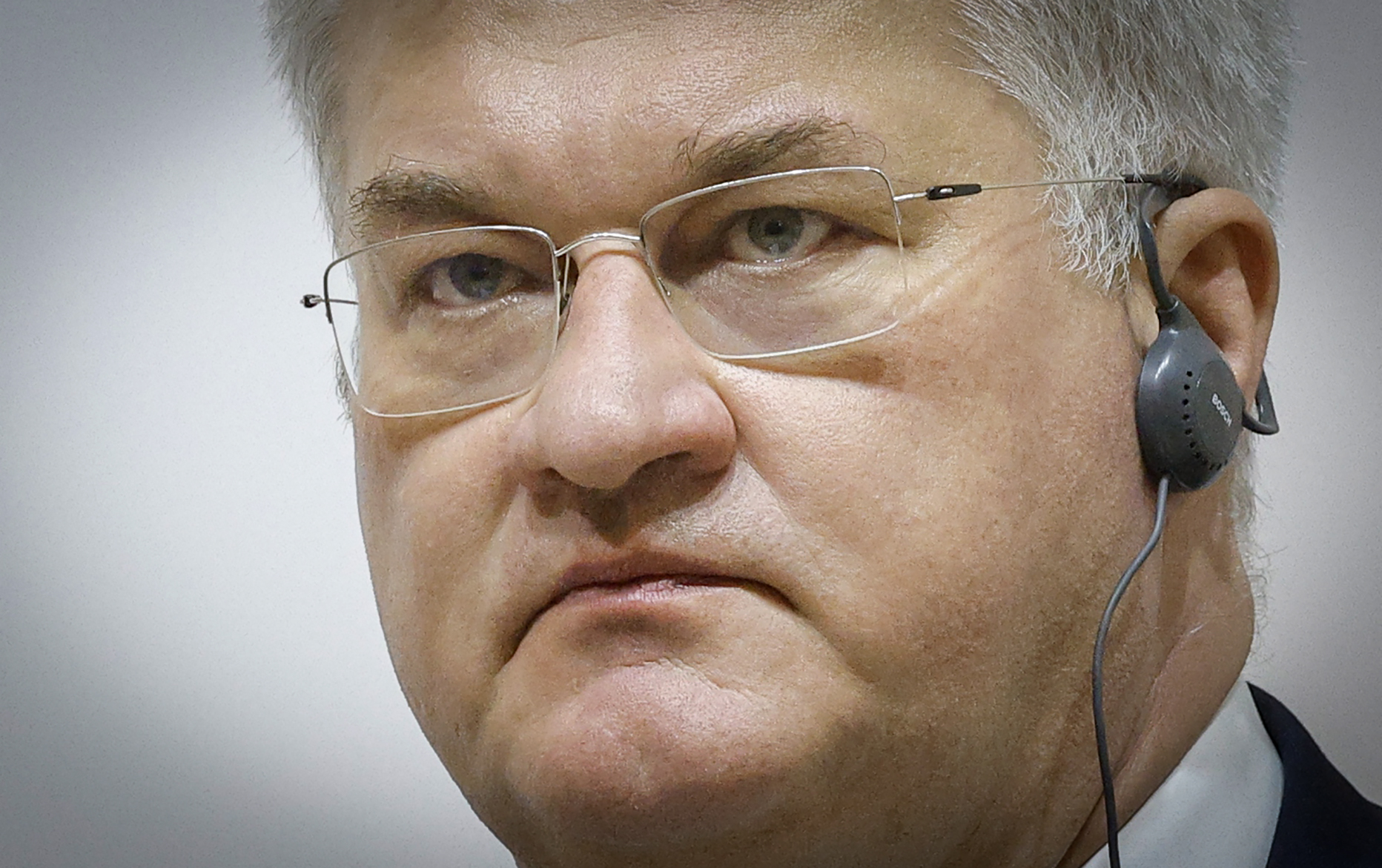
 Ukrainian foreign minister Andrii Sybiha. (Photo: EPA-EFE / Sergey Dolzhenko)
The war against Russia is “turning in Ukraine’s favour”, Ukraine’s foreign minister Andrii Sybiha recently told African government ministers, former leaders and current opposition leaders.
Sybiha addressed the Spier Dialogue run by Spier and the Platform for African Democrats, and supported by Germany’s Konrad Adenauer Foundation, where the discussion was around African and global issues.
/file/dailymaverick/wp-content/uploads/2023/05/peterfab-botswana-UN2.jpg "File photo of former president of Botswana Ian Khama. (Photo: EPA / Mario Ruiz)")
The African audience included former Botswana President Ian Khama, Zimbabwean opposition leader Tendai Biti, Mozambican opposition leader Venancio Mondlane, Angolan opposition leader Adalberto Costa Junior, Nigerian presidential candidate Peter Obi, Ugandan opposition leader Joel Senyonyi, DA leader and Cape Town mayor Geordin Hill-Lewis, SA home affairs minister Leon Schreiber, SA sport, arts and culture minister Gayton McKenzie, SA cooperative governance minister and IFP leader Velenkosini Hlabisa and former Lesotho prime minister Moeketsi Majoro.
/file/dailymaverick/wp-content/uploads/2025/06/12731847.jpg "Mozambican presidential candidate Venancio Mondlane addresses supporters upon his return from exile in Maputo on 9 January 2025. (Photo: EPA-EFE / Luisa Nhantumbo)")
Speaking by video link from Kyiv, Sybiha said he didn’t want to be overly optimistic about Ukraine’s chances, but “that’s the reality. Ukraine holds the line and we have stabilised the front line. We are now intercepting up to 90% of Russian aerial targets. Our drone technologies have become a game-changer.
“We can operate drones far from the front line and our front line is about 1,300km, with daily clashes, with daily fighting.
“Our main goal is to save the lives of our soldiers. In some parts of this front line, we try to replace soldiers by using drones, and because of our advanced, sophisticated drone technologies, not only in the air, but also on the ground and on the sea, manpower is no longer an advantage for Russians.”
Digital technology is helping Ukraine hold its own against a country that is 26 times bigger, while paying for a war that was costing it $450-million a day to maintain what he said was now the strongest army in Europe.
‘All is not well for Putin’
“Things are not going well for Putin. He loses 35,000 men per month, a number that is growing, a number that he cannot compensate for.” About 1.3 million Russian soldiers have been killed or wounded since Moscow’s full-scale invasion of Ukraine on 24 February, 2022, he said. “Putin is becoming the biggest murderer of his own people.”
/file/attachments/orphans/RC2RCLAZ3T27_961622.jpg "Russian President Vladimir Putin inspects an honor guard during a welcoming ceremony at the Great Hall of the People in Beijing, China May 20, 2026. (Photo: REUTERS/Maxim Shemetov/Pool)")
Despite this high price, last year Russia gained just 0.8% more of Ukraine’s territory.
Sybiha said that because of its high casualties, Russia was increasingly turning to Africa “to feed its war machine”.
“More than 1,700 mercenaries from 36 African countries fight in the Russian army against Ukraine. Hundreds of citizens from nations like Ghana, Mali, Kenya and Nigeria are already trapped in this conflict.” Many were invited to Russia under the false pretence of getting jobs or student visas.
He urged African governments, civil society and the media to expose the recruiting networks and said Ukraine hoped that the African Union would move to stop them.
Sybiha was speaking on Saturday, 23 May, just hours before Russia launched another large missile attack on Ukraine, which killed four and injured about 100 people in Kyiv and other areas, according to Ukrainian President Volodymyr Zelensky.
/file/attachments/orphans/GettyImages-2277582044_295943.jpg "A distressed resident is held back by a Ukrainian police officer as rescuers recover the remains of her relative from the smouldering rubble of a house destroyed in a Russian bombardment of a residential area that killed two residents on May 25, 2026 in Kramatorsk, Ukraine. Russia has intensified its bombing campaign on the Ukrainian fortress belt, targeting key cities along the eastern front. (Photo: Pierre Crom/Getty Images)")
US equipment ‘crucial’ to Ukraine
The foreign minister was asked if the US was still important to Ukraine’s defence, despite President Trump’s ambivalence. He said it was crucial, because Ukraine was buying American military equipment, the US was providing Ukraine with intelligence, and it was also trying to mediate a peace deal.
He said Ukraine had not experienced any delay in receiving weapons because of the war in Iran, and it was buying US weapons funded by Nato countries.
“We managed to close the sky for some types of aerial objects, like drones or cruise missiles, but we don’t have enough capacities to shoot down ballistic missiles,” Sybiha said. He noted that the best anti-ballistic missile weapon was the US Patriot.
/file/attachments/2992/14013773_384372.jpg "Smoke rises as Ukrainian rescuers work at the site of a Russian strike on a shopping center in Kyiv, Ukraine, 24 May 2026, amid the Russian invasion. More than 600 drones and 90 missiles struck several sites across Kyiv overnight on 24 May, resulting in at least two confirmed fatalities and more than 80 injuries, according to Ukrainian President Volodymyr Zelensky. EPA/SERGEY DOLZHENKO")
But Ukraine had begun its own programme to develop a weapon to shoot down ballistic missiles, “and we are advancing. I hope that Ukraine will proceed and will have our own national air defence systems with anti-ballistic capacities.”
Sybiha said that though the war was a tragedy, it had also triggered considerable development, including of weapons, and Ukraine had increased its defence production by more than 38 times during the war and was now meeting more than 50% of the needs of its military.
Drone tech, other aid ‘available to Africa’
Ukraine was ready to share its drone technology, especially, with Africa, he said, affirming that it could also be used for civilian purposes. The country was also ready to share its experience in education, medicine, energy and digital infrastructure.
Sybiha said he was addressing the meeting “because Africa’s voice matters. In today’s world, the African continent plays an increasing global role. And I am confident you can play a role in peace efforts because global security is interlinked, and Russia’s war against Ukraine has global consequences.
“Our engagement with African countries is systemic, long-term, and practical. We want to see more Ukraine in Africa and more Africa in Ukraine. We can strengthen each other, and we want to increase your self-sufficiency. This is one of the lessons we have learned during this horrible war. It is necessary to become self-sufficient and independent.”
‘Time for peace efforts’
Sybiha said there was now a momentum to end the war, and it was time to combine all efforts. He recalled the African Peace Mission of presidents, which South African President Cyril Ramaphosa led to Ukraine and Russia three years ago.
He noted one of its central initiatives was the exchange of prisoners of war and the return of Ukrainian children abducted by Russia. Sybiha said Ukraine was grateful to SA for its readiness to mediate in the efforts to return the children, as well as for supporting the UN General Assembly resolution in December demanding the return of the children.
/file/attachments/2992/13978828_745127.jpg)
“Ukraine wants peace. We want to end this war. The war is on our territory, and our people are suffering.
“Unfortunately, we don’t see any signs of Russia being ready for diplomacy. They put forward demands. They want us to withdraw from our Donetsk region. And additionally, they now want their flags there, their jurisdiction and their currency, their legislation. This is unacceptable.”
He said Ukraine would never accept a peace formula which cost the country its sovereignty and territorial integrity. But it was ready to stop fighting where its soldiers now stood and to observe a “lasting and reliable” ceasefire, opening a path to broader negotiations.
But “we believe the current trilateral format of the negotiations has reached its limits,” he added, apparently referring to the US-mediated talks.
“To advance peace efforts…we need to make Putin stop hiding and meet President Zelensky. We believe that South Africa can play a role in persuading and facilitating such a meeting.”
Trump’s leverage required
Sybiha nonetheless noted that “It is not realistic to achieve lasting comprehensive peace without Trump”, and Ukraine needed his pressure and leverage over Russia. “But in parallel, recently we started new discussions in Europe. It’s probably also a time for Europe to step up, to start to play a complementary role, focusing on resolving concrete issues. We are talking not about [an] alternative, but we are talking about a complementary track.”
All of Ukraine’s diplomatic efforts were aimed at ending the war, he said.
The war had affected African countries, which had felt the impact of disruptions to food supplies, including Ukrainian exports of grain and fertiliser and higher energy prices, he said.
Food security
Despite the war, Ukraine remained a global guarantor of food security, including through the Grain from Ukraine initiative, supported by Ukraine’s partners, which was supplying grain and other foodstuffs free to the neediest countries.
He said that at the start of this year, it had delivered more than 300,000 tons of food to 13 countries, mostly African. Ukraine was also launching international grain hubs to address food insecurity.
Ukraine was helping African countries to achieve long-term economic resilience and food sovereignty by boosting agricultural expertise, Sybiha said.
Over the past two years, Sybiha said total trade turnover between Ukraine and African nations had exceeded $4.23-billion, an increase of almost 65% since 2023. DM
Comments
Scroll down to load comments...