




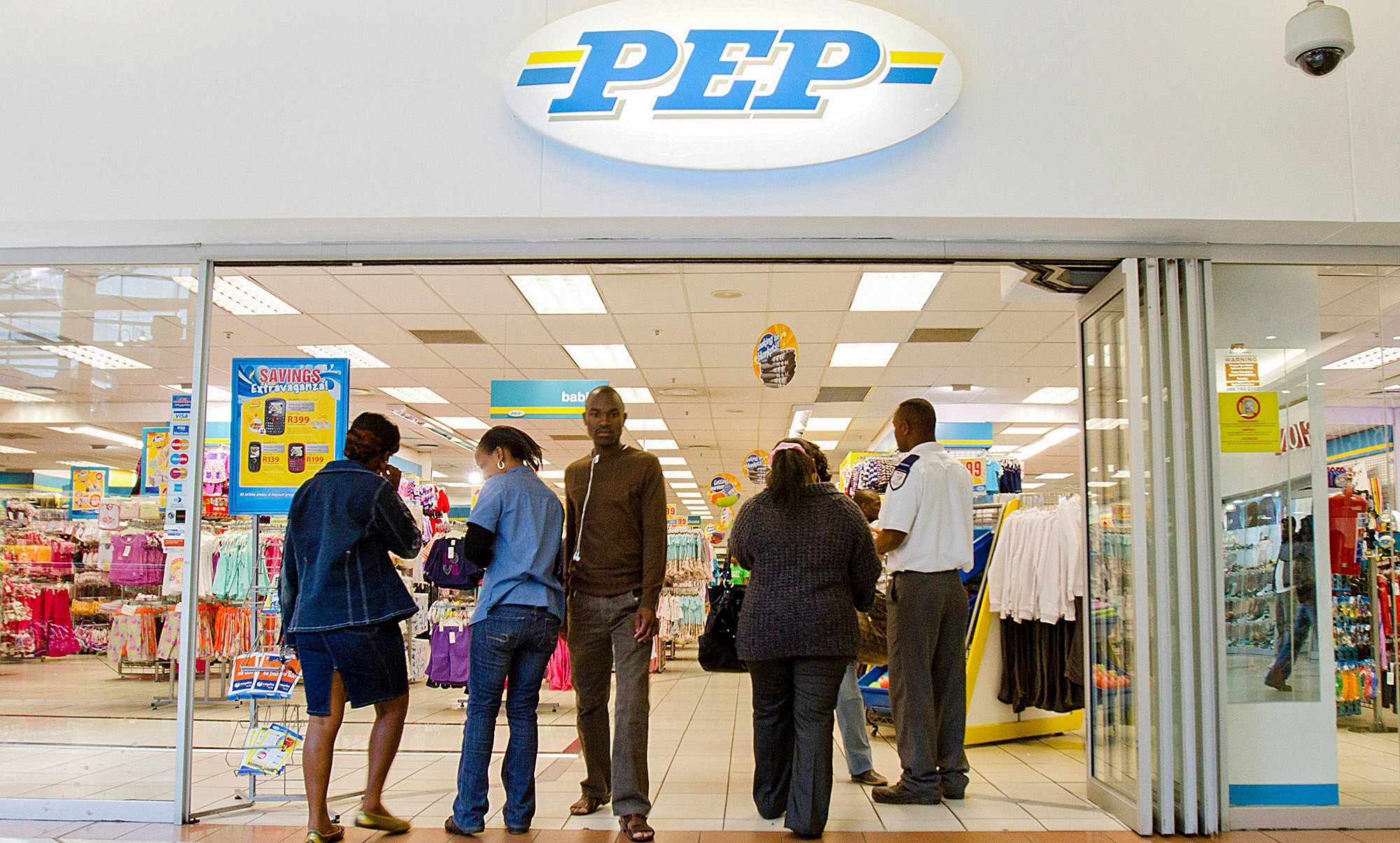
 The financial services segment of Pepkor saw operating profit jump by 63.4%. (Photo: Nadine Hutton / Bloomberg via Getty Images)
A decade ago, JSE management teams were being rewarded for getting capital out of the country as quickly as humanly possible. Today, the market is swooning over executives who are unlocking growth in South Africa by using their core business as a distribution engine for other opportunities. How times change!
But this doesn’t mean that the share prices of these companies are heading in the right direction this year. Markets are fickle things, with the broader geopolitical worries hurting the valuations of even the best businesses. Other than for a handful of sectors, 2026 is proving to be an ugly year.
These environments create wonderful opportunities for stock pickers, as great companies can be picked up at relatively cheap levels. Market dislocations are where the money gets made, although they require a long-term view and patience. As the old saying goes: the market can remain irrational for longer than you can remain solvent.
The past week gave us results from two retailers that are doing a lot of great work in their underlying businesses. Despite this, both share prices are down year-to-date. I’ve already added one of them to my portfolio and I’m exercising patience in adding the other.
Let’s take a closer look at Pepkor and Lewis.
Pepkor: from basics to banking
Pepkor’s shareholders have watched the price decline by 19% year-to-date. But the results for the six months to March 2026 reflect revenue growth of 13.2%, with sales up by 5.2% if you exclude acquisitions. That doesn’t sound like a business that deserves to be punished.
An even more impressive metric is the two-year compound annual growth rate (CAGR) in like-for-like sales of 5.7%. Despite all the difficulties of the South African consumer story, Pepkor is achieving comparable growth that is well ahead of inflation. There aren’t many retailers that can say that at the moment.

It’s not all good news, of course. Ackermans has been a headache for the group in the recent period, with like-for-like sales down by 0.5% (admittedly in the face of a demanding base period). An important element of my bull case is that management acknowledges responsibility for this issue and has included commentary on how they plan to address it. There are far too many management teams on the JSE who simply throw their hands in the air and blame the economy.
With normalised headline earnings per share (Heps) up by 12.1% and cash from operations up by 15.1%, Pepkor is turning this revenue growth into solid returns for shareholders.
If we dig deeper, we find a segmental story that shows exactly why it’s so important for Pepkor to layer services over its traditional retail business. Operating profit was up by only 3.6% in clothing and general merchandise. In furniture, appliances and electronics, that metric was up by just 1.0%. These are unimpressive numbers that show us why the broader sector is struggling.
But then we reach the Pepkor party trick: financial services saw operating profit jump by a magnificent 63.4% and the informal market platform achieved profit growth of 23.5%.
These segments may only contribute a combined 20% of group operating profit, but they have a great story to tell. The retail footprint is proving to be an excellent distribution network for these solutions. With the footprint growing rapidly, I expect to see more of this going forwards.
The long-term investment thesis is that these segments are merely a taste of what is to come in Pepkor’s banking ambitions. I like the strategy of adding a banking business to an existing store footprint that has already won the trust of consumers when it comes to financial services. It’s not rocket science to see how a rewards programme would fit in beautifully.
/file/attachments/orphans/pepkor-segmental-performance_950288.jpg "Pepkor’s 2026 interim results. (Image: Pepkor)")
I’ve added Pepkor to my portfolio and I’ve left space to add more if the share price keeps dropping. On a price/earnings multiple of 13.5x and with this underlying growth story, there’s a lot to feel good about here.
Lewis: a lending business that also sells furniture
Lewis is a prime example of a company that has figured out how to make money in South Africa. In the year ended March, it grew merchandise sales by 7.3% to R5.5-billion and other revenue by 15.7% to R4.9-billion. The thing to notice here is that “other revenue” is nearly as big as the sale of furniture.
This is because Lewis uses furniture and other products as a means to an end. The true economics of the business shine through when you combine the gross profit on sales with the income from lending activities, as Lewis customers are typically buying furniture using debt.
Lewis is trading on a price/earnings multiple of 6x (less than half of that at Pepkor). The market is nervous of how Lewis’ underlying exposures can quickly snowball into a problem in a recessionary environment. There isn’t much that Lewis can do about the broader economy, so the company focuses on delivering strong growth and hoping that the market will reward it accordingly.
With Heps up by 18.3%, it is making a strong case for those rewards. Return on equity just increased from 15.4% to 16.2%. They achieved this during a period where the company opened a record number of new stores. And in case you’re wondering whether this rapid store roll-out is merely masking an underlying issue in the group, comparable store sales growth of 4.8% should put those worries to rest.
The total dividend for the year increased by 12.1% to 891 cents per share. This puts Lewis on a dividend yield of just more than 10%. Even when the share price doesn’t put in a spectacular performance, investors can enjoy their dividends and wait for the capital gains to come through.
The market loved the latest numbers, with the share price up more than 6% in the past week. It remains 4.3% down year-to-date though, showing how difficult the current market environment is for these stocks.
I’m tempted to add Lewis to my portfolio, but I’m concerned about the impact of higher rates and inflation from fuel prices. Perhaps I’ll be proven wrong here, but I suspect that a better entry point may present itself in months to come. DM
Comments
Scroll down to load comments...