




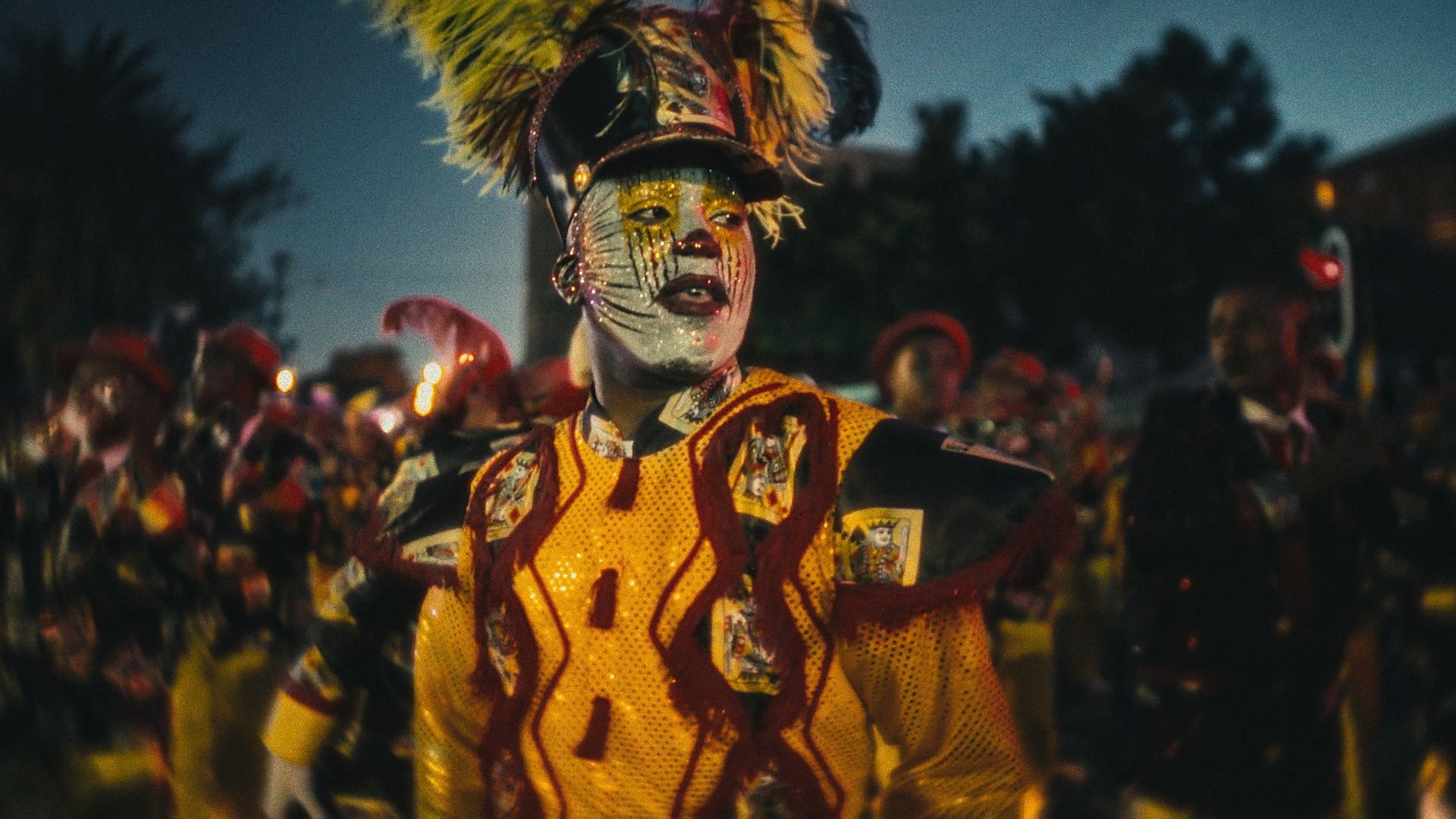
 A still from Notes from the Underground. (Photo: Chris Kets / Adrian Van Wyk)
A polar bear must endure the shrinking of his icy habitat and navigate the land alongside modern human life. A journalist investigates Kenya’s tea plantations, where the hands of imperialism seem to have never left. And a young hip-hop artist in Cape Town pieces together words of self-expression.
These are a few of the stories featured in the 2026 Encounters South African International Documentary Festival, which brings films from South Africa and Kenya, to Canada and the US into a cultural exchange of ideas, histories and messages.
While the festival presents narratives and filmmaking covering a spectrum of themes, the 28th edition of Encounters is anchored by its curation of documentaries that tackle matters of land ownership, reclamation of power and the question of belonging amid sociopolitical tensions.
Humans as invasive species
/file/attachments/orphans/AstillfromNuisanceBear_EncountersDocumentaryFestival_131504.jpg "A still from Nuisance Bear. (Photo: Mubi)")
It’s not unusual for the existence of wild creatures in human-populated areas to be described as an infestation, invasive or a nuisance.
They are words that capture how some wildlife may inconvenience or threaten the daily lives of human beings, but they nevertheless cast certain species in antagonistic roles, often failing to acknowledge how humans ourselves have intruded upon and destructed natural habitats that were never ours to begin with.
Making its African debut at Encounters, Nuisance Bear, the winner of the 2026 Sundance Grand Jury Prize, confronts this paradox by decentralising the Western anthropic gaze.
It traces the survival tactics of a polar bear in Churchill, Manitoba in Canada – considered the polar bear capital of the world – while being grounded in the ideological and spiritual perspective of a narrator from the Inuit community.
“Historically, with a lot of nature documentaries, you’re excluding your inclusion as a filmmaker, as people in the landscape. This is a very colonial thing,” co-director Gabriela Osio Vanden tells the International Documentary Association. “[Presenting] the land as unpopulated by human beings is very common. But we are part of those ecosystems, and you’re leaving out a massive chunk when you don’t include human beings.”
In this way, Nuisance Bear functions as a thriller-like tale in which the human species – portrayed as a peripheral buzz of tourists, hunters and wildlife officers – is framed as the real invasion on the world’s natural rhythms.
Not only is Nuisance Bear a thematically rich documentary in its social and environment commentary, but it is also visually striking.
Land as colonial legacy
“The soil is fertile, but the land is cursed,” an anonymous worker tells journalist and filmmaker Bea Wangondu about her experience on a tea plantation in Kenya run by a multinational corporation.
Kikuyu Land follows Wangondu, who is also the documentary’s co-writer and co-director with Andrew H Brown, as she investigates the realities behind the gates of tea farms in Kenya and comes up against gatekeepers of both the physical and metaphorical kind.
It’s a slow-paced narrative that’s less a centred exposé of the inner workings of tea plantations than an overarching examination of the persistence of the colonial grip on African land, drawing a vivid comparison between a queen ant’s reliance on the colony’s worker ants for survival and the dependence of multinational corporations on exploitative labour practices.
Initially, Kikuyu Land establishes a captivating throughline. But by juggling a number of thematic threads, including Kenya’s contemporary political landscape and a revelation of Wangondu’s own family ties to the tea-farming industry, it ultimately loses sight of its narrative core, causing it to fall flat in its conclusion.
Yet, that doesn’t detract from the documentary’s impact in stressing how colonial forces are intrinsically entangled in something even as small as a single tea bag.
Music as resistance and reconnection
In the face of these historical systems of injustice are voices of lyrical resistance, nourishing the bond between communities and their heritage.
Notes from the Underground, from South African filmmakers Adrian van Wyk and Chris Kets, is an in-depth study of Cape hip-hop – from its history as an instrument of liberation to its continual role in life on the Cape Flats.
It’s a multilayered and nuanced portrayal of the city’s hip-hop scene, particularly eloquent in evoking the timelessness of the medium. Hip-hop music is, the film argues, a form of expression and resistance that transcends the constraints of linear time, collapsing the perceived distance between the Cape’s ancient, indigenous roots and the present.
On a similar note, the documentary Amadou and Mariam: The Blind Couple from Mali speaks to music’s capacity to build bridges across borders.
Chronicling the career of one of the most successful African pop artists, the film is strung together through a harmony of infectious love, humour and joy, intimately narrated by the stylish Amadou and Mariam themselves as well as a cast of their musical collaborators and admirers, including Vieux Farka Touré, Tiken Jah Fakoly, Scissor Sisters’ Jake Shears and Coldplay’s Chris Martin.
“We sing to say that failing to unite and failing to get along just doesn’t work,” says Amadou, describing their song Généralisé. “We remind everyone of their duty [...] the musicians, they are here to sing, to send out messages so that harmony can exist.”
Both Amadou and Mariam as well as Notes from the Underground carry a narrative and visual glow that embodies a sense of nostalgia, not necessarily for the past, but rather for a future that pulses to a unified beat. DM
Encounters Documentary Festival takes place at select cinemas in Johannesburg and Cape Town from 4 to 14 June.
Also screening at the festival are the African premieres of Tutu and Knife: The Attempted Murder of Salman Rushdie.
Comments
Scroll down to load comments...