




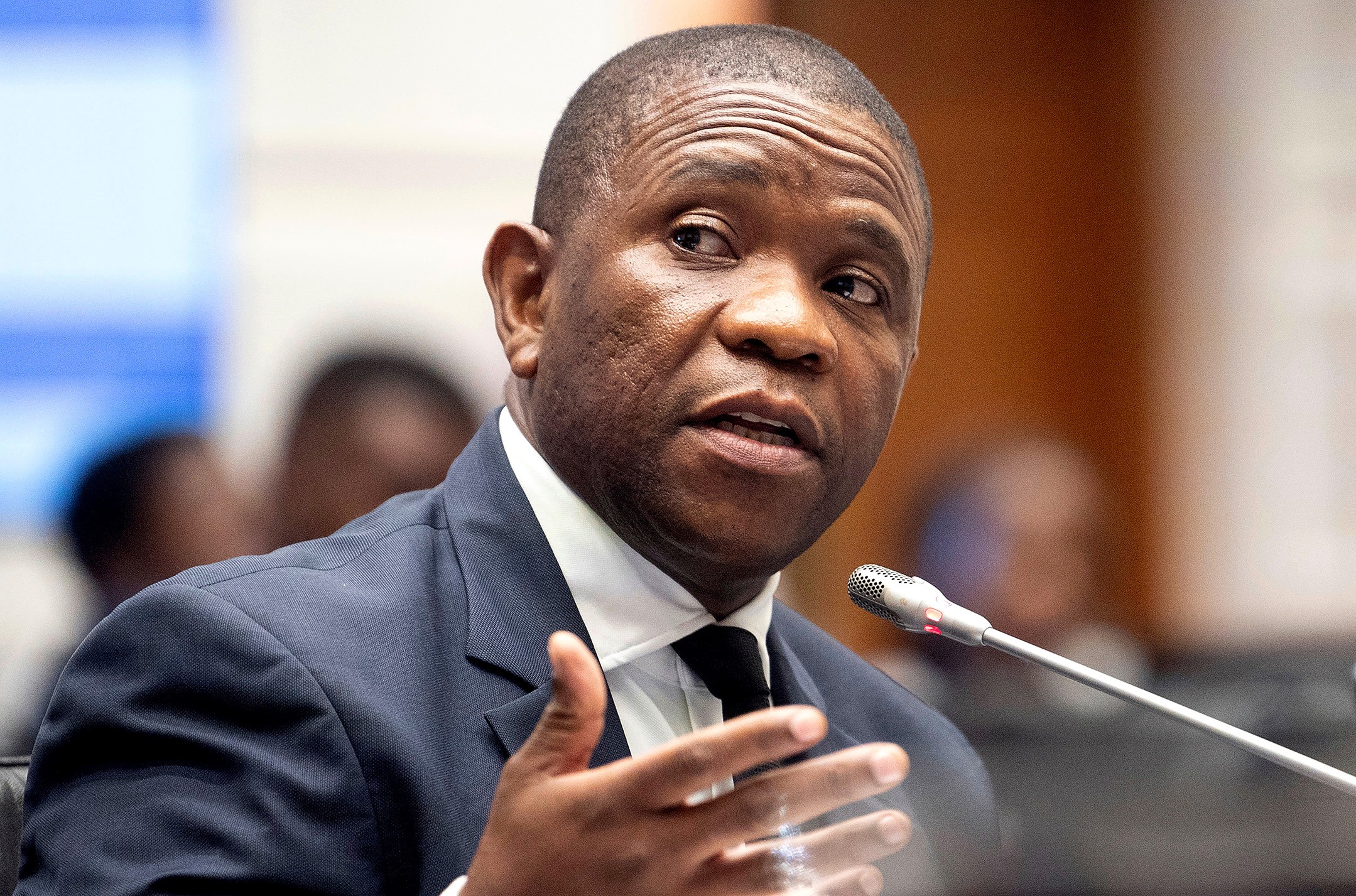
 KwaZulu-Natal police boss Nhlanhla Mkhwanazi at Parliament’s ad hoc committee investigating his allegations of law enforcement infiltration by criminals. (Photo: Brenton Geach / Gallo Image)
The SAPS is facing a serious and multilayered institutional crisis, is how advocate Norman Arendse SC, the evidence leader of Parliament’s ad hoc committee investigating law enforcement infiltration, described the outcome of its investigation late on Thursday, 28 May 2026.
The committee met for a briefing on a draft report that Arendse and his team compiled, based on its months-long hearings involving the testimony of dozens of witnesses.
Arendse gave an overview of witness testimony and the inferences drawn from this.
It became clear that the ad hoc committee believes there have been serious lapses in national and municipal law enforcement.
Concerning overview
Some of the issues Arendse touched on during Thursday’s late proceedings included:
- The politicisation of senior appointments in the SAPS and systematic governance failures, including in the National Prosecuting Authority;
- Necessary vetting and integrity processes;
- How the Independent Police Investigative Directorate needs to be independent of the police ministry; and
- Instability and governance failures in Crime Intelligence.
Arendse also turned his attention to several state officials.
Parliament’s ad hoc committee has been investigating accusations first made in July last year by KwaZulu-Natal Police Commissioner Nhlanhla Mkhwanazi.
He alleged that a drug cartel, known as the Big Five, infiltrated South Africa’s criminal justice system, politics and private security.
Several police officers and other state figures testified about these and broader allegations before the ad hoc committee.
‘Matlala was participant, not victim’
During Thursday’s proceedings, attention turned to individuals, including organised crime suspect Vusimuzi “Cat” Matlala, who faces various charges, and sidelined police minister Senzo Mchunu.
Mkhwanazi previously alleged that Matlala was a Big Five cartel member and had dubious links to Mchunu, which Mchunu denied.
Matlala was among those who testified before the ad hoc committee.
/file/attachments/orphans/ED_601924_452651.jpg "Vusimuzi ‘Cat’ Matlala appears in the Pretoria Magistrates‘ Court on 25 March 2026. (Photo: Gallo Images / Frennie Shivambu)")
Arendse said on Thursday that Matlala had not been “credible in material respects.”
He said Matlala was “characterised as a participant rather than a victim” in an allegedly corrupt network and had been associated with a drug manufacturer, Jerry Boshoga, who was kidnapped in Gauteng in 2024.
Boshoga is still missing.
Arendse said this saga involving Matlala’s proximity to Boshoga should be referred to, among other institutions, the National Prosecuting Authority and Special Investigating Unit.
‘Mchunu didn’t consult Ramaphosa’
During Thursday’s proceedings, Arendse also focused on an issue that the ad hoc committee had before analysed – a 31 December 2024 order from Mchunu to disband the Political Killings Task Team (PKTT) in KwaZulu-Natal.
According to a letter from Mchunu at the time, he had ordered the team to be “disestablished” because it was not “adding any value to policing in South Africa”.
He denied he was influenced to disband the task team because criminals were under the impression it would scupper investigations into them.
/file/attachments/orphans/WhatsApp-Image-2025-10-21-at-100853_358842.jpeg "Sidelined police minister Senzo Mchunu testifies before Parliament’s ad hoc committee investigating accusations that a drug cartel has infiltrated South Africa’s law enforcement and politics. (Photo: Phando Jikelo / RSA Parliament)")
On Thursday evening, Arendse said “multiple witnesses confirmed” that they had not been consulted before Mchunu decided to disband the PKTT. (These witnesses were senior state officials.)
Arendse said that not even President Cyril Ramaphosa had been aware of Mchunu’s plan.
“The President confirmed he was not consulted about the disbandment and only learned of it through social media,” Arendse said.
‘Vexed dockets issue’
Another focal point on Thursday evening was what he described as “a vexed issue”.
This related to 121 case dockets.
Mkhwanazi previously alleged that in March 2025, the deputy national commissioner of crime detection, Lieutenant General Shadrack Sibiya, directed the removal from the PKTT of “121 case dockets under investigation”.
Sibiya has since been suspended.
/file/attachments/orphans/ED_597412_281656.jpg "Suspended deputy national commissioner of crime detection Shadrack Sibiya testifies at the Madlanga Commission of Inquiry in Pretoria on 24 February 2026. (Photo: Gallo Images / Frennie Shivambu)")
Arendse said on Thursday evening that an audit had found that “no substantive progress” had been made on those dockets after they had been removed — arrests that had been authorised but had not been acted on.
‘Abdicated his responsibility’
Arendse also referred to a highly contentious matter – a dodgy R360-million police tender awarded to Matlala’s company, Medicare 24 Tshwane District (Pty) Ltd, back in 2024.
The contract was subsequently cancelled.
This scandal resulted in criminal charges being laid against Matlala earlier this year, along with a business associate and 13 senior police officers.
Among those officers is suspended national police commissioner Fannie Masemola.
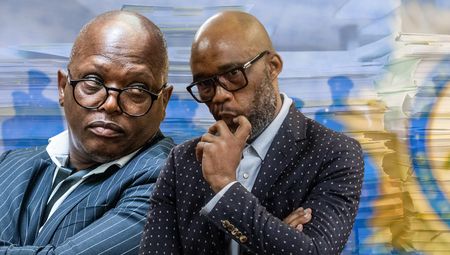
Arendse on Thursday focused on yet another suspended high-ranking policeman, Lieutenant General Molefe Fani, the police’s divisional commissioner of supply chain management.
Fani testified before the ad hoc committee that, in terms of Matlala’s company being awarded the contract: “Based on the issues picked up… this tender should not have been awarded.”
Arendse, referring to Fani on Thursday, said: “We assessed him to have abdicated his responsibility as the bid adjudication chairperson.”
The way forward
The ad hoc committee hearings began on 7 October last year and ran until earlier this year.
A total of 28 witnesses were called before it.
Arendse was referring to their evidence when outlining the draft report compiled on this. Members of the ad hoc committee will have a chance to assess the draft and respond to it.
The committee has a mandate to conclude its work by 12 June. It is then set to table its findings and recommendations in Parliament.
A parallel hearing investigating the same accusations, the Madlanga Commission of Inquiry, has been on a break and is set to resume its hearings on 1 June. DM
Comments
Scroll down to load comments...