




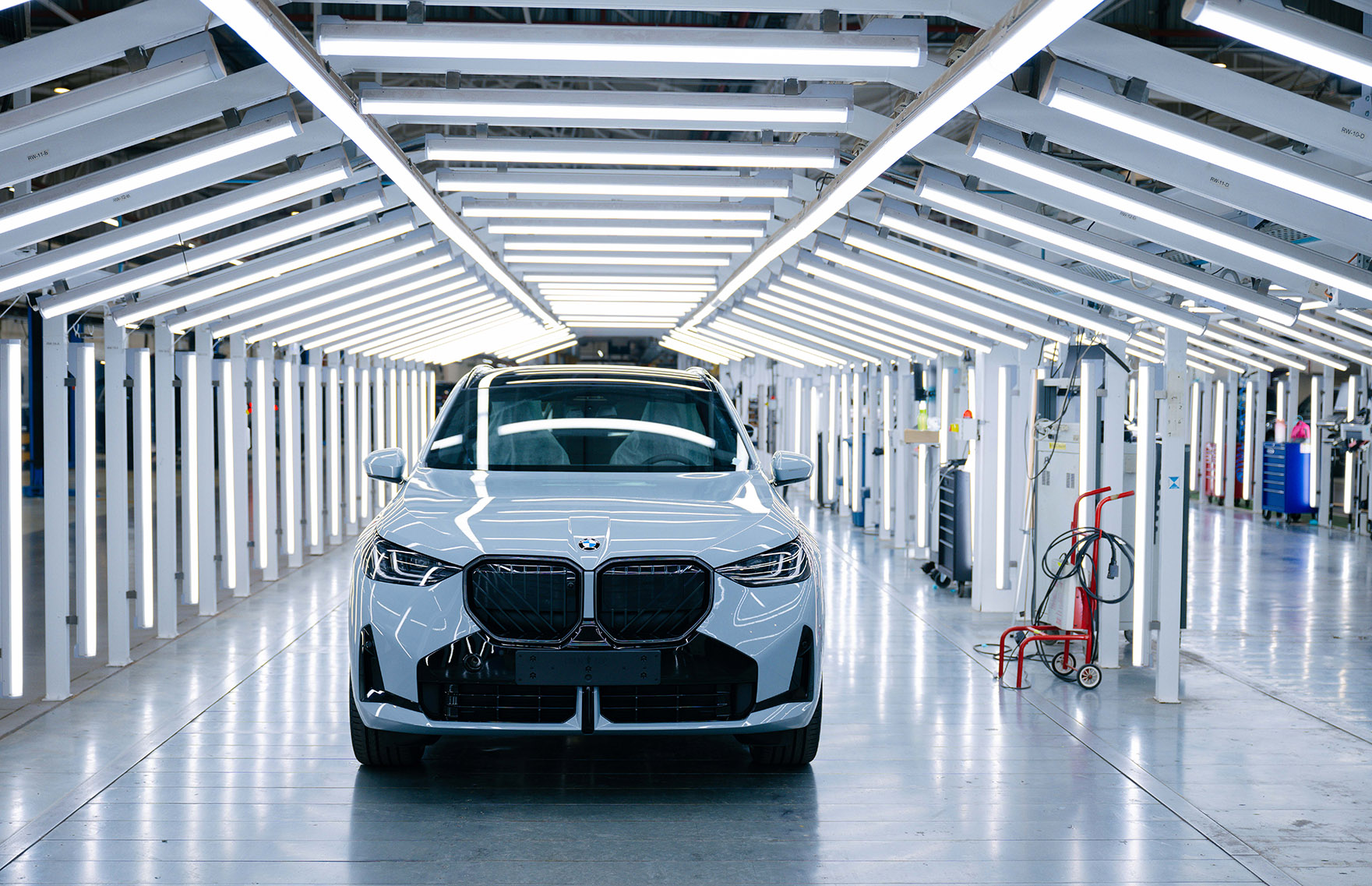
 The BMW X3 30e xDrive is a plug-in electric vehicle that is being exclusively manufactured at BMW’s Plant in Rosslyn, Pretoria. (Photo: BMW Group)
We gave ourselves a target of 500,000 tonnes of green hydrogen production by 2030 when pricing the hydrogen economy as a top-three priority in the R1.5-trillion Just Energy Transition Investment Plan (JET-IP).
It is now clear that SA will not meet the high ambition target of its 2030 Nationally Determined Contribution for greenhouse gas emissions. However, the government and the Presidential Climate Commission remain confident that there is still a credible pathway to hit the lower ambition target (420 MtCO2e by 2030) if we can accelerate across all mitigation projects simultaneously.
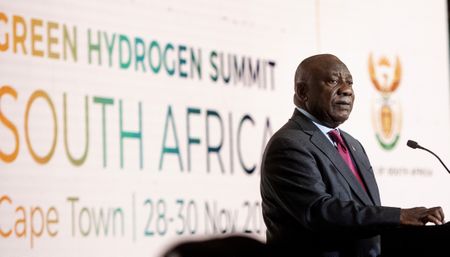
When it comes to the ambitious goal to produce 500,000 tonnes of green hydrogen annually by 2030, supported by 10 GW of electrolysis capacity, as well as the deployment of up to 500 hydrogen-powered buses and trucks – there seems to be a bit of a snag.
Globally there’s a cooling on the technology, evidenced by a wave of bankruptcies among green hydrogen start-ups. And battery prices continue to fall.
Or neighbours to the north of the Orange River have a longer time horizon – 2050 – but from a cold industrial start Namibia has made significant progress with its flagship $10-billion Hyphen project, which has already signed non-binding offtake agreements for more than one million tonnes of green ammonia annually.
Come, mister tally man
Yes, SA looks to be losing ground, but the goal is to use green hydrogen to transform its existing fossil-fuel-dependent domestic industries while also producing green ammonia for export.
Mzansi also has the skills and intellectual property hard won from the existing established industrial infrastructure and some clever investments. One of those was into electrolyser tech at the University of the Western Cape (UWC), but more on that later.
The country also has a Sasol, which is already a world leader in hydrogen technology and is only in need of a good cleanup.
Wait, but what happened to all the JET money?
In dollar terms, that Just Energy Transition Investment Plan estimate is about $100-billion. Initially we faced an estimated funding gap of 44% (R700-billion). As of December 2025 international pledges stand at $13.92-billion. This is despite the United States withdrawing from the partnership in February 2025 and cancelling its potential $1.05-billion pledge.
However, much like the salads and scrums equation, pledges do not equal cash in hand. Only 42% of pledged funds ($5.799-billion) have actually been allocated to projects.
While grants and policy loans have seen high allocation rates, commercial debt and equity are sitting at a mere 4% allocation, and highly concessional loans are at a round 0%.
As of 31 December 2025, the active green hydrogen portfolio only totalled $228-million – the sector was originally allocated just over a fifth of the Just Energy Transition Investment Plan (R319-billion). While the sector successfully secured $96.82-million in grant funding, no loans were signed for green hydrogen in 2025.
Why the low funding for green hydrogen? Because production requires massive, continuous inputs of renewable power (that’s the “green” part), but the national grid is heavily congested.
President Cyril Ramaphosa’s government has been forced to prioritise grid rehabilitation and transmission expansion over green hydrogen projects.
Consequently, the electricity sector has absorbed 77% of all active international disbursements ($3.08-billion). This emergency pivot has effectively crowded out capital that was originally earmarked for green hydrogen project development.
Daylight come
Dr Rebecca Maserumule serves as the Just Energy Transition project management office director for green hydrogen at the Industrial Development Corporation. She’s been in the role for 14 months (she led green hydrogen for the Department of Science, Technology and Innovation before that) and is tasked with moving massive hydrogen projects – ranging from $400-million to $5.8-billion – across the finish line. Her focus has heavily shifted from policy idealism to pragmatic financial syndication and systemic efficiency.
“I’m a special delivery unit. And really the focus is around investment, because at the end of the day if you do not get investment... the sector is not going to move,” she told the audience at a Wits Business School hydrogen dialogue on energy, mobility and transport.
“If you add the weighted average cost of capital to your great solar and wind, your levelised cost of hydrogen can go up by 20%. Just by a 5% increase in your WACC (weighted average cost of capital). So that comparative advantage was taken out because we don’t have grid finance. So issues of blended finance... are really important.”
Maserumule also proposes that SA break from its traditional piecemeal approach to these big hairy ambitions, and rather gobble the elephant in one bite.
“Instead of a project developer going from DFI (development finance institution) to DFI, begging for money, we said we need to take a different approach. We need to eat the elephant all at once... all the DFIs with an interest in investing in SA... sit down together and you figure out the funding plan for that project. It is not the project developer’s problem. It’s our problem.”
She says the focus should be on getting smaller projects across the line to build credibility in the market. But this is also not for lack of trying.
Work all day
The Department of Science, Technology and Innovation had to defend the 15-year-old Hydrogen South Africa (HySA) programme as a “resounding success”, citing a R1.4-billion investment that produced 204 graduates, 18 patents, and a commercial spin-off called HyPlat in response to parliamentary questions.
However, Professor Vladimir Linkov is the man on the ground for the programme as director of the SA Institute for Advanced Materials Chemistry at UWC, and he offered the Wits audience a far more critical autopsy of the local technology landscape, urging the sector to face harsh global realities.
“We are in the middle of the most difficult year in the history of fuel cell technology... for the newcomer... you need to actually answer two questions: Are you really in the space where the batteries will not take you out of business in one to five years? And number two: Are you really in the space where Chinese products will not take you out of business within one to five years?”
For the 15 years and R1.4-billion, Linkov reports skraal returns on investment.
“What happened in HySA... the one company that came out of this is HyPlat, I think they’re doing very well... [but] to make their MEAs (membrane electrode assemblies)... is like working with landmines. One mistake and you’re dead, you’re out of business.”
He also dismisses the funding of micro-scale hydrogen projects, arguing that the industry must focus on massive scale to be viable.
“To have a green electrolyser really justified you need to produce a minimum 100kg of hydrogen a day... if somebody applying for funding to get... 10kW, maybe 2kg a day... this time has passed, it’s irrelevant.”
But even the grumpy professor can see a silver lining. Instead of clouds of smoke coming from the vehicles of long-haul transport, Linkov sees this as an opportunity for hydrogen to displace battery EVs.
“If it’s a long-haul truck that travels thousands of kilometres... You’re not going to carry with you a five-ton battery... And that is where the local technologies, where I think the local focus need to be, and we really need to speak to real business people.” DM
Comments
Scroll down to load comments...