




 Siviwe Gwarube, Minister of Basic Education, at the official release of the 2025 National Senior Certificate examination results at Mosaïek Church on 12 January 2026 in Johannesburg, South Africa. (Photo: Gallo Images / Luba Lesolle)
Basic Education Minister Siviwe Gwarube has tabled her Budget Vote under the theme “Strong Foundations for Stronger Futures”, placing early childhood development, school infrastructure and foundational literacy at the centre of the government’s education reforms.
On Tuesday, 26 May, Gwarube tabled a R38.2-billion budget for the 2026/27 financial year to fund this vision. Emphasising that “delivery must be felt in the classroom,” she said that R32.7-billion had been set aside specifically for conditional grants. This money was split across several critical areas:
- Almost R11-billion for school nutrition.
- R16-billion for school infrastructure to tackle overcrowding, sanitation and safety.
- R4.6-billion for Early Childhood Development (ECD).
- R477-million for Mathematics, Science and Technology.
- R307-million for learners with disabilities.
Stating that the government must “choose reform over excuses”, Gwarube’s speech covered five key issues:
Independent probe into textbook procurement
Gwarube announced an independent external investigation into the Foundation Phase National Catalogue process, which affects learning materials for learners in grades 1 to 3.
She stated she had considered advice from the National Treasury and preliminary Internal Audit work, but would not pre-empt the outcome of any process. However, the concerns are serious enough to require independent testing.
While the National Treasury’s consideration of the matter was inconclusive, it had raised a concern about whether “the department’s deviation from ordinary competitive bidding processes was lawfully justified and properly supported by the required reasons, records and approvals”.

Gwarube said this investigation must be conducted urgently by a reputable, independent law firm with the expertise, credibility and capacity to withstand scrutiny.
EFF MP Mandla Shikwambana said the party rejected the budget, arguing that under Gwarube’s leadership the Department of Basic Education was facing a crisis of credibility. He stated that within months the department was already dealing with allegations of political interference, manipulated recruitment processes, withheld documents and procurement controversies.
Gwarube hit back, describing Shikwambana’s remarks as disappointing, noting how he spent his allotted time “pining about a phantom corruption in my office”.
A clampdown on provincial financial crises
Following a financial analysis initiated in September 2024, Gwarube confirmed that three provincial education departments, KwaZulu-Natal, the Free State and the Northern Cape were now officially operating in the red, with others under growing pressure.
To support provincial education departments on budget planning, financial analysis and school resourcing, Gwarube announced the establishment of a Multi-Disciplinary Recovery Technical Support Team of experienced advisers to take charge of provincial budget planning.
She also issued a stern ultimatum to provinces regarding the late payment of Norms and Standards allocations to schools, saying that the national department would strengthen oversight.
Measuring education quality, not just pass rates
While applauding the Class of 2025 for achieving a record-breaking 88% pass rate, Gwarube noted that the national conversation had, for too long, been reduced to a single percentage or the misleading myth of a 30% pass mark.
/file/attachments/orphans/PHOTO-2026-01-12-19-42-30_451094.jpg "Minister of Basic Education, Siviwe Gwarube. (Photo: Kopano Tlape / GCIS)")
Going forward, the department will now rank provincial performance through an “inclusive basket of indicators focused on quality”. This new quality basket will evaluate the overall pass percentage alongside Bachelor pass attainments, distinctions, learner retention rates, and performance in critical gateway subjects like Mathematics, Physical Sciences, and Accounting.
Gwarube explained that this broader framework would give South Africans a more honest picture of quality, participation, progression and subject depth.
Strengthening early grade education, slashing red tape
Gwarube made it clear that early grade education was now the department’s top priority. To support this, she revealed that 10,000 Foundation Phase teachers would receive targeted literacy and numeracy training this year as the department refreshed its National Reading Literacy Strategy.
The department has been forced to redirect R800-million from the ECD grant to address a funding shortfall for the appointment of Grade R teachers. This is after the National Treasury failed to provide the full R10-billion required over the medium-term expenditure framework for compulsory Grade R schooling.
Gwarube also announced that the review of the teacher allocation formula would conclude this financial year to ensure more educators were placed in these crucial early grades.
She also stated that the department would develop guidelines on screen time for children aged two to six, noting that international evidence highlighted developmental risks from excessive screen exposure in early childhood.
Acknowledging the crippling administrative burden placed on educators, Gwarube said that following proposals from the National Education and Training Council, the department would soon issue directives to provinces to drastically reduce reporting tools.
The end of the pit latrine backlog
Declaring that “school safety and infrastructure remain urgent priorities”, Gwarube provided an update on the long-running battle to rid South African schools of unsafe sanitation.
She stated that the department has eradicated 99.9% of the pit toilets identified in the 2018 SAFE Initiative backlog, with mop-up operations currently under way on the single remaining project still in construction.
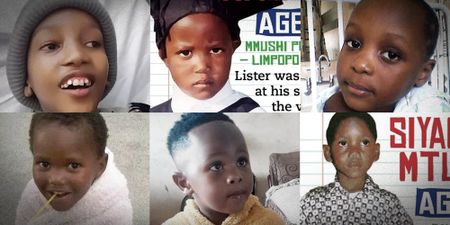
However, Gwarube did not celebrate this milestone as a clear-cut victory, expressing deep frustration over the timeline.
“I am pleased that we are closing the last project on that backlog, but angry that it has taken this long. Project management in the public service must improve,” she said.
Gwarube also acknowledged the reality that the initial data may no longer reflect the full scope of the problem on the ground today. Noting that there may still be pit toilets missed in the 2018 survey or which emerged after 2018, she outlined financial commitments to keep upgrading school facilities.
To tackle this ongoing challenge, the department was allocating R16.3-billion to the Education Infrastructure Grant. Gwarube said that these funds were specifically earmarked for safety, sanitation, overcrowding reduction and rural infrastructure. DM
Comments
Scroll down to load comments...