




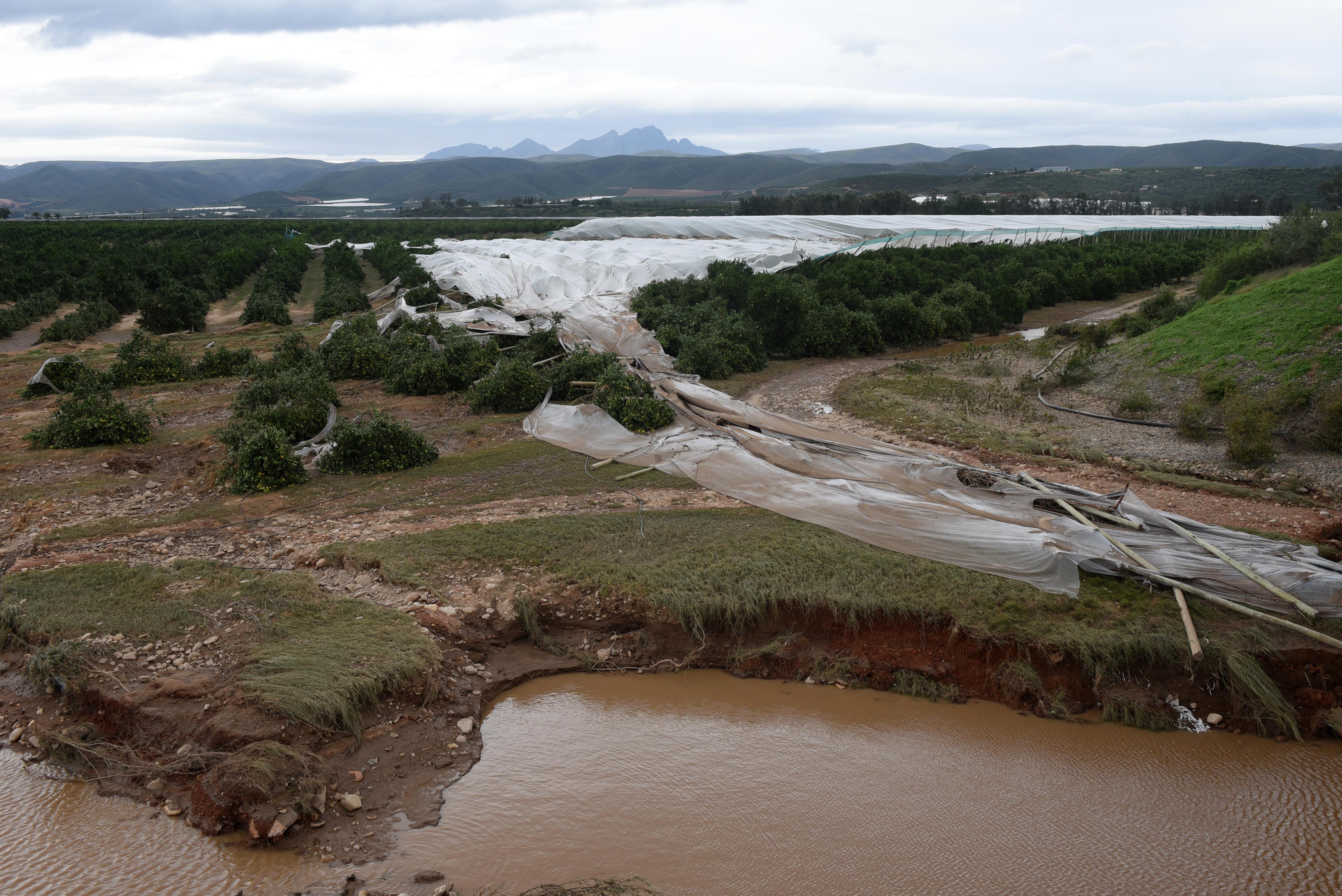
 Netting meant to protect citrus orchards from birds, bugs and the elements was destroyed when large sections of orchards around Patensie were flooded. (Photo: Deon Ferreira)
Ceres earlier this month was drenched by a deluge of record proportions.
The torrential storm that beat a path of destruction through the Western Cape from 10 to 12 May unleashed the highest rainfall in a 24-hour period over the citrus-growing region since records began in 1955, the South African Weather Service said.
In the middle of this tempest, on 11 May, the Ceres Automatic Weather Station recorded an astonishing 333.2mm of rain. The long-term average monthly rainfall at the station in May is 80.4mm, meaning in that single day more than four times the monthly average was recorded.
“Rainfall observations extracted on 22 May 2026 indicate that the Ceres Automatic Weather Station has already accumulated a monthly total of 507.0mm for May to date. This amount far exceeds rainfall totals recorded during the preceding months of 2026,” the weather service said in a statement.
“While the substantial rainfall contributed positively to dam levels, groundwater recharge, river flows and agricultural water availability, the excessive rainfall over this short period led to adverse impacts on communities.”
The Breede River catchment system became a menacing torrent, sweeping through wine-producing towns including Worcester, Robertson and Swellendam, as well as citrus orchards.
The full extent of the damage will not be calculated for some time, but it will be significant, though the Citrus Growers Association (CGA) in its latest CEO newsletter on 22 May pointedly did not prune its forecast of a record 209.5 million cartons to be packed and shipped in 2026.
/file/dailymaverick/wp-content/uploads/2025/11/justin-chadwick-CITRUS-subbed-1.jpg "Ceres experienced a record-breaking storm, resulting in 333.2mm of rain in just one day, overwhelming the citrus-growing region. (Photo: Max on Unsplash)")
Industry group Hortgro said in a statement that the damage to the pome and stone fruit industry that included apples and pears was estimated at R6.3-billion, and that 6,700 jobs were directly at risk of being washed away in the Western and Eastern Cape provinces. It also highlighted damage to irrigation systems – a serious consequence in a water-intensive industry – and the silting of dams.
“Given the multiplier effect of agricultural employment on local economies – where each farm job typically sustains several indirect jobs in transport, packaging, retail and services – the total employment impact is likely to be considerably higher,” Hortgro said.
This arm of the agricultural sector is valued at R24.6-billion, so the estimated damage is about 25% of its value.
The latest long-range forecast for the southwestern and southern coastal regions of SA predicts below-average rainfall over the winter wet season in those parts, and a drought may indeed follow this deluge with an emerging and potentially powerful El Niño also brewing.
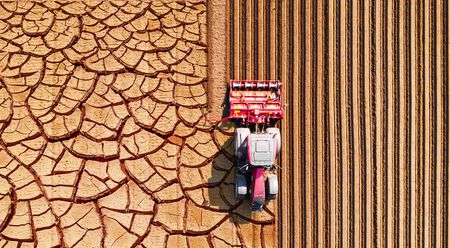
Climate change is giving rise to an accelerating number of such extreme weather events, but that hardly reduces their capacity to shock for communities directly affected.
The one blessing from this latest curse will be increased soil moisture and dam levels.
The latest data from the Department of Water and Sanitation shows that as of last week, Western Cape dam levels had risen signficantly in recent weeks to 71.8% compared with 56.2% at the same time last year. That’s at least a welcome buffer if a drought is indeed on the horizon. DM
Comments
Scroll down to load comments...