




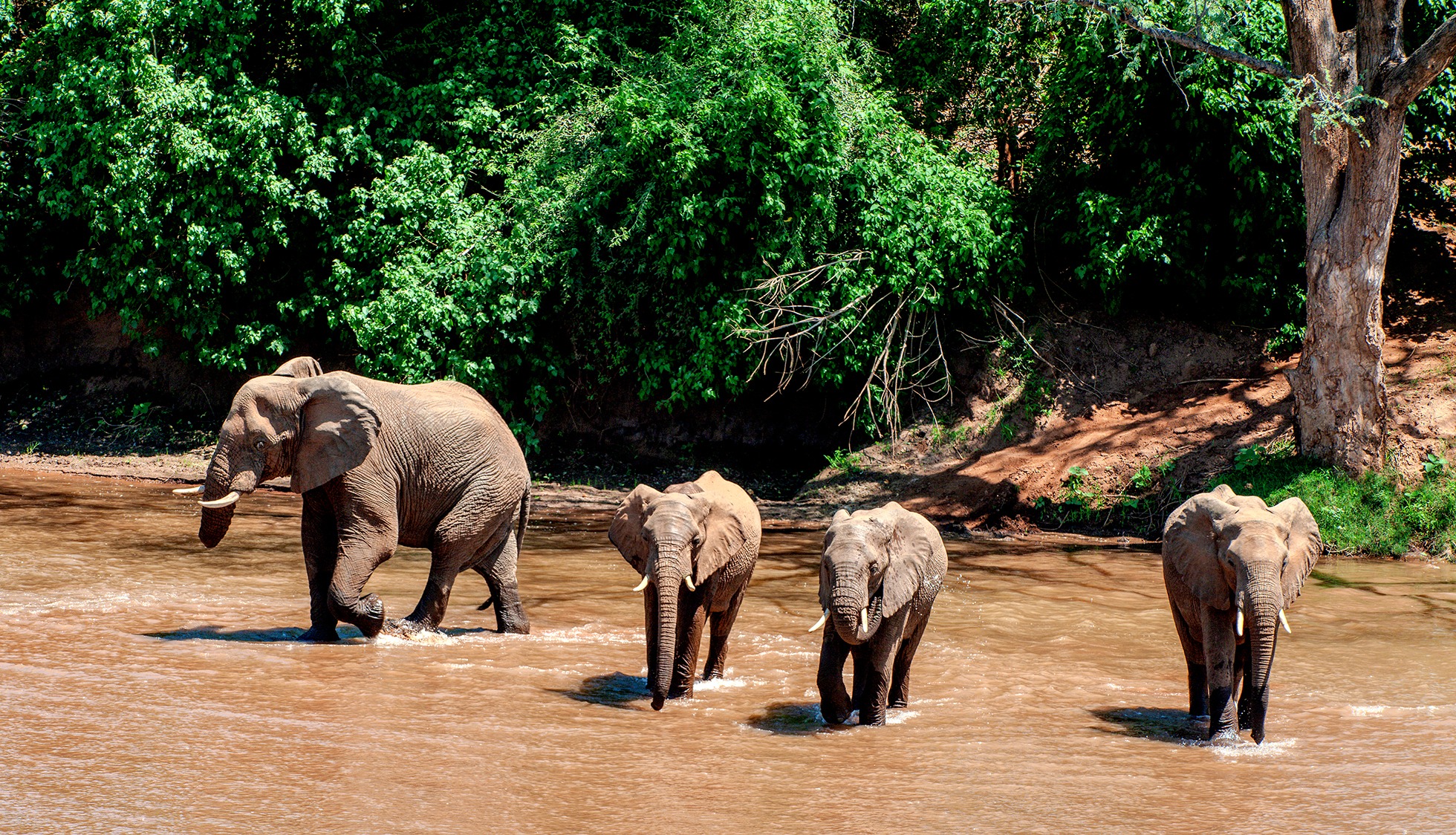
 Wellbeing is a word with large implications for wild creatures. (Photo: Don Pinnock)
The word “wellbeing” may look soft, even sentimental. In law, it’s not: it decides what must be seen, what may be ignored and how humans make decisions about wild animals.
That’s why the National Society for the Prevention of Cruelty to Animals (NSPCA), together with the EMS Foundation, are in the Constitutional Court this week to defend the inclusion of wellbeing in the National Environmental Management: Biodiversity Act, or Nemba.
The case may turn on one word, but behind it lies a much larger struggle over whether South African conservation law should deal only with wild animal species, populations, permits and sustainable use, or whether it must also consider the welfare of individual animals.
The challenge was brought by the South African Hunters and Game Conservation Association. Its formal argument is procedural: it says there was insufficient public participation before the wellbeing provisions were inserted into the act. It wants those provisions declared invalid and struck out, or suspended to allow further public participation. In court on Tuesday, 26 May 2026, Parliament and the Department of Forestry, Fisheries and the Environment supported the association’s call for a 24-month suspension in order to re-engage public participation.
/file/attachments/orphans/DON1991_143496.jpg "Under debate is whether conservation law should consider the welfare of individual animals. (Photo: Don Pinnock)")
In a statement issued on Tuesday, the NSPCA said the case “could significantly impact the legal recognition of wildlife wellbeing” in the act, and that it “remains resolute in defending the inclusion of wellbeing” in it.
The word was inserted into the National Environmental Management: Biodiversity Act through the National Environmental Management Laws Amendment Act of 2022. It is defined as “the holistic circumstances and conditions of an animal, which are conducive to its physical, physiological and mental health and quality of life, including the ability to cope with its environment”.
That definition moves the law beyond the old question of whether an animal is useful, rare, profitable, or part of a viable population. It asks something different: What is happening to the animal itself?
Wild animals are more that a statistic
For decades, conservation law has been good at counting. It can count elephants, rhinos, permits, quotas, hectares and trophy fees. It can regulate ownership, transport, breeding, trade and killing.
What it has struggled to do is recognise that an animal is not simply a unit in a population or an object in an industry. It’s a sentient being with a body, a nervous system, social bonds, fear, distress, agency and needs.
That shift has not come from nowhere. In 2016, in a case brought by the NSPCA against the Minister of Justice and Constitutional Development, the Constitutional Court confirmed the NSPCA’s power to bring private prosecutions for animal cruelty. But the judgment also helped elevate animal welfare into the constitutional sphere.
The court’s media summary said the rationale for protecting animal welfare had shifted from “merely safeguarding the moral status of humans” to recognising “the intrinsic value of animals”. It also highlighted the connection between animal welfare and animal conservation, strengthened by constitutional environmental rights.
/file/attachments/orphans/DON1902copy_766874.jpg "Wellbeing could become secondary to use, ownership and wild game being viewed as a ‘biological resource’. (Photo: Don Pinnock)")
In other words, animal welfare was no longer only about human morality, cruelty or sentimental kindness. It was part of environmental governance. This was canvassed by the justices in the Constitutional Court in the start to the hearing on Tuesday.
That was reinforced in later policy processes. The high-level panel on lions, rhinos, elephants and leopards recommended integrating welfare and wellbeing into conservation and sustainable use. The 2023 White Paper on the Conservation and Sustainable Use of South Africa’s Biodiversity then underlined the intrinsic value of living organisms and the need for their wellbeing. These developments marked a shift from conservation as biological management alone toward conservation that includes ethical responsibility.
The case for welfare
The NSPCA’s position is that the inclusion of wellbeing in the National Environmental Management: Biodiversity Act recognises that “human-induced activities affecting wildlife must take animal welfare into account”, and is aligned with court findings recognising animals as sentient beings worthy of protection.
That doesn’t mean every intervention involving wild animals becomes unlawful, or that predators and prey can no longer share a reserve, or that conservation managers can never move, collar, treat, hunt or kill animals. It means those decisions cannot be made as if the individual animal’s experience is irrelevant.
This is especially important in SA, where wild animals are intensively managed. Elephants are fenced, translocated, contracepted, collared, hunted, culled, supplied with water, denied water, protected from poachers, or destroyed as damage-causing animals. These interventions may be undertaken in the name of conservation, but they can have serious consequences for animals, people and ecosystems.
Without wellbeing in the law, decisions can be justified on the basis of population-level or ecological goals while overlooking harm to individual animals or communities. With wellbeing in the law, decision-makers must at least ask a fuller set of questions. Is the intervention necessary? Is it proportionate? What suffering does it cause? Are there less harmful alternatives? What happens afterwards? Who benefits and who carries the cost?
Dr Andrew Muir, CEO of Wilderness Foundation Africa who was a member of the high-level panel, told Maverick Earth the legal challenge was alarming because it undermined progress in aligning SA’s policy with legal imperatives and international obligations. The panel, he said, recognised that “good welfare practices, responsible conservation management and sustainable utilisation were not mutually exclusive nor incompatible”.
The hunter’s concern
The broader concern from hunting and sustainable-use interests is clear. They fear that wellbeing could be used to restrict activities such as hunting, game farming and other human uses of wildlife. The association said the inclusion of wellbeing considerations could be used as an excuse to stop sustainable use practices, including responsible hunting.
The NSPCA’s concern is the opposite: that removing the word would push animal welfare out of biodiversity law and into a separate, weaker, often fragmented system. The organisation notes that its existing powers under the Animals Protection Act remain enforceable, whatever happens in this case. But that is not the same as having wellbeing recognised inside the National Environmental Management: Biodiversity Act, the main statute governing biodiversity and wildlife management.
/file/attachments/orphans/DON2344_450013.jpg "Breeders fear that wellbeing could be used to restrict activities such as hunting. (Photo: Don Pinnock)")
That distinction is crucial because cruelty law usually responds after harm has occurred. A wellbeing requirement in biodiversity law can shape decisions before harm happens. It can influence permits, norms and standards, management plans and policy choices. It changes the frame from punishment after cruelty to prevention, assessment and accountability.
If the challenge by the SA Hunters and Game Conservation Association succeeds, SA may retain animal cruelty laws but lose a key bridge between welfare and conservation, despite growing jurisprudence about the sentience of animals. Wild animals would still be protected in some ways, but their wellbeing could again become secondary to older categories of use, ownership, productivity and population management: being viewed as “biological resources”.
If the NSPCA succeeds, the word remains in place. That would confirm that conservation law may concern itself not only with whether a species survives, but with how animals live under human control.
It would not end conflict over hunting, culling, trade, or sustainable use. But it would require those conflicts to be argued in a legal language that recognises animals as more than resources.
That is why a single word has become a constitutional battleground. “Welbeing” asks the law to notice the animal inside the policy. The decision is now in the court’s hands. DM


Comments
Scroll down to load comments...