




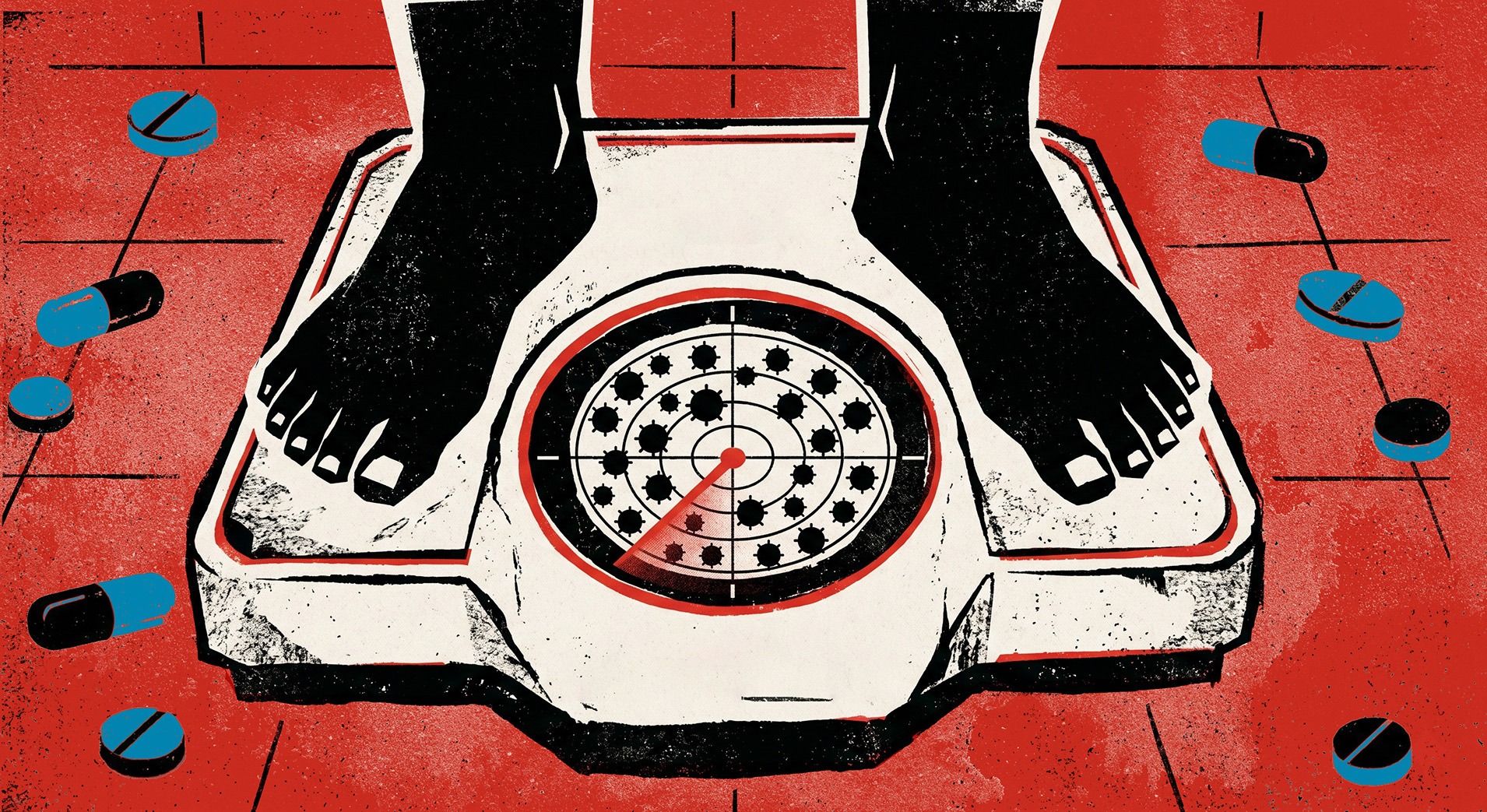
 (Illustrative image: Sources generated with Google Gemini Flash Image 2.5)
When I was growing up one of the images that impinged on my young consciousness was of young children who were literally starving to death.
So strange was our society at the time that I think the first time I realised people were dying because of a lack of food was not an incident in South Africa.
It was the famine in Ethiopia.
In the UK this is remembered not because of what happened, but because of the reporting of a BBC reporter called Michael Buerk (who later became their correspondent in South Africa – I once worked with his son in the UK) and then the Band Aid concerts that followed.
Years later I came to realise the entire famine had been artificial. It was the result of deliberate human policy on the part of Haile Mengistu Mariam (who later went into exile in Harare).
The economist Amartya Sen won a Nobel Prize for his work that showed you cannot have famine with a democracy (in short, if the rulers of a place have voters to fear, they will make sure no one starves). He based it in part on his own experiences in Bengal during a massive famine there in 1943 (fans of Winston Churchill should take note of the actions of their hero in this).
But while I was growing up something changed fundamentally in the relationship between human beings and food.
We seemed to go from battling starvation to battling obesity.
Not entirely of course. During the pandemic many people in our country went to sleep hungry.
But this big change still seemed to happen quickly, within a generation or two.
When I first heard about the still relatively new wave of weight loss drugs, the semaglutide shots, it seemed just too good to be true. The kind of trend that floats through Hollywood from time to time and is shortly forgotten.
But over time these drugs have clearly been shown to work.
I’ve raised the issue of weight loss with two doctors in the past year just to see what they would say. Both immediately recommended the drugs.
But I also raised it with a nurse of some experience. She immediately said that is what she expected doctors to say – they’re trained to prescribe drugs was her point.
Instead she was a fan of one of the diets where you try to remove carbs where you can (but not all of them) and try to increase your protein intake so you don’t feel too empty all the time.
Inevitably, while these drugs first needed a prescription, there seem to be all sorts of ways to get them. And considering that this is something you actually inject into yourself, this is where I get a little squeamish.
Over the weekend the South African Health Products Regulatory Authority and the South African Pharmacy Council said they were telling one of the companies who makes these drugs here to recall their products.
The company concerned, iDexis, is furious at the claim and strongly denies it.
You can imagine the desperation of people who are trying to lose weight.
No one can say it’s easy.
While some people have really performed miracles, I think the real problem is not so much just not eating. That most of us can do. It’s being able to continue being a parent and a spouse and to work and to enjoy life all while losing weight. That’s really the tough part.
Sometimes you find yourself in a position where a team of people is relying on you, so you have to perform. And to do that, you have to eat.
This is where the magic of these things seems to lie. And why I, for one, will never close the door on using them myself.
But it does lead to some social difficulties.
When I was younger if someone lost a lot of weight you could wait until a private moment to just say “I can see you’ve lost a lot of weight. Congratulations”.
Now of course, particularly in the impolite society in which I move (with the single honourable exception of the one member of my friend group who reads ATB regularly), you just can’t really do that.
It’s become a little bit of a minefield.
They might have lost lots of weight and really battled to do it and are rightly proud of what they’ve done.
They might have struggled and felt they lost and eventually took the jab. In which case, while they might have mixed feelings about it now, over the longer term I think they’ll see it as a moment where they were able to really regain control over something they had battled with.
In the end I have found myself falling back on a slightly odd but, I think, polite phrase which simply goes “You’re looking well…”
It can mean anything. But it does tell someone that you have noticed that they’ve done something to improve their lives.
And in the end, that’s the real victory.
We come from a generation where our parents told us to finish what was on our plate. They came from a time where many places battled to make sure everyone had enough food.
Our battles now are often very different.
And any progress we make, in whatever shape, is progress. DM
Comments
Scroll down to load comments...