




 Image: Oneworld Publications
 Tayari Jones returns with an exuberant, richly told novel about mothers and daughters, about a lifelong friendship and the complexities of being a woman in the American South. Here is an excerpt from Kin.
***
My first word was “mother”, spoken out loud and with texture. MOTHER. There was a host of witnesses, including Aunt Irene, who called out for God and considered running down the block to fetch the pastor. But before she could even straighten her skirt, she decided that this wasn’t a pot to be stirred by any man’s spoon. It was August, canning season, and the women were gathered to put away snap peas and pole beans. It was Louisiana hot, but even more so, due to the water boiling to purify the mason jars. Aunt Irene was never at home in the kitchen, so she busied herself plaiting my hair while everyone else hulled and cut up the harvest. The Ward Sisters sang out amid the thick radio static as Aunt Irene added her colourful soprano to the arrangement. Sitting between her knees, I rested my face on her thigh, still as stone and just as quiet. Sharp against my scalp, a rat-tailed comb created precise parts.
After the death of my parents, I had shown myself to be a peculiar child. No one could say if I was born that way or if I turned that way. I walked early and would do so in my sleep, escaping my crib. I once found my way to the front porch, where I was discovered humming with my head resting on the matted fur of a stray puppy.
At two and a half, I had yet to speak. Folks worried that I was slow. My cradle friend, Annie, was already talking up a storm. She even gave me my nickname, because Vernice had been too many letters for her to hold in her mouth at the same time. “Niecy!” she called, determined to shake loose a response. When shouting didn’t work, she tried kindness, breaking her shortbread cookie in two. I smiled in gratitude, and sometimes offered sloppy baby kisses in return, yet I didn’t say a word.
Annie’s grandmother joked that Aunt Irene should be grateful I couldn’t speak. Annie talked so much that she didn’t shut up, not even when she was asleep. Shut eyes quivering, she mumbled the name of her own mother, Hattie Lee.
“This baby will talk when she has something to say.” Aunt Irene knew there was quickness in my eyes but feared that seeing my mama shot dead had shocked the words right out of my mouth. Others worried that I had been taken over. Spirits can be hardheaded and hold grudges – purposely missing their ride to the next place. When this happens, they might just set up house in a defenceless body. Aunt Irene shut that conversation down, dismissing it as “hoodoo” – her catch-all word for anything not of this world that didn’t involve our Lord and Saviour. That said, she knew that sometimes there was substance to that hoodoo talk. However, she knew her dead sister, my mother, Arletha. When Aunt Irene held my face to hers, she didn’t see my mama staring back. She figured I’d talk when I was ready.
Because of this, but not only this, my aunt didn’t indulge any gossip. She knew what it was to be whispered about and couldn’t bear loose tongues lashing an orphan baby. But she was worried for a coloured girl who seemed slow, even if she wasn’t, a girl who couldn’t say what had happened to her. I made people nervous, which is probably why no one objected when Aunt Irene ducked out from the canning kitchen and sat on the couch to fix my hair. I had been touched by blood, and not the blood of the lamb.
There I was, this haunted child, not even whimpering as Aunt Irene raked the comb through the thicket at the nape of my neck.
“Mother,” I said, softly at first. As I raised my voice to a bellow, every heart in the house contracted, vulnerable as a scalded tomato gripped in a tiny, greedy fist.
Only three women stood in that tight kitchen, but nearly the entire congregation would let the story play on their lips, sharing details as vivid as those of any eyewitnesses. Some say their throats closed to hear me call for Arletha, dead by then just over two years to the day. They lost their breaths, the way you choke in your sleep when witches ride your dreams. Annie’s granny said she heard wonder in my voice like I gazed into the eyes of an angel. Aunt Irene said she understood it as a command, her dead sister telling her that I was hers for life. Only Mrs. Ola Mae, the midwife, attended to me. Scooping me into her stout arms, she cooed, “I hear you, baby”. Annie, who had been in the kitchen yapping away, toddled up to Mrs. Ola Mae, arms raised to be held as well. We were both crowded onto her lap. I kept saying my new word over and over, but Annie was quiet for once, sucking my thumb as though it were her own.
***
Women in my family have never been particularly fruitful. My grandmother had only the pair of daughters to show for some 30 years of marriage. She never gave Granddaddy a son, though word on the street was that there was a boy down in Bogalusa who shared his middle name and narrow feet. Four years in the marriage bed, and my mother hatched only me, and I hadn’t come gently. (Mrs. Ola Mae told my mother to name me Miracle but instead, she called me Vernice up top, and Irene just after – like all the women in our family.)
Aunt Irene was what the old folks called “barren” but what she called “lucky”. She figured this out when she was just a teenager, when a revival came to town. Aunt Irene heard that altar call and what was done, was done. When the tent came down and the saints moved on to Jacksonville, Aunt Irene had joined the choir. She also joined the associate pastor in whatever accommodations were available for coloured travellers who happened to be servants of the Lord. “Have mercy, he was a pretty man,” she said. “Listen. If you ever get a chance in life, grab you a preacher – but just temporarily. Don’t fool around and end up being somebody’s First Lady.” She laughed at the memory, grinning into whatever was on the rocks. “I was wild when I was a girl.” DM
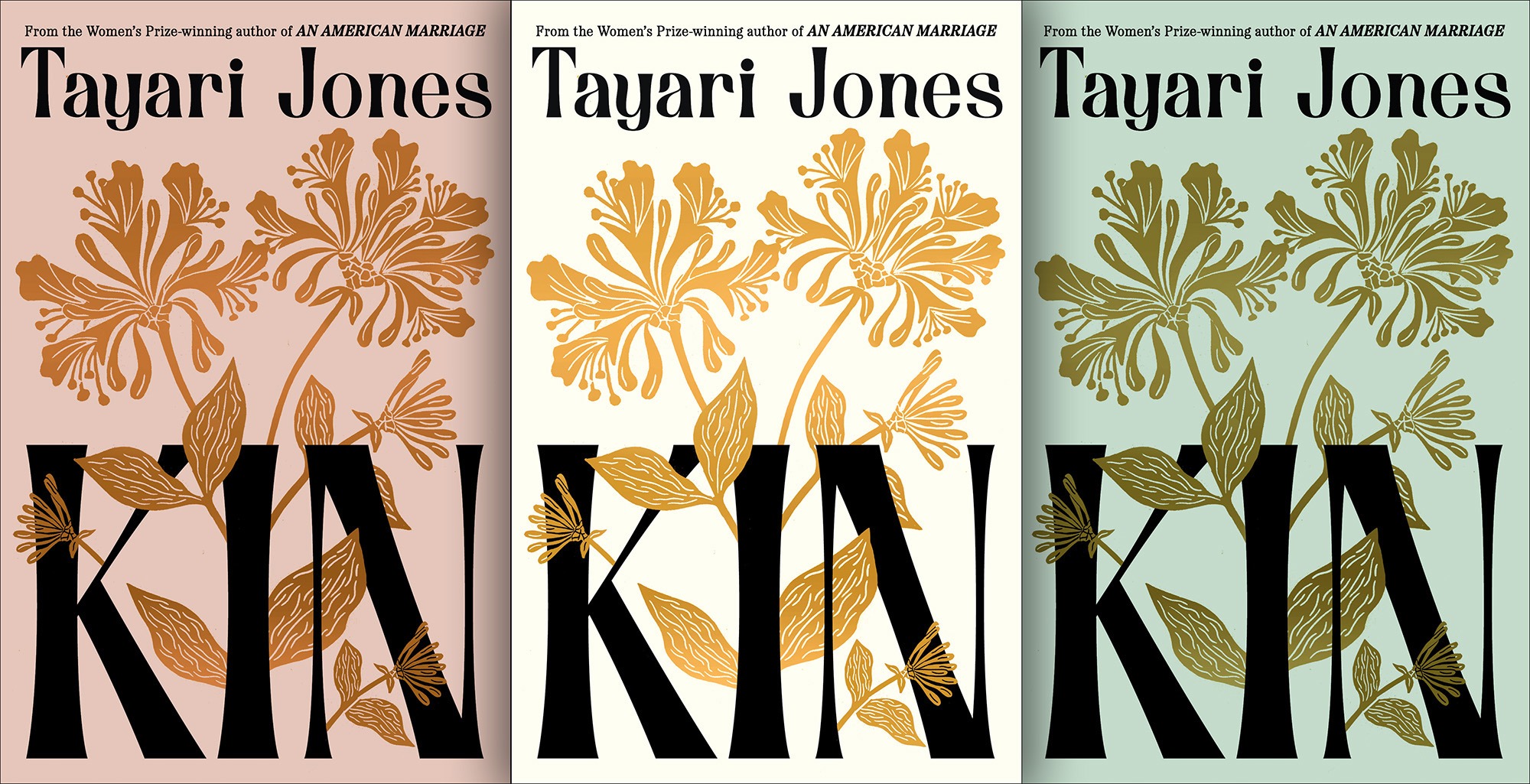
Kin by Tayari Jones is published by Oneworld Publications. It is available for a retail price of about R370.