



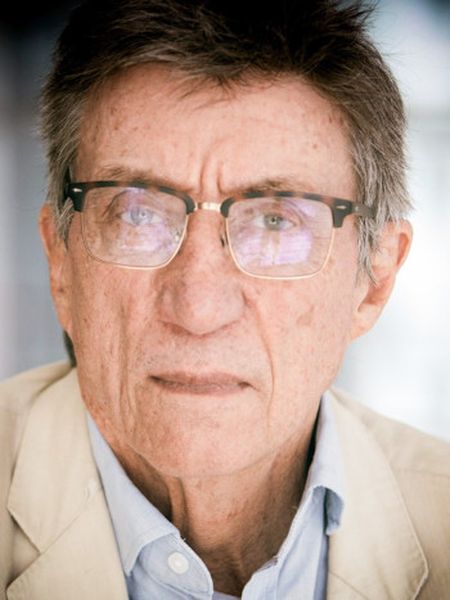
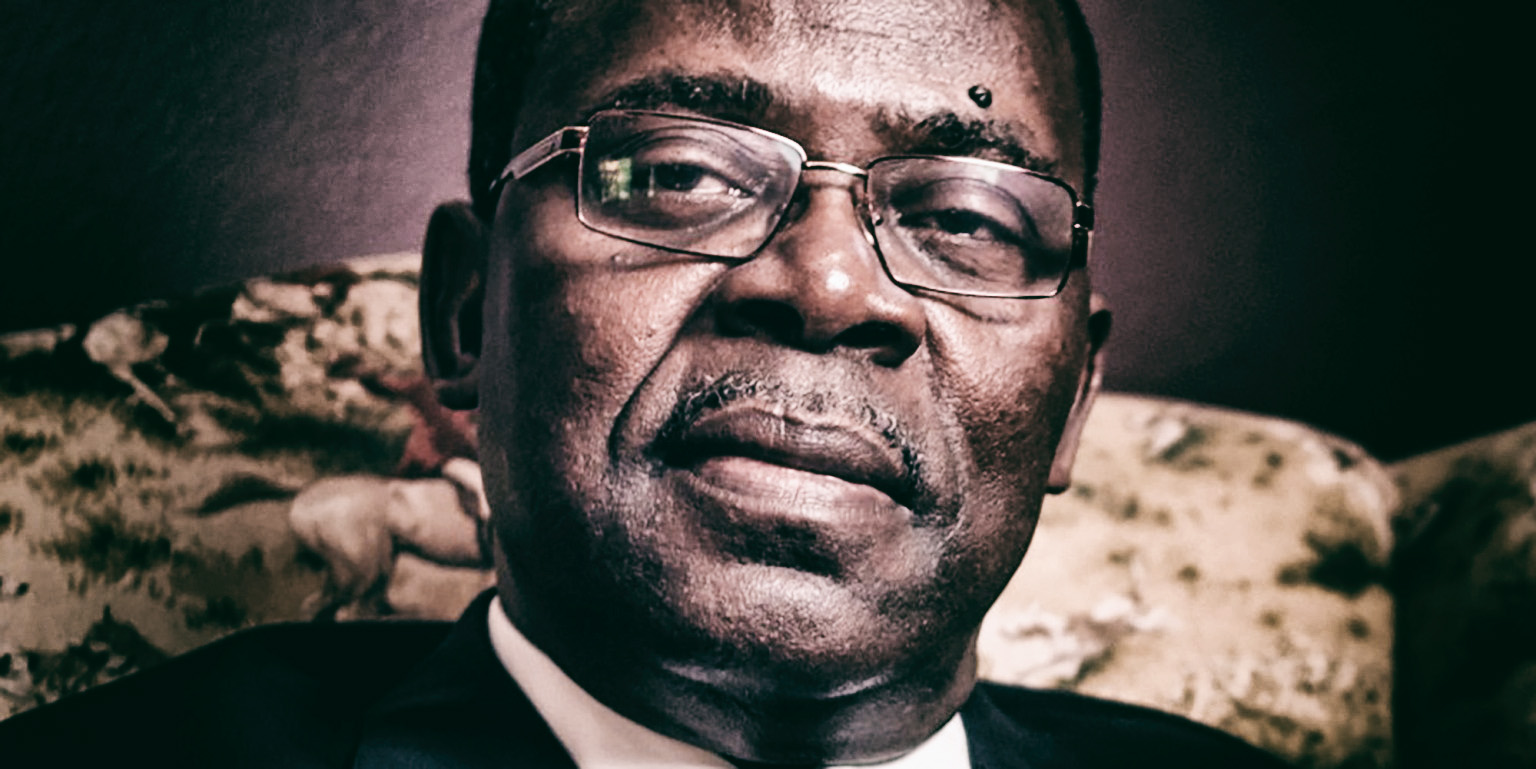
 Central African Republic Ambassador André Nzapayeké. (Photo: Embassy Direct)
African ambassadors to South Africa did not inform Pretoria, as reported, that they intended boycotting an Africa Day event in Moruleng, North West yesterday, to protest against xenophobic attacks and harassment of Africans from foreign countries.
/file/attachments/orphans/ED_587680_584084.jpg "Minister of International Relations and Cooperation Ronald Lamola. (Photo: Gallo Images / Beeld / Deaan Vivier)")
It was reported at the weekend that André Nzapayeké, ambassador of the Central African Republic and dean of the African ambassadorial corps, had written to the Department of International Relations and Cooperation (Dirco) informing its minister Ronald Lamola that “African ambassadors would not participate in Africa Day celebrations this year for security reasons.”
This decision was presented in the Sunday Times report as meaning that the ambassadors intended boycotting South Africa’s main Africa Day event in Moruleng on Monday to protest against the recent wave of xenophobic attacks and harassment of foreign Africans, which is causing major embarrassment for Pretoria.
The Moruleng event was addressed, ironically, by Minister of Sport, Arts and Culture Gayton McKenzie, who has been vociferous in demanding that undocumented foreigners should be sent home.
Report ‘wrong’
But Nzapayeke told Daily Maverick that the news report was factually wrong. He said he had written to Lamola to inform him, instead, that the African ambassadors had decided – for security reasons – to postpone their own Africa Day celebration which they had intended to hold in Kempton Park on 30 May.
Instead, they planned to hold an African Diplomatic Social Evening in July or August, to which they would invite Lamola.
Nzapayeke said the ambassadors had decided to postpone their Africa Day event because they expected about a thousand people to come from all over the area, and they had decided it would be impossible even for the police to provide protection for these people at the event, or on their way to and from the event.
“So it is absolutely for this reason only, that we decided to postpone it. We are not boycotting anything, it is our day, so we cannot boycott.”
“It is our own African celebration on the 30th that we say we will not be able to organise this year, full stop.”
Daily Maverick has seen a copy of the letter Nzapayeke sent to Dirco and has confirmed that it referred to the African ambassadors’ decision to postpone their own event in Kempton Park on 30 May and not to boycott the official Africa Day event in Moruleng on Monday, 25 May. Dirco officials said they had received no official notification from Nzapayeke about the Moruleng Africa Day event.
/file/dailymaverick/wp-content/uploads/2025/03/6T5A7818.jpg "Chrispin Phiri. spokesperson for Minister of International Relations and Cooperation Ronald Lamola. (Photo: Shelley Christians)")
Nzapayeke also responded to Lamola’s spokesperson Chrispin Phiri saying that the government expected ambassadors to help it work towards resolving issues and challenges as they arise.
“We have always been working with government,” Nzapayeke said, adding that the African ambassadors had met Dirco officials to discuss this last week. “They told us what they are doing and what they are planning to do.”
Asked if he was satisfied with what he heard, he said, “It’s not a matter of us being satisfied or not, that is what they told us.”
He said he would prefer not to comment on whether xenophobia in South Africa was getting worse.
“Just what I can say is that we are very worried, but we count also on the government. There is a certain worry about the security matter.”
Gayton McKenzie controversy
At the Moruleng Africa Day event, McKenzie said, “African leaders keep sending their people to take the jobs of our young people. They must look after their own people first. If you don’t have papers for this country, you must go home.
“You can’t come here and commit crimes, you are not documented. How does asking for people to be documented and to follow the law make me xenophobic? Leaders of Africa should ask yourself a serious question before you call us xenophobic; why is [it] that your people are running away from you?”
Meanwhile, Lamola said the government had been engaging with its African counterparts to address their concerns about xenophobia. “And we have assured them that South Africans are peace-loving people.
“But there are isolated incidents of protest that sometimes turn violent. And also the activities that you have all seen of some of the groups that are moving, checking passports and IDs and so forth.
“And we have been clear that we condemn such actions. It can only be handled by the police, law enforcement … that migration, dealing with irregular migration, it’s an issue of law enforcement. It’s not for private citizens.
“And that we have to continue to engage with all our sister countries, to deal with all the issues, push and pull factors that impact the issue of migration.”
Lamola said most other African governments understood “that every government has the responsibility and authority to enforce the rule of law to ensure that there is regular migration”.
Asked if he believed that McKenzie’s statements on Monday had gone beyond the bounds of government policy on immigration, Lamola replied; “I think it … is not in the spirit of the government of South Africa.
“The government of South Africa, like all citizens, is concerned with the issue of irregular migration. But we are saying it must be handled in a constitutional way with human dignity.”
Lamola was speaking in Cape Town after participating, with the SA Institute of International Affairs, in a seminar on South Africa’s foreign policy.
Fact check: Migration in numbers
Population: The Stats SA Report on Migration Statistics based on the 2022/2023 Income and Expenditure Survey (IES) showed that the population of international migrants stood at 3.1 million people, or about 5.1% of the total population. Around 56.2% of immigrants are male, while 43.8% are female.
Most immigrants come from SADC countries, who make up 63.4% of the immigrant population. About 25.4% came from the rest of Africa, and 11.4% came from outside Africa. Gauteng has the highest population among immigrants at 51.2%, followed by Western Cape at 13.3%, followed by KwaZulu-Natal at 7%.
Basic education: According to the Department of Basic Education, in 2025, there were 253,618 foreign-born school children and 3,240 foreign-born school teachers. The total number of children recorded on the Learner Unit Record Information and Tracking System for the year was 13,596,869, meaning foreign-born children represented just 1.87% of total public school enrolments.
The IES 2022/2023 showed migrant children were less likely to be enrolled in educational programmes. About 52.1% of immigrant children were not enrolled in any ECD programme compared with 32.9% of the South African-born population. Among immigrants, 23.4% did not attend educational institutions compared with just 5.3% of South Africans.
Higher education: In 2023, the total number of foreign students enrolled in higher education institutions was 39,843, representing 3.7% of the total enrolment, which stood at 1,071,715, according to statistics from the Department of Higher Education and Training (DHET). More than a third of international students were from Zimbabwe (35.5%), followed by the Democratic Republic of Congo (6.7%), and then Namibia (6.06%).
There were slightly more international students enrolled in private higher education institutions. There were a total of 15,965 international students enrolled, representing 5.6% of total student enrollment.
In a parliamentary reply published in February 2026, the DHET confirmed that foreign staff made up 7.74% of the total post-school education workforce, according to 2024 figures. About 82.89% of these staff members served as instructional or research professionals, while the remainder were in technical, support and administrative positions. Section 38 of the Immigration Act (Act 13 of 2002) prohibits institutions from hiring undocumented workers.
Employment: The most recent Stats SA data on immigrant employment rates is found in their 2023 Migration Profile Report for South Africa. In 2022, the unemployment rate for immigrants in the third quarter was 18.2%, their labour force absorption was 64%, and their labour force participation rate was 78.3%. Immigrants made up 8.9% of the total workforce, up from 6.0% in the third quarter of 2012.
In comparison, the national unemployment rate for the same time period was 32.9%, the labour force absorption rate was 39.1%, and the labour force participation rate was 58.3%.
The majority of immigrant workers were found working in private households (18.4%), followed by construction (17.2%) and retail (13.6%).
Prison population: Prisons in South Africa remain overcrowded. The national approved bed space in prisons is 107,346. Yet, in a September 2025 parliamentary reply to Build One South Africa, the department stated that the total prison population was 167,000, with 107,456 in total being sentenced and a further 59,887 awaiting sentences.
According to 2024 figures by the Department of Correctional Services, the population of sentenced and unsentenced foreign nationals in prisons stood at 18,000, making up about 11% of the incarcerated population. According to 2025 figures, foreign nationals made up 12.4% of the total sentenced prisoner population, equating to 12,676 people.
Spaza shop ownership: Exact figures on spaza shop owners are difficult to find, owing to the number of unregistered shops. A 2023 study of spaza shop ownership demographics found that most owners were Somali nationals at 58%, followed by Ethiopian nationals at 25%. South Africans made up just 8% of spaza shop owners.
Following widespread reports of contaminated food being sold in spaza shops, the Department of Cooperative Governance launched nationwide spaza shop registration campaigns. Between July 2024 and January 2025, municipalities nationwide received 82,924 spaza shop registration applications, and of these, about 37% were submitted by foreign nationals (30,617). Of the 15,528 applications approved during the period under review, 2,586 were granted to foreign nationals, making up 17%.
Fifteen million illegal immigrants? There are currently no reliable figures on the number of irregular or illegal immigrants residing in South Africa owing to difficulties in tracking irregular movement and collecting reliable data. However, several political parties, including ActionSA, have claimed that up to 15 million people are living in the country illegally. This was a misrepresentation of available data, which ActionSA leader Herman Mashaba has since publicly acknowledged.
Fact-checking organisation Africa Check has since debunked the claim, tracing its origin to 2018 data from the World Bank. However, this World Bank data looked at all people in South Africa who lack legal identity documents and includes South African citizens. The Department of Home Affairs has also distanced itself from the claim. — By Naledi Mashishi
DM
Comments
Scroll down to load comments...