




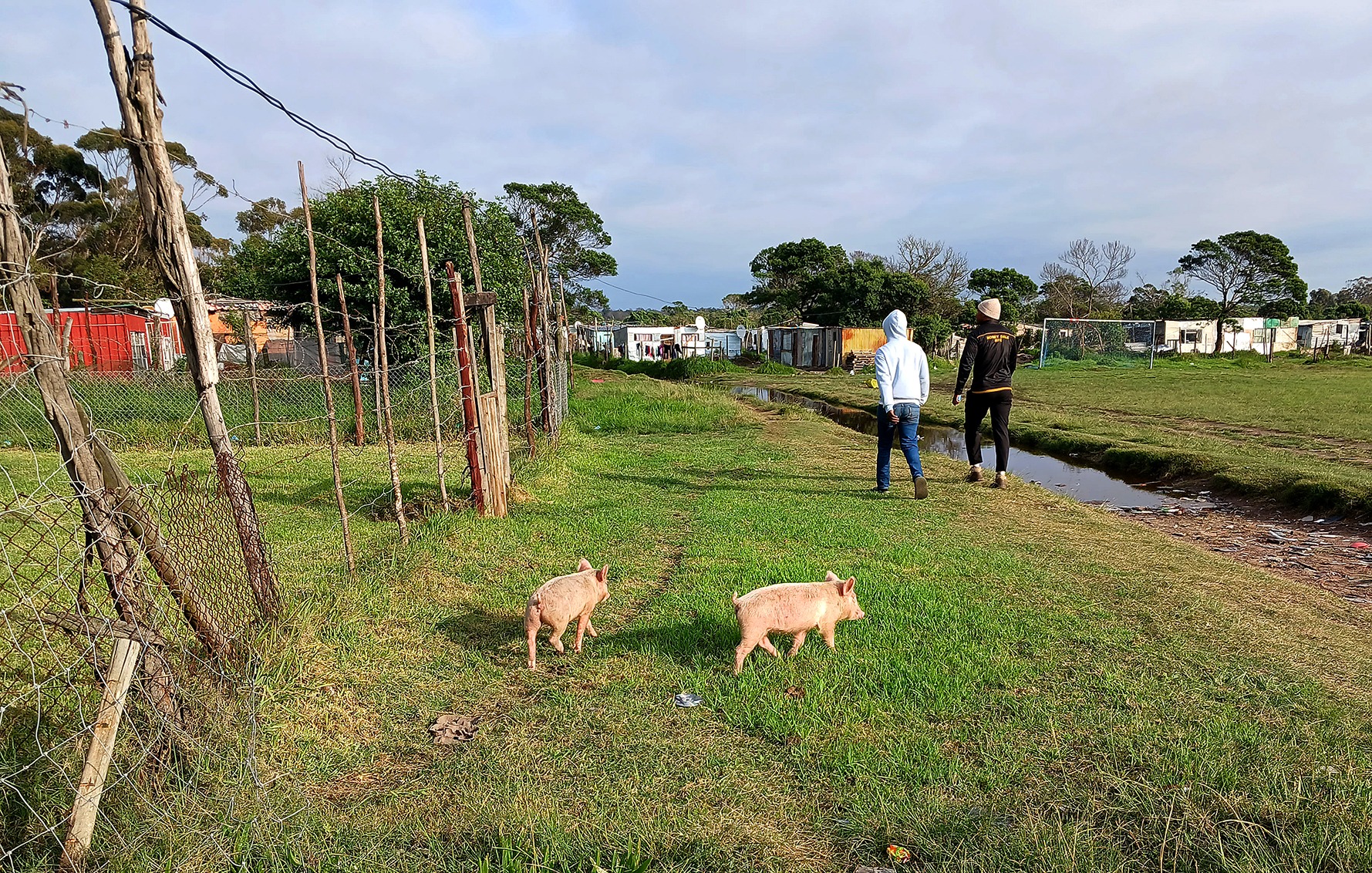
 Municipal officials confirmed that an inoculation programme is being rolled out in Grogro and surrounds as part of their ongoing campaign to curb the spread of African swine fever in the area. Several pigs have died in the area over the past two weeks, raising concern about the spread of the disease. (Photo: Riaan Marais)
 Public health and veterinary services officials in Nelson Mandela Bay are closely monitoring an outbreak of African swine fever at Grogro after several pigs were found dead at a dumpsite on the outskirts of the informal settlement in Gqeberha.
The carcasses raised alarm bells last week and after their removal, tests confirmed the pigs died from the highly contagious animal disease.
While the municipality said it is working closely with State Veterinary Services to contain the spread of the disease and monitor the condition and movement of livestock in the area, some Grogro residents have questioned whether there truly is African swine fever (ASF), or if residents from nearby Sherwood did not poison their pigs.
NMB’s director for environmental health, Dr Patrick Nodwele, said the outbreak first came to light on Monday, 18 May, when officials were notified of a “mass mortality of pigs”.
“Upon arrival on site, our initial suspicion was possible poisoning. However, after engaging the State Veterinary Services and conducting the necessary tests, the final confirmed diagnosis was African swine fever,” Nodwele said.
He said the carcasses were removed and disposed of, as required by health regulations.
ASF, not to be confused with swine flu, poses no harm to human health and only affects pigs.
/file/attachments/orphans/SwineFever2_304789.jpg "Municipal officials confirmed that an inoculation programme is being rolled out in Grogro and surrounds as part of their ongoing campaign to curb the spread of African swine fever in the area. (Photo: Riaan Marais)")
In an article by Professor Jan Crafford, of the University of Pretoria’s Faculty of Veterinary Science, he explains the distinction between three diseases commonly found in pigs, each with its own symptoms and risk factors.
“There are several key differences between African swine fever, classical swine fever and swine flu, including the clinical signs that develop, the way the diseases affect pigs, and the risk of human infection. Knowing these differences can help to differentiate the diseases and guide appropriate control measures.”
Crafford said the names are often used interchangeably, leading to oversight and ineffective treatments that could have dire consequences for pig owners.
ASF is a haemorrhagic fever in domestic pigs with a high mortality rate. In acute cases, symptoms can include fever, loss of appetite and internal bleeding. In some cases, pigs may die without showing any clinical signs.
Warthogs and bush pigs can carry the disease without showing any symptoms, and domestic pigs become infected by ticks that transfer the disease.
Classical swine fever, more commonly found in Europe, can present very similar clinical signs to ASF, and laboratory confirmation is important to discriminate between the two diseases.
In contrast, swine flu is an upper respiratory disease characterised by fever, coughing, sneezing, nasal discharge and laboured breathing. Animals usually recover quickly, and the mortality rate is low.
There is no evidence to suggest that ASF and classical swine fever can be carried over to humans. However, swine flu can occasionally infect humans and cause flu-like symptoms.
/file/dailymaverick/wp-content/uploads/2023/01/kenneth-schipper-vera-6y7jACxmhP8-unsplash.jpg "African Swine fever is a haemorrhagic fever in domestic pigs with a high mortality rate. (Photo: Unsplash / Kenneth Schipper)")
Municipal spokesperson Sithembiso Soyaya said their top priority is containing the disease and they are working closely with the State Vet’s office to monitor the situation.
“During the joint outreach and intervention process, assessments and veterinary interventions were undertaken on live pigs within the affected area, including inoculations as part of disease control measures aimed at limiting further spread.
“It is important to note that no live cloven-hoofed animals may currently be moved due to the foot and mouth disease movement restrictions still in force nationally. For this reason, interventions are conducted where the pigs are located and not through mass animal removals.”
He said two pig carcasses were removed and disposed of in accordance with health and environmental safety protocols. More carcasses were found on-site but were found to have been burnt or buried by residents, which lowered risk factors.
“Given the nature of the informal settlement environment and the fact that some pigs roam freely, it may not always be possible to immediately account for every animal within the area. However, the municipality and State Veterinary Services continue ongoing monitoring, community awareness and containment interventions,” Soyaya said.
On Friday morning, at least four decomposing pig carcasses were found at a dumpsite in Grogro, while a group of piglets were seen roaming among the rubbish before fleeing among nearby shacks.
/file/attachments/orphans/SwineFever1_263350.jpg "At least four pig carcasses remained at the dumpsite in the Grogro informal settlement in Nelson Mandela Bay where State Veterinary Services confirmed an African swine fever outbreak last week. (Photo: Riaan Marais)")
Asked what he thinks of the situation, Grogro pig owner Unathi Veldman said he was happy to comply with any measures the municipality enforced.
“These pigs are a source of income for me. I sell them to my neighbours. I can’t have them die from some sickness, or have people be afraid to buy them. If the municipality are willing to assist with vaccines and medicine I will be first in line. I am glad they are doing something for our community.”
His neighbour, Geraldine Ndwalaza, is more sceptical about the explanations going around for the pig deaths. She believes the municipality is lying about the disease to cover up the fact that residents are poisoning Grogro’s livestock.
“I’ve heard the people from Sherwood say they want to shoot the stray cattle and pigs. They complain that the animals make a mess in their yards and streets. Who is to say they are not putting poison out for our pigs to eat?”
She intends to approach community leaders to investigate the matter. DM
Comments
Scroll down to load comments...