



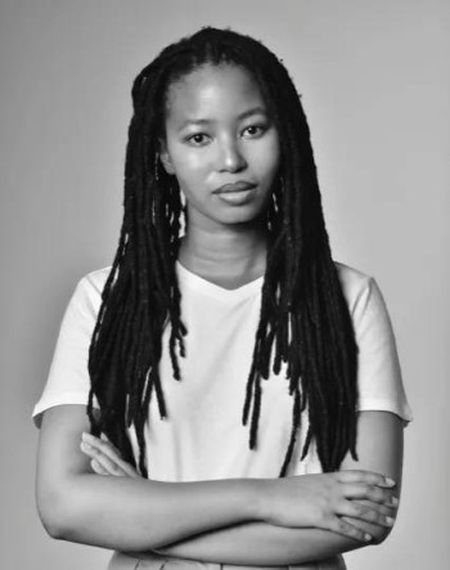

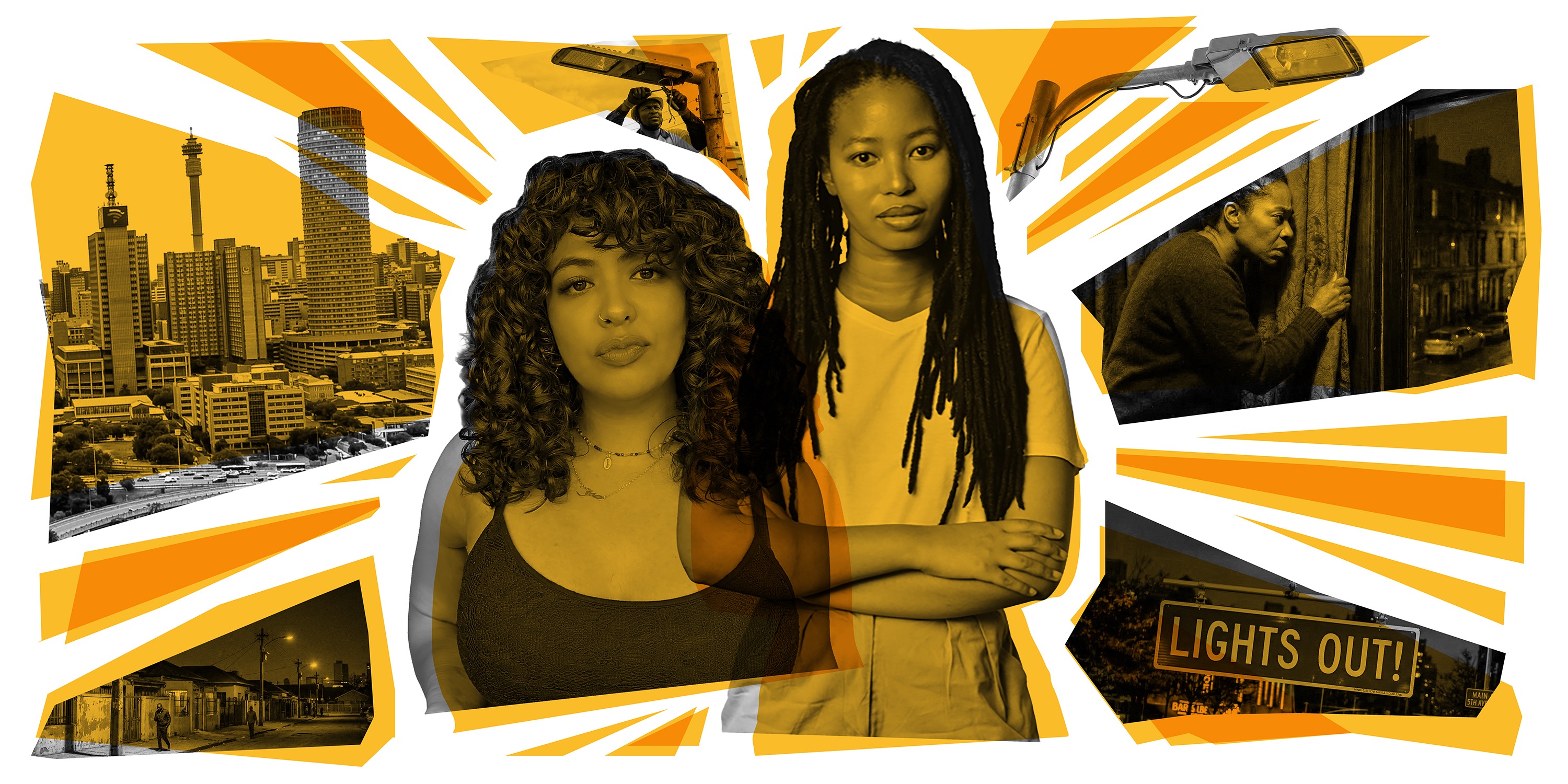
 Aneesa Adams and Naledi Mashishi held a roundtable discussion about the impact that broken streetlights have on women’s safety in Johannesburg. (Illustration: Kevin Momberg)
Streets in Johannesburg remain dark as residents wait weeks for the City to repair streetlights. A Daily Maverick community investigation previously found that repair times skyrocketed from 2023 to 2024, with streetlights being targeted for cable theft and vandalism. As a result, residents are finding their worlds shrinking.
Earlier this year, Daily Maverick asked readers to report broken streetlights across the City. More than 130 readers logged issues, with some streetlights experiencing regular outages for up to six years. The results, shown below, were published in January and recorded the extent of what many residents face.
In this instalment on Joburg’s streetlights, we look at what impact the outages that readers reported have on residents’ lives.
In February, we sat down with a group of women to discuss how the lack of illumination and corresponding fear of crime are reshaping lives – their safety, their faith and their freedom.
Service delivery and safety are major concerns in the lead-up to the local government elections scheduled for 4 November 2026. In 2025, Johannesburg mayor Dada Morero mentioned fixing streetlights in his State of the City Address. Yet, residents report that patches of streetlights across the city have remained unfixed for weeks or even months.
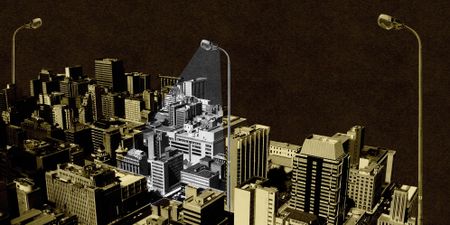
In a country with high rates of gender-based violence, we wanted to know how the lack of lights is shaping the lives of women who live in it – how the outages we tracked affect everyday decisions.
Our roundtable included a range of Joburg women:
- Busi Nkosi (69), a pensioner from Diepkloof;
- Yonela Sinqu (39), spokesperson for Sisonke, a grassroots sex worker advocacy organisation and a Johannesburg CBD resident;
- Naadiya Adams (35), a sports broadcaster from Centurion;
- Busisiwe Mphapang (32), a researcher and writer from Ferndale; and
- Nabeelah Khan (32), a communications officer from Fourways.
Their discussion shows how crime and safety concerns often dominate daily life.
A city afraid of the dark
Q: How has the lack of working streetlights directly impacted your daily routine?
Busi Nkosi: It’s a constant problem. I live in Diepkloof Extension near the N1 and opposite Diepkloof Hostel. It’s such a problem because people go to work in the morning.
It’s dark in the morning. It’s dark in the evening. Particularly in winter. It’s better now that it’s still summer, but in winter it’s terrible.
Even now with summer, the weeds [are] high. It’s very unsafe. I walk every morning. So I have decided to leave late to start my work at 7am because I’m scared to go out at 6am because it’s still dark.
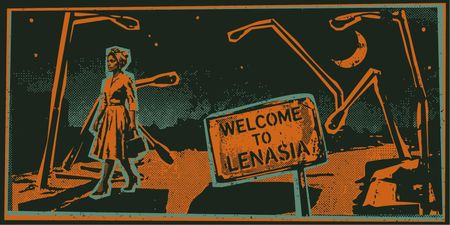
Naadiya Adams: Where I live in Centurion, my mom lives, I would say, five minutes away from me. It’s a bit of a drive, but it takes me five minutes to get there. But on the route to get to her there’s no lights.
There’s a specific spot where it’s a long stretch, and you go over a bridge, you get to the robot and then you turn onto the other street – then there’s lights. But for this long stretch there’s no lights.
Sometimes I’m driving late at night, 11, 12 at night, you know, thinking, “Ah, it’s a quick thing”. But when I’m actually driving, it is the freakiest thing to drive in the dark like that.
That’s why even when I do drive, I think, “I’m not going to... take my baby. I’m just going to go by myself because I feel like I’m risking myself.” So, I’m fine to risk myself, but I’m not going to put my baby at risk.
/file/attachments/2992/WhatsAppImage2026-05-25at081218_147270.jpeg "Centurion resident Naadiya Adams is scared to drive alone at night, especially with her children. (Photo: Supplied)")
Busisiwe Mphapang: I used to run, but now I won’t go out after 5pm. Even my male personal trainer is afraid to be out after dark. I think, more than anything, it’s just made us more isolated individually. We’re all just closed in our house.
After 5pm everyone is back from work and you just lock yourself in and you don’t go out. Which is crazy because growing up in the township, you know, the township was also a place where we would play outside until like 6pm and your mother would be like, “You need to come back in”.
But now when I go to the township, it’s even got worse because the crime rate has increased in certain parts of the township. More than anything, I think it’s just made us isolated as humans. Kids don’t play outside anymore. The minute the sun sets, they’re inside the house because the lights don’t work.
/file/attachments/orphans/8922D717-C4EC-45DE-A460-9603F1758315-IMG_6750_771116.jpeg "Fourways resident Nabeelah Khan and Ferndale resident Busisiwe Mphapang at the roundtable discussion, hosted by Daily Maverick, about how inadequate streetlighting affects women in Johannesburg. (Photo: Reitumetse Pilane)")
Q: Yonela, you represent sex workers, which is an already dangerous industry that primarily operates at night. How does the darkness change the nature of the work?
Yonela Sinqu: It’s a very big concern for us. To the point [where] a lot of the ladies are saying they are scared to work late at night. They are also scared to work during the day because people throw things at them when they’re working during the day.
At night it’s more dangerous to be picked up because the person who’s coming to pick you up will switch their lights off. So you can’t get the registration. So the people who are actually with you can’t pick up the colour of the car. They can’t pick up the make of the car. They can’t pick up the registration of the car. And you’re already standing in a dark space.
/file/attachments/orphans/Image7_916138.jpg "Yonela Sinqu (39), spokesperson for Sisonke, described the impact broken streetlights on sex workers. (Photo: Supplied / Yonela Sinqu / Facebook)</p>
<p>")
I’m also very concerned about the ladies who clean the street because they come around at 4am and almost every second streetlight is not working. And if it is working, it’s working at [its] least capacity. You can’t even see your own shadow, it’s so dim.
I’ve noticed now that instead of using the lights that require cables, they’ve moved to solar lights, but even those, they’re being vandalised. So you would have lights this week and then next week the lights are gone.
Q: Nabeelah, you mentioned specific dangers on the road to Lenasia. What are residents facing there?
Nabeelah Khan: There is this particular stretch of the road where there’s absolutely no lights and it’s incredibly dangerous. What happens is there’s a lot of veld and bush on the side, so you have a lot of criminals who hide in the bushes and they know the time when the road is a bit quiet and they’ll put spikes on the road.
You’ll drive over the spikes. Obviously, your tyres are gone and now you’re stranded late at night on a road that has no lights and you’re probably about to be robbed.
I used to drive that road with the music off, just praying until I hit my driveway. The anxiety is overwhelming because, as a woman in a country with a GBV crisis, your head immediately goes to the worst-case scenario.
Q: Does it feel like the authorities are listening, or is there a disparity in how these issues are handled?
Nabeelah Khan: I think that speaks to a lot more of a deeper socioeconomic thing between the north and the south, where the south of Joburg, service delivery is basically nonexistent. But in the north, you know, where it’s a lot more economically vibrant and all of that, you probably will have someone who will come and fix something. If you call them, they’ll come.
Yonela Sinqu: No. I mean, you walk into a room, you introduce yourself, and already people get their ears blocked. They’re like, “What the hell are you doing here because you’re dirtying our streets and you’re doing this and that and the other? You’re exposing our children.”
But the reality is we’re trying by all means to keep children away from the street and let their mothers do the work, but we are a criminalised industry. So even that makes it worse.
Busi Nkosi: In Diepkloof, we were told the darkness was due to stolen cables, but there’s also a feeling of “collective punishment”. When people from the hostel connect illegally to the poles, we complain that this is very dangerous for the children, and [the municipality] would simply just switch off the lights and say nothing.
We would just read in between the lines and say, “Oh, it’s because we have complained and the lights have been switched off”.
/file/attachments/orphans/6329D2FA-3856-416B-8D80-37E815E1E733-IMG_6732_261481.jpeg "Busi Nkosi, a pensioner from Diepkloof, at the roundtable discussion hosted by Daily Maverick. (Photo: Reitumetse Pilane)")
Q: Beyond safety, what are we losing as a society when the lights go out?
Busi Nkosi: Today it’s Thursday. Because I’m Christian it’s the Lent period for us and we have Wednesday services from 6pm to 7pm. I’m a Methodist so we kind of work in circuits and the circuit has many branches and with the Lent services now, we rotate among the branches.
It’s in Soweto, and I’m not going because it’s dark at night. I wish to, I want to attend these services, but there’s just one thing that prevents me from doing that. It’s because it’s dark. I’ll be driving in the dark.
The crime rate is high. There are potholes. It’s just about everything. But the darkness is the main thing that makes me not want to go. So you see, you miss things that you would like to do.
Naadiya Adams: We are missing out on a “life”. In other countries, malls stay open late and there is a vibrant nightlife. Here, we don’t have that freedom. Even the interaction between drivers becomes spiteful. Everyone uses their brights because they can’t see, which ends up blinding everyone else. It creates an unnecessary conflict caused by a lack of lights.
Busisiwe Mphapang: The government doesn’t seem to realise that streetlights are the easiest crime prevention tool available. By failing to provide them, they force the burden of safety onto the residents. So it becomes an issue whereby I think as a society we’ve become extremely isolated, whereby you only go out during the day to public spaces.
/file/dailymaverick/wp-content/uploads/2025/07/WFD_0709.jpg "Vandalised street lights along the R82 (Old Vereeniging Road) south of Johannesburg on 14 July 2025. (Photo: Felix Dlangamandla)")
‘Dark spots’ provide cover for crime
Daily Maverick requested comment from various stakeholders about safety concerns arising from the state of the city’s streetlights, including the City of Johannesburg, the Johannesburg Metropolitan Police Department (JMPD), the South African Police Service (SAPS) and premier Panyaza Lesufi’s office.
While most didn’t respond, City of Johannesburg spokesperson Nthatisi Modingoane said that while there is no formal analysis confirming a direct link between streetlighting and crime, it is “widely recognised” that a lack of public lighting can contribute to crime.
“The Johannesburg Metropolitan Police Department, through its Crime Prevention Units and Integrated Intelligence Operations Centre, continuously monitors crime hotspots and accident-prone areas.
“Internal assessments consistently support the ‘Fighting Crime Through Environmental Design’ theory, which suggests that poor lighting creates ‘dark spots’ that can provide cover for criminal activities, including smash-and-grab incidents, hijackings, and contact crimes such as muggings and gender-based violence,” he said.
He added that crime statistics from the SAPS indicate that there is a “higher prevalence” of opportunistic crime in areas where public lighting has been compromised because of vandalism or poor maintenance.
“In addition, poor visibility is recognised as a significant contributing factor to pedestrian-related accidents and collisions, particularly at intersections. JMPD accident data is regularly analysed to identify high-risk corridors where targeted lighting interventions may help reduce incidents and fatalities.”
A recent report by News24 indicated the problem may worsen, as Eskom had issued a notice to the City of Johannesburg over the R4.1-million debt owed for streetlights in areas including Sandton, Bryanston, Cosmo City and Ivory Park. The unpaid debt could lead to the entity disconnecting some lights and refusing to respond to faults until the debt is paid, plunging the city further into darkness. DM
Comments from the roundtable discussion were edited for clarity and brevity.
Comments
Scroll down to load comments...